Maintaining a beautiful Bermuda grass lawn means tackling weeds before they sprout. Understanding what is a good pre emergent for Bermuda grass is crucial for effective weed control. This guide will help you select the right products, master application timing based on soil temperatures, and apply them correctly to prevent common invaders like crabgrass and poa annua, ensuring a healthier, weed-free lawn.
What Is a Good Pre Emergent for Bermuda Grass
Ah, the lush, carpet-like beauty of a well-maintained Bermuda grass lawn! It’s the envy of the neighborhood, isn’t it? But maintaining that pristine look often feels like a constant battle against pesky weeds. Crabgrass, poa annua, broadleaf plantain – they all seem to pop up overnight, ruining your lawn’s perfect appearance. The good news? You can get ahead of them! The secret lies in understanding what is a good pre emergent for Bermuda grass and how to use it effectively.
This comprehensive guide is designed to transform you from a reactive weed-puller into a proactive weed-preventer. We’ll dive deep into the world of pre-emergents, exploring why they are essential for Bermuda grass, which products stand out, and, most importantly, when and how to apply them for maximum effectiveness. Get ready to learn the secrets to a virtually weed-free Bermuda lawn!
Key Takeaways
- Selection: Prodiamine (Barricade) and Dithiopyr (Dimension) are top choices for Bermuda grass, offering broad-spectrum weed control.
- Timing is Key: Apply pre-emergent in spring when soil temperatures consistently reach 50-55°F for 3-5 days, and again in late summer/early fall when soil temperatures drop below 70°F.
- Soil Temperature: Use a soil thermometer to accurately determine optimal application windows, as air temperature can be misleading.
- Application Method: Calibrate your spreader or sprayer for even coverage, and always water in granular pre-emergents immediately after application to activate them.
- Avoid New Seeding: Do not apply pre-emergents to newly seeded, sprigged, or sodded Bermuda grass, as they inhibit root development and germination.
- Split Applications: For extended protection, consider splitting your spring pre-emergent dose into two applications, 6-8 weeks apart, especially if you have a long growing season.
- Read the Label: Always follow the product label’s specific instructions for rates, application, and safety precautions.
Step 1: Understanding Pre-Emergents and How They Work
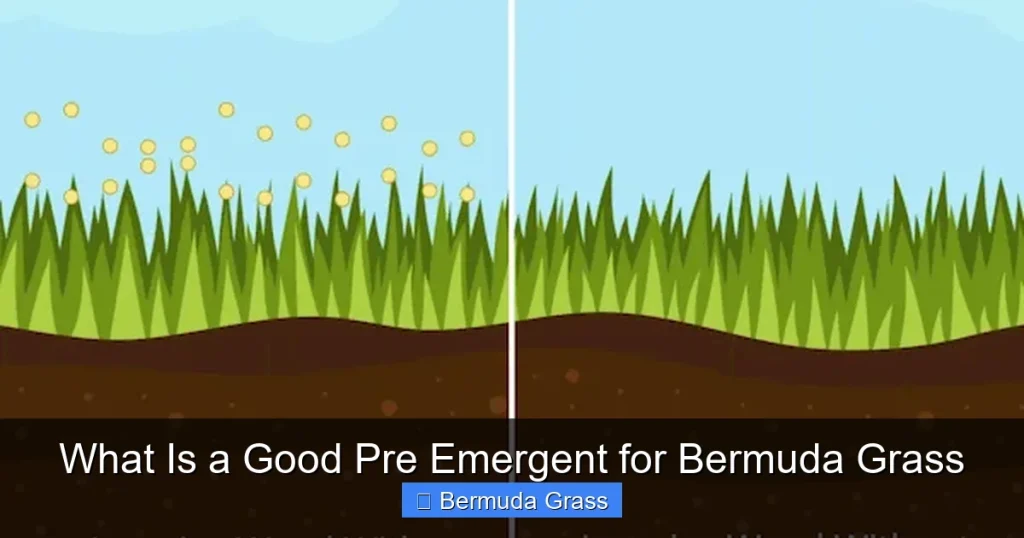
Before we talk about specific products, let’s understand the magic behind pre-emergents. Simply put, a pre-emergent herbicide is a chemical barrier that prevents weed seeds from germinating and emerging from the soil. Think of it as a microscopic shield that stops weeds before you even see them.
How Pre-Emergents Stop Weeds
Unlike post-emergent herbicides, which kill existing weeds, pre-emergents create a protective zone in the top layer of your soil. When weed seeds try to sprout and grow roots or shoots into this zone, they absorb the herbicide, which disrupts their cellular division and growth processes. The result? The seeds die before they can ever become visible weeds. This preventative approach is incredibly effective for Bermuda grass, as it minimizes the need for more intensive, and sometimes damaging, post-emergent treatments.
Why Pre-Emergents Are Crucial for Bermuda Grass
Bermuda grass, known for its dense growth and resilience, can still be overtaken by weeds if not properly managed. Weeds compete with your Bermuda grass for vital nutrients, water, and sunlight, weakening your turf and making it more susceptible to diseases and pests. Using a good pre emergent for Bermuda grass is a cornerstone of a healthy lawn care program, ensuring your Bermuda grass stays thick, vibrant, and weed-free.
Step 2: Identifying the Best Pre-Emergents for Bermuda Grass
When selecting a good pre emergent for Bermuda grass, you’ll encounter several active ingredients. Each has its strengths, but a few stand out as top performers, offering excellent broad-spectrum control against a variety of common lawn weeds without harming your established Bermuda turf.
Visual guide about What Is a Good Pre Emergent for Bermuda Grass
Image source: i.ytimg.com
Prodiamine (Commonly known as Barricade)
- What it is: Prodiamine is arguably one of the most popular and effective pre-emergent herbicides for Bermuda grass. It offers a long residual period, meaning it provides extended weed control.
- Benefits: It’s highly effective against crabgrass, poa annua, foxtail, goosegrass, and many broadleaf weeds. It’s also very safe for established Bermuda grass when applied correctly. Its long-lasting nature means fewer applications might be needed.
- Forms: Available in both granular and liquid formulations. Granular is often easier for homeowners to apply with a broadcast spreader.
Dithiopyr (Commonly known as Dimension)
- What it is: Dithiopyr is another excellent choice. What makes it unique is its “early post-emergent” activity against crabgrass. This means it can kill very young crabgrass seedlings that have just emerged, giving you a slightly wider application window than prodiamine.
- Benefits: Excellent control of crabgrass, goosegrass, poa annua, and many broadleaf weeds. Its dual pre-emergent and early post-emergent action against crabgrass offers a bit more flexibility.
- Forms: Also available in granular and liquid.
Pendimethalin (Commonly known as Pendulum)
- What it is: Pendimethalin is a yellow-colored herbicide often found in professional and homeowner products. It’s a reliable option for pre-emergent control.
- Benefits: Provides good control of crabgrass, poa annua, goosegrass, and various broadleaf weeds. It’s safe for established Bermuda grass.
- Forms: Available in granular and liquid.
Granular vs. Liquid Pre-Emergents: Which is Best?
- Granular: Often simpler for homeowners. You apply it with a broadcast or drop spreader, similar to fertilizer. It then needs to be watered in to activate. Granular products can be easier to see where you’ve applied them.
- Liquid: Applied with a pump sprayer or hose-end sprayer. Liquid formulations typically offer more uniform coverage if applied correctly and may be absorbed by the soil slightly faster once watered in. However, precise mixing and application calibration are crucial to avoid over or under-application.
Ultimately, a good pre emergent for Bermuda grass can be either granular or liquid, depending on your preference and equipment. Just make sure to read the label carefully for specific instructions.
Step 3: Mastering the Timing of Pre-Emergent Application
This is arguably the most critical step. Even the best pre emergent for Bermuda grass won’t work if applied at the wrong time. Pre-emergents need to be in place before weed seeds germinate. This means paying close attention to soil temperatures.
Spring Application: Targeting Warm-Season Weeds (e.g., Crabgrass)
- When: The ideal time for spring pre-emergent application is when soil temperatures consistently reach 50-55°F for 3-5 consecutive days. This usually happens when daytime air temperatures are regularly in the 60s and 70s.
- Why: Crabgrass and other warm-season annual weeds begin to germinate when soil temperatures hit this range. Applying your pre-emergent just before or as this happens creates the barrier they can’t penetrate.
- Tip: Don’t rely solely on air temperature. Invest in a soil thermometer to get accurate readings. You can also check local university extension office websites or online soil temperature maps for your region.
- Zone Matters: In the southern parts of the Bermuda grass growing region, this might be late February or March. Further north, it could be April or even early May.
Fall Application: Targeting Cool-Season Weeds (e.g., Poa Annua)
- When: A second, equally important application of a good pre emergent for Bermuda grass occurs in the fall. This is typically when soil temperatures drop below 70°F and are consistently in the 50-60°F range.
- Why: Cool-season annual weeds like poa annua (annual bluegrass), henbit, and chickweed germinate in the fall as the soil cools. A fall application targets these weeds, preventing them from establishing over winter and becoming a problem in spring.
- Tip: Just like in spring, use a soil thermometer. Fall applications can range from late August to October depending on your climate zone.
Split Applications for Extended Control
If you have a very long growing season or struggle with persistent weeds, consider splitting your pre-emergent dose. Apply half the recommended rate in the early spring, and the other half 6-8 weeks later. This extends the protective barrier through more of the germination period for various weeds. Always check the product label for guidelines on split applications.
Step 4: Proper Application Techniques
Once you’ve chosen a good pre emergent for Bermuda grass and determined the perfect timing, proper application is key to success.
H3: Prepare Your Lawn
- Mow: Mow your Bermuda grass a day or two before application. This ensures the pre-emergent reaches the soil surface more easily.
- Clear Debris: Rake up any leaves or heavy thatch. The goal is for the product to make good contact with the soil.
- Water (Optional, for some products): Some product labels recommend applying to a dry lawn, others to a slightly damp lawn. Always follow the specific instructions on your product’s label.
H3: Calibrate Your Equipment
This step is critical for even coverage and to avoid over- or under-application, both of which can lead to poor results or even harm your Bermuda grass.
- For Granular Spreaders: Refer to the product label for the recommended spreader settings. If your spreader model isn’t listed, you’ll need to calibrate it. A common method is to measure out a small area (e.g., 100 sq ft), apply the product at a low setting, and then adjust until you get the correct amount for that area. Always walk at a consistent pace.
- For Liquid Sprayers: Calibrate your sprayer by practicing with water. Measure how much area a known volume of water covers at your typical walking speed and spray pattern. Then, mix your concentrate according to the label instructions for that coverage rate. Use a fan nozzle for even coverage.
H3: Apply Evenly
- Walk in a Pattern: Whether using a granular spreader or liquid sprayer, walk in a consistent, overlapping pattern (e.g., perpendicular passes, half-rate in one direction, half-rate perpendicular). This ensures uniform coverage and prevents skips or overlaps.
- Avoid Over-Application: Do not double-apply over areas, especially at turns or when refilling. Over-application can damage your Bermuda grass.
H3: Water It In
Most pre-emergents require watering in to activate them. This moves the herbicide from the grass blades down into the soil where it forms the protective barrier.
- When: Water immediately after application for granular products. Liquid products might have a short drying time before watering in. Check the label.
- How Much: Aim for about 0.5 inches of water. This can be achieved with a sprinkler system or natural rainfall. If no rain is expected, plan to irrigate.
Step 5: Tips for Long-Term Success
Using a good pre emergent for Bermuda grass is a cornerstone, but it’s part of a bigger picture for a truly healthy lawn.
- Know Your Lawn’s Needs: Understand your specific soil type, sun exposure, and common weed pressures.
- Integrated Pest Management: Combine pre-emergent use with good cultural practices like proper mowing height (Bermuda thrives short, but not scalped), appropriate watering, and regular fertilization. A dense, healthy Bermuda lawn naturally resists weeds better.
- Avoid Application on New Growth: Never apply pre-emergents to newly seeded, sprigged, or sodded Bermuda grass. Pre-emergents inhibit root development and germination, which will prevent your new grass from establishing. Wait until your new Bermuda grass is fully established (typically after 2-3 mowings or several months) before applying.
- Read the Label, Always: This cannot be stressed enough. Every product has unique instructions regarding application rates, safety precautions, watering requirements, and re-entry intervals. The label is your ultimate guide for successfully using any good pre emergent for Bermuda grass.
- Consider a Soil Test: A soil test every few years can reveal nutrient deficiencies or pH imbalances that might be stressing your Bermuda grass and making it more susceptible to weeds.
Step 6: Troubleshooting Common Pre-Emergent Issues
Even with the best intentions, sometimes things don’t go perfectly. Here are some common issues and how to address them.
Pre-Emergent Didn’t Work / Weeds Still Appeared
- Timing Was Off: The most common reason. The pre-emergent was applied after the weed seeds had already germinated. Next time, be more diligent with soil temperature monitoring.
- Incorrect Application: Uneven application due to poor spreader calibration or skips, or not watering it in sufficiently, can lead to gaps in protection.
- Wrong Product: Some pre-emergents target specific weeds. Ensure the product you chose is effective against the weeds you’re seeing.
- Product Breakdown: If there was excessive rainfall after application (before activation), or if the product’s residual period simply ran out, weeds might emerge later in the season. Consider split applications for longer control.
- Resistant Weeds: Occasionally, a weed might be resistant to a particular active ingredient. In this case, you might need to try a different pre-emergent or use a post-emergent specifically for that weed.
Damage to Bermuda Grass
- Over-Application: Applying too much product can stress or even kill your Bermuda grass. Always calibrate your equipment and measure accurately.
- Applied to New Grass: As mentioned, pre-emergents inhibit root growth. If applied to newly seeded or sprigged Bermuda, it can prevent it from rooting properly.
- Applying During Stress: Avoid applying pre-emergent to Bermuda grass that is already under stress from drought, disease, or extreme heat. Wait until the grass has recovered.
Conclusion
Achieving a beautiful, weed-free Bermuda grass lawn doesn’t have to be a constant struggle. By understanding what is a good pre emergent for Bermuda grass, mastering the crucial timing of application, and employing proper techniques, you can effectively prevent weeds before they ever become a problem. Remember, consistency and attention to detail, especially regarding soil temperatures and product labels, are your greatest allies. With a little planning and effort, your Bermuda lawn will be the envy of the neighborhood, staying thick, healthy, and perfectly green all season long!