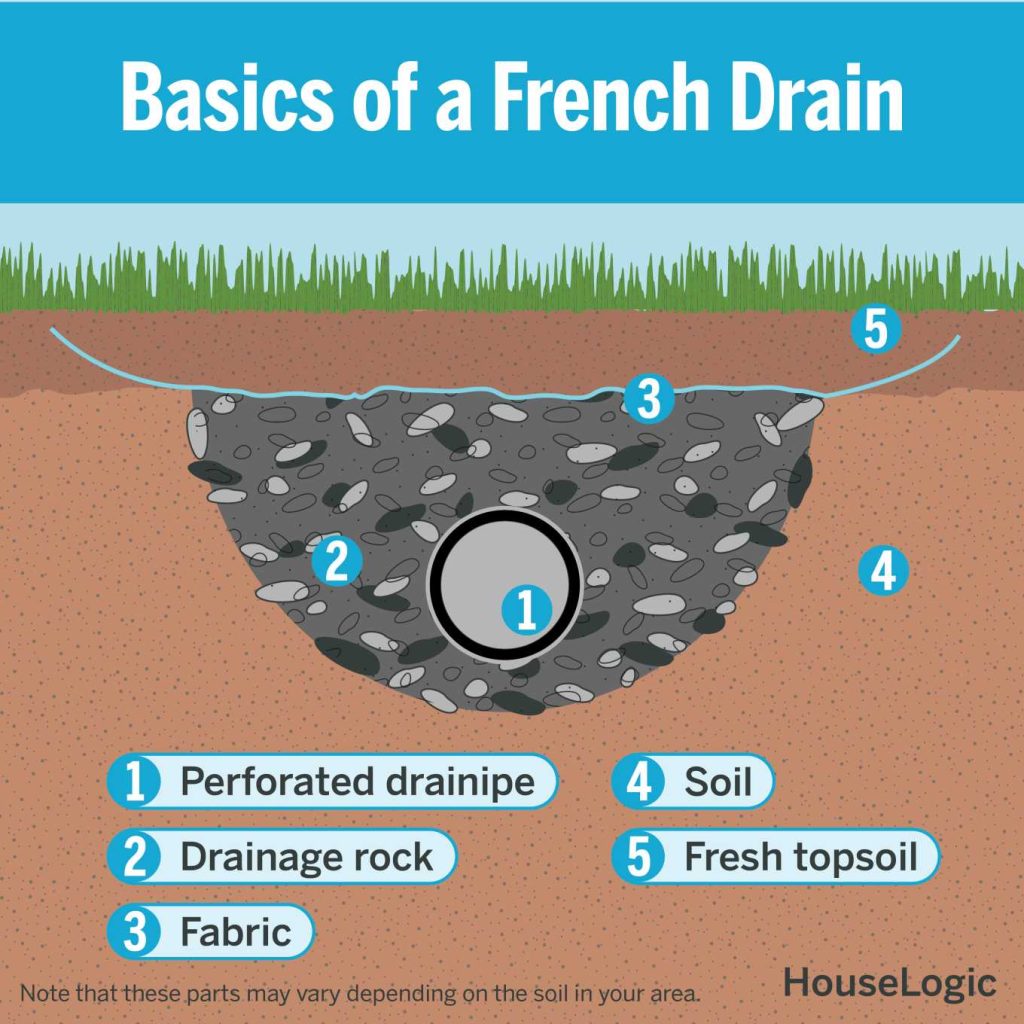
A French drain is a simple yet effective drainage solution designed to redirect excess water away from your property. If you’re dealing with soggy yards, water pooling around your foundation, or basement leaks, installing a French drain could be your answer to these frustrating issues. Essentially, it’s a trench filled with gravel or rock that contains a perforated pipe. This pipe collects and channels water away, preventing damage to your home and landscaping. Whether you’re facing heavy rainfall or melting snow, a French drain helps keep your property dry and safe. So, if you’re in need of an efficient drainage system, understanding how a French drain works could be your first step toward a drier, more manageable landscape.

What Is A French Drain
A **French drain** is a type of drainage system designed to redirect water away from specific areas, typically preventing flooding or water damage in basements and other low-lying areas. It is named after its creator, Henry French, who popularized this method in the 19th century. Understanding how a French drain works and its key components can help homeowners make informed decisions about drainage solutions for their property.
How Does a French Drain Work?
A French drain works by utilizing gravity to facilitate the movement of water. It consists of a trench filled with gravel and a perforated pipe at the bottom. When rainwater or groundwater accumulates, it seeps into the gravel and flows through the perforated pipe. From there, the water is diverted away from the problem area, reducing the risk of flood damage.
The process of drainage is straightforward:
- Water enters the gravel-filled trench.
- It filters through the gravel, which helps remove debris.
- The water then travels through the perforated pipe.
- Finally, it is directed to a suitable drainage point, such as a storm sewer or a dry well.
This natural system relies on gravity, making it an effective option for many homeowners.
Components of a French Drain
Understanding the components of a French drain is essential for anyone looking to install one. Each part plays a crucial role in ensuring effective drainage.
Trench
The trench is the first component needed for a French drain. It should be dug to a depth and width suitable for the project. Typically, trenches are around 18 to 24 inches wide and 18 to 24 inches deep. The slope of the trench is also vital, usually set at a minimum of 1% for proper water flow.
Gravel
Gravel is the second crucial component. It provides a means for water to enter the drain while preventing soil from clogging the system. The gravel used is generally three-quarter-inch clean, so it has no fines or small particles. This allows for optimal water movement and filtration.
Perforated Pipe
The perforated pipe fits inside the trench. This pipe has holes or slots that allow water to flow in from the gravel. It is typically made from PVC or corrugated polyethylene and is available in various diameters. The choice of pipe will depend on the drainage requirements of the location.
Filter Fabric
Filter fabric is an essential addition to the French drain system. It wraps around the gravel and the perforated pipe, preventing soil and sediment from entering the drainage system. This helps maintain the system’s efficiency and extends its lifespan.
Where to Install a French Drain
Choosing the right location for a French drain is crucial for maximizing its effectiveness. Several factors should influence this decision.
Basement Areas
Many homeowners opt to install French drains in their basements. If your basement is prone to flooding or moisture, a French drain can help divert water away from these areas, protecting your home from water damage.
Foundation Perimeters
Installing a French drain around the foundation of a home can prevent water from pooling near the base. This is especially important in regions with heavy rainfall or high groundwater levels.
Driveways and Patios
Driveways and patios can also benefit from a French drain system. If these areas often get flooded or retain water, a French drain can help redirect excess water away, improving safety and usability.
Different Types of French Drains
French drains come in various types, each designed for specific drainage needs. Understanding these types can help you choose the right system for your property.
Interior French Drains
Interior French drains are installed inside the home, typically around the basement perimeter. This type helps collect water that seeps through walls or floors, channeling it into a sump pump for removal.
Exterior French Drains
Exterior French drains are placed outside the home, around the foundation. They serve to redirect surface water and prevent it from pooling near the foundation, protecting against moisture intrusion.
Surface Drains
Surface drains can be used in conjunction with French drains. These drains capture surface water, typically during heavy rain, and direct it into the French drain system to prevent flooding.
Benefits of Installing a French Drain
There are numerous benefits to installing a French drain system on your property. These advantages can enhance the performance and longevity of your home.
Flood Prevention
One of the main benefits is the prevention of floods. By directing water away from critical areas, a French drain significantly reduces the risk of flooding in basements and crawlspaces.
Foundation Protection
French drains protect your foundation from water damage. Keeping moisture away from the base of your home helps prevent cracking, shifting, and other structural issues.
Increased Property Value
Having a French drain system can increase your property value. Potential buyers are often attracted to homes with effective drainage solutions, making your property more appealing.
Maintenance of French Drains
Maintaining a French drain system is vital for ensuring its long-term efficiency. Regular maintenance helps prevent clogs and other issues.
Regular Inspections
Regular inspections should be conducted to check for clogs or damage. Look for signs of standing water, which may indicate that the drain is not functioning correctly.
Cleaning and Flushing
Cleaning the French drain is essential for its maintenance. Flushing the system with water can help clear out debris and sediment that may have built up over time.
Checking for Damage
Inspect the gravel and pipe for any visible signs of damage. Replacing damaged sections promptly can prevent further issues and prolong the life of the system.
DIY vs. Professional Installation
When considering a French drain installation, you may wonder whether to tackle the project yourself or hire a professional. Each option has its pros and cons.
DIY Installation
Installing a French drain yourself can save on labor costs. However, it requires physical labor, digging, and knowledge of proper drainage techniques. Make sure to research and understand the process before starting.
Professional Installation
Hiring a professional ensures that the job is done right and in accordance with local building codes. They have the experience and tools needed for effective installation. While this option may cost more upfront, it can save money on potential repairs later.
Costs Involved in Installing a French Drain
Understanding the costs associated with installing a French drain can help homeowners budget accordingly. Several factors can influence the total cost.
Materials
The cost of materials can vary based on the type and quality of gravel, pipes, and fabric used. Generally, a perforated pipe costs around $1 to $3 per linear foot, while gravel can range from $15 to $30 per ton.
Labor Costs
Labor costs also play a significant role in the overall expense. If hiring a professional, expect labor costs to be anywhere from $50 to $100 per hour, depending on your location and the complexity of the job.
Permits and Fees
Some areas may require permits or other fees for drainage system installation. Check with local regulations to ensure compliance, as this can add to the overall cost.
French drains are an effective solution to combat water accumulation on your property. Recognizing their components, functions, and benefits can help you make informed decisions for maintaining a dry, safe environment. Whether you choose to install one yourself or hire a professional, a well-planned French drain system can protect your home from water damage for years to come.
HOW A FRENCH DRAIN WORKS
Frequently Asked Questions
“`html
What materials are used to create a French drain?
A French drain typically consists of a trench filled with gravel or rock, with a perforated pipe at the bottom. The gravel allows water to flow freely while filtering out debris, preventing clogs. In some cases, a fabric liner may also be used to keep soil from mixing with the gravel.
How does a French drain function in managing water drainage?
A French drain works by redirecting excess water away from areas prone to flooding or standing water. The perforated pipe collects water that seeps through the soil, allowing it to flow into the pipe and be carried away to a designated drainage area or sump pit.
Where should I install a French drain on my property?
Locate low spots in your yard or areas where water accumulates after heavy rainfall. Installing the French drain along the perimeter of your home can help prevent water from pooling near the foundation. It’s essential to ensure that the drain slopes away from your house to promote effective drainage.
How deep should I dig a trench for a French drain?
The depth of the trench for a French drain typically ranges from 6 to 12 inches, depending on the amount of water you expect to manage. The depth can also vary based on the local soil conditions and the desired drainage effectiveness. Ensuring a slight slope towards the outlet is crucial for optimal performance.
Can I install a French drain myself, or should I hire a professional?
If you have some DIY experience and the right tools, you can install a French drain yourself. However, if the project seems too complex, or if you’re unsure about your drainage needs, hiring a professional can ensure proper installation and effective water management.
“`
Final Thoughts
A French drain is an effective solution for managing excess water around your property. It consists of a trench filled with gravel and a perforated pipe that redirects water away from foundations, preventing flooding and water damage.
By understanding what a French drain is, property owners can better protect their homes from water-related issues. Installing a French drain not only enhances drainage but also prolongs the life of your property.