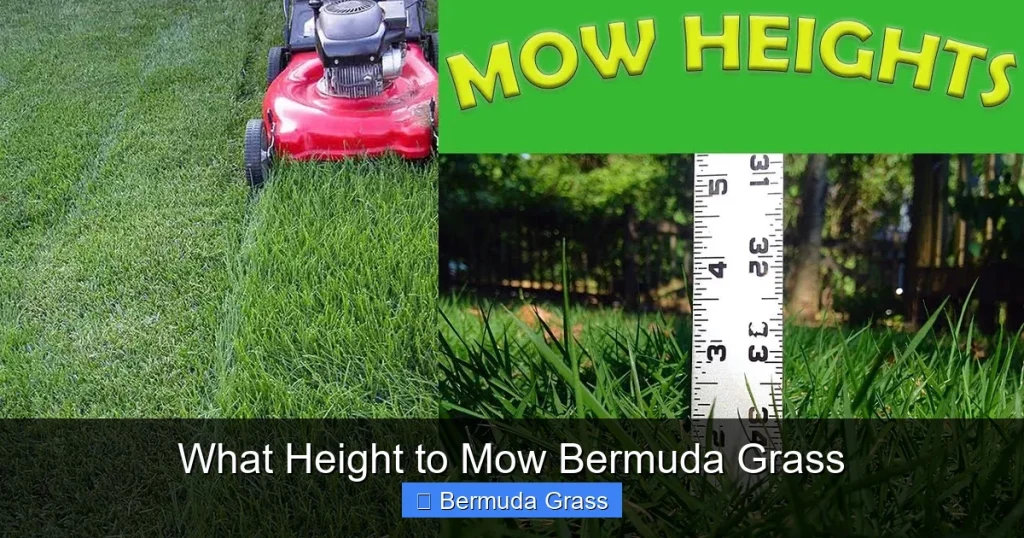
Achieving a lush, healthy Bermuda grass lawn hinges significantly on maintaining the correct mowing height. This guide will teach you the optimal cutting range, typically between 1 to 2 inches for most home lawns, and explain why proper height promotes strong roots, drought resistance, and weed suppression. Discover the essential techniques and seasonal adjustments needed to keep your Bermuda grass thriving year-round, ensuring a picture-perfect yard.
What Height to Mow Bermuda Grass
Welcome, fellow lawn enthusiasts! If you’ve chosen Bermuda grass for your yard, you’re already on your way to a beautiful, resilient turf. Known for its incredible durability and ability to thrive in warm climates, Bermuda grass is a favorite for homeowners, golf courses, and sports fields alike. But to truly unlock its full potential, one of the most critical factors you need to master is its mowing height.
Mowing isn’t just about making your lawn look neat. For Bermuda grass, it’s a fundamental aspect of its health, density, and ability to withstand stress. Mow too high, and your lawn might become sparse. Mow too low, and you risk scalping, which can severely damage the grass. This comprehensive guide will walk you through everything you need to know about the ideal bermuda grass mowing height, why it matters, and how to maintain it for a vibrant, healthy lawn year-round. Get ready to transform your yard into the envy of the neighborhood!
Key Takeaways
- Optimal Mowing Height: For most residential Bermuda grass lawns, aim to maintain a cutting height between 1 to 2 inches for best health and appearance.
- The One-Third Rule: Never remove more than one-third of the grass blade’s length in a single mowing session to prevent stressing your lawn and causing damage.
- Mower Type Matters: While rotary mowers are common, reel mowers offer a cleaner, sharper cut, especially if you desire a very low cut (below 1 inch) typical of sports fields.
- Sharp Blades are Crucial: Always use sharp mower blades. Dull blades tear the grass, leading to frayed, brown tips and making your lawn more susceptible to disease.
- Seasonal and Situational Adjustments: Adjust your mowing height based on the season (lower in spring/fall, slightly higher in summer heat) and environmental factors like shade (mow higher in shaded areas).
- Consistency and Frequency: Regular, frequent mowing prevents scalping and promotes dense, even growth. Bermuda grass often needs weekly or even twice-weekly cuts during peak growing season.
Understanding Bermuda Grass Growth Habits
Before we dive into specific heights, let’s briefly understand what makes Bermuda grass unique. Bermuda grass is a warm-season grass, meaning it thrives in hot temperatures and goes dormant in colder months. It’s also known for its aggressive growth, spreading rapidly via both above-ground runners (stolons) and underground rhizomes. This vigorous growth habit is why it can recover quickly from damage but also why it requires frequent mowing.
Unlike cool-season grasses that often prefer a taller cut, Bermuda grass performs best when kept relatively short. This encourages its dense, lateral growth, creating that carpet-like appearance we all love. Mowing at the right bermuda grass mowing height ensures proper sunlight penetration to the lower parts of the plant, strengthening the overall turf.
The Ideal Mowing Height Range for Bermuda Grass
Getting the bermuda grass mowing height right is paramount. The “ideal” height isn’t a single number but rather a range, influenced by your specific lawn goals and environmental conditions.
General Residential Lawns: 1 to 2 Inches
For most homeowners, maintaining your Bermuda grass between 1 to 2 inches is the sweet spot. This height allows the grass to develop a robust root system, provides excellent density, and offers good resistance to weeds and environmental stress. A height of 1.5 inches is often considered a perfect balance for a beautiful, healthy home lawn without requiring specialized equipment.
Sports Fields and Golf Greens: 0.5 to 1 Inch
If you’re aiming for that super-short, manicured look seen on golf fairways or putting greens, Bermuda grass can be cut as low as 0.5 to 1 inch. However, achieving and maintaining these ultra-low heights requires very specific equipment, typically a reel mower, and a much more intensive care regimen. For the average homeowner, trying to go this low with a standard rotary mower can lead to scalping and severe lawn damage.
Shaded Areas: Slightly Higher
Bermuda grass loves full sun. If parts of your lawn receive less than 6-8 hours of direct sunlight per day, you’ll want to increase the mowing height in those shaded areas. Mowing Bermuda grass in shade at 2 to 2.5 inches allows the blades to have more surface area for photosynthesis, helping the grass compensate for reduced light.
New Sod or Seed: Initial Higher Cut
When establishing new Bermuda grass from sod or seed, it’s best to start with a slightly higher cut. For new sod, wait about 1-2 weeks before the first mow, setting your mower to around 2 inches. For seeded lawns, let the grass reach about 3 inches before the first cut, then gradually lower it to your desired height over several mowing sessions.
Why Mowing Height Matters for Your Bermuda Grass
You might wonder why we make such a fuss about a few inches. The chosen bermuda grass mowing height has a profound impact on your lawn’s health and appearance:
- Root Development: Taller grass blades (within the ideal range) translate to deeper, stronger roots. A robust root system helps your lawn access water and nutrients more efficiently, making it more resilient to drought and heat stress.
- Weed Suppression: A dense, properly mowed Bermuda lawn forms a thick canopy that shades out weed seeds, preventing them from germinating and competing with your grass.
- Drought Tolerance: Deeper roots and a denser canopy mean your Bermuda grass can better withstand dry periods, requiring less frequent watering.
- Disease Resistance: Correct mowing practices reduce stress on the grass, making it less susceptible to common lawn diseases. Proper height also allows for better air circulation, which is crucial for preventing fungal issues.
- Overall Appearance: The right bermuda grass mowing height contributes to that lush, carpet-like appearance that makes Bermuda grass so appealing. It encourages lateral growth, filling in bare spots and creating a uniform, attractive turf.
Step-by-Step Guide to Mowing Bermuda Grass Correctly
Now that you understand the “why,” let’s get into the “how” of maintaining the perfect bermuda grass mowing height.
1. Assess Your Bermuda Grass Type and Condition
Before you even touch your mower, take a good look at your lawn. Is it common Bermuda, or a hybrid variety? Hybrids often tolerate lower cuts due to their denser growth. Is your lawn healthy and vigorous, or showing signs of stress? A stressed lawn might need a slightly higher cut temporarily to help it recover.
2. Choose the Right Mower for Bermuda Grass
The type of mower you use significantly impacts the quality of your cut and the bermuda grass mowing height you can achieve.
Reel Mowers vs. Rotary Mowers
Rotary Mowers: These are the most common type for homeowners. They use a horizontal blade that spins at high speed, “whacking” the grass. They work well for Bermuda grass heights of 1 inch and above. However, if your blades aren’t razor-sharp, they can tear the grass, leading to ragged, brown tips.
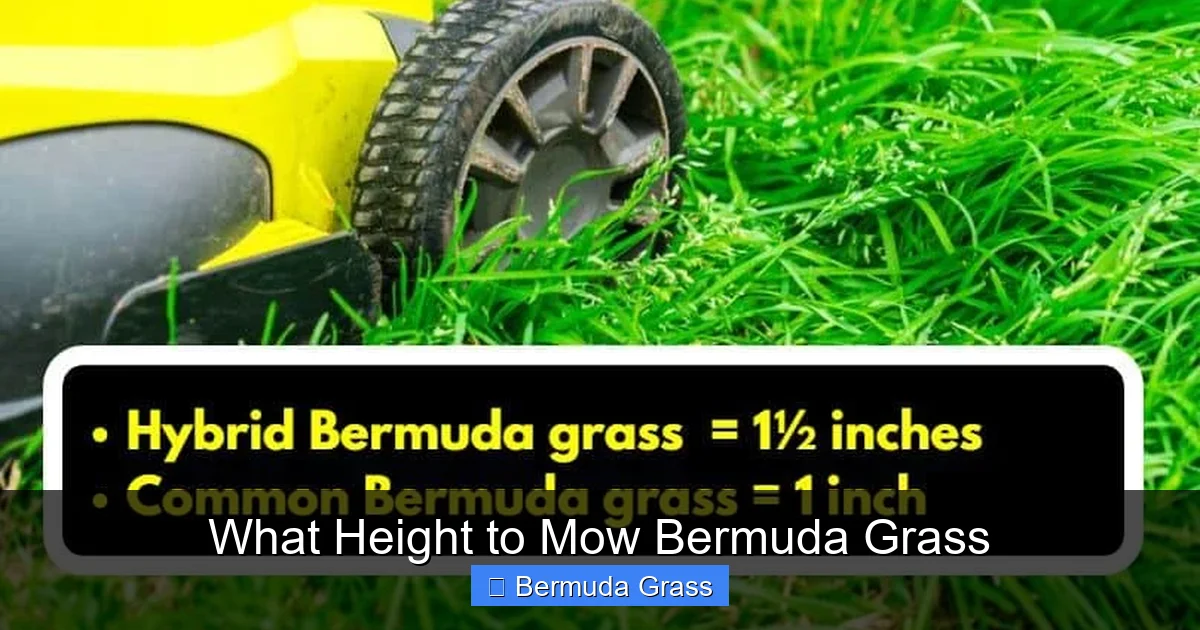
Visual guide about What Height to Mow Bermuda Grass
Image source: crabgrasslawn.com
Reel Mowers: These mowers use a series of spiral blades that rotate against a fixed bedknife, providing a scissor-like cut. They are essential for achieving very low bermuda grass mowing height (below 1 inch) like on golf courses. Reel mowers deliver a much cleaner cut, which is healthier for the grass and produces that perfectly manicured look.
Blade Sharpness is Key!
Regardless of mower type, sharp blades are non-negotiable. Dull blades tear the grass, leaving jagged edges that turn brown, weaken the plant, and make it vulnerable to diseases. Sharpen your blades at least once a season, or more frequently if you notice your grass tips browning after mowing.
3. Determine Your Ideal Mowing Height
Based on the sections above, decide what bermuda grass mowing height is best for your specific lawn.
- Consider Your Usage and Desired Look: Do you want a golf course aesthetic, or a functional, resilient family lawn?
- Account for Environmental Factors: Do you have significant shaded areas? Is your lawn under drought stress? Adjust your target height accordingly.
4. Set Your Mower to the Correct Height
This step is often overlooked but is crucial for consistent results.
How to Measure Mowing Height Accurately
Don’t rely solely on your mower’s settings (e.g., “setting 3”). Mower decks can vary, and what’s 2 inches on one mower might be different on another.
Method 1 (Pavement Method): Roll your mower onto a flat, paved surface. Measure from the pavement to the bottom of the cutting blade (or the bedknife on a reel mower). Adjust until it’s correct.
Method 2 (Yardstick Method): On a flat part of your lawn, stick a ruler or yardstick into the grass near a wheel. Adjust your mower until the bottom of the blade is at your desired height from the ground. Then, test a small area to confirm.
Adjusting Your Mower Deck
Most rotary mowers have a single lever or individual levers on each wheel to adjust the deck height. Follow your mower’s manual. Ensure all wheels are set to the same height to prevent an uneven cut.
5. Establish a Consistent Mowing Schedule
Bermuda grass grows fast, especially during its peak season. Consistency is vital.
The “One-Third Rule”
This is arguably the most important rule in lawn care. Never remove more than one-third of the grass blade’s total length in a single mowing session. For example, if your target bermuda grass mowing height is 1.5 inches, don’t let your grass grow taller than 2.25 inches before cutting it back down. Removing too much at once stresses the plant, leading to brown patches and reduced vigor.
Frequency Based on Growth Rate
During peak growing season (hot summer months), you might need to mow Bermuda grass weekly, or even twice a week, to adhere to the one-third rule. In cooler parts of its active season (spring, early fall), bi-weekly mowing might suffice. The key is to monitor growth and mow before it gets too tall.
6. Practice Proper Mowing Techniques
Beyond height and frequency, how you actually mow makes a difference.
Mowing Patterns
Vary your mowing pattern with each cut. If you always mow in the same direction, you can create ruts and compact the soil unevenly. Changing patterns also helps the grass stand up straighter, ensuring a more even cut.
Bagging vs. Mulching
For most Bermuda grass lawns, mulching clippings back into the lawn is beneficial. These clippings return nutrients to the soil, acting as a natural fertilizer. Only bag clippings if they are excessively long (violating the one-third rule), if your lawn is diseased, or if you prefer a very clean look.
Mowing When Dry
Always mow your Bermuda grass when it’s dry. Wet grass clumps, clogs your mower, and leads to an uneven cut. It can also spread diseases more easily.
Adjusting Mowing Height for Specific Situations
The ideal bermuda grass mowing height isn’t static. It changes with the seasons and specific lawn conditions.
Seasonal Adjustments
Spring Green-Up
As Bermuda grass emerges from dormancy in late spring, you can start by mowing at the lower end of your desired range (e.g., 1 inch). This helps remove any lingering dormant blades and encourages aggressive lateral growth for a quick green-up. Gradually raise the height as summer approaches.
Summer Heat Stress
During the hottest parts of summer, especially if your lawn is under drought conditions or experiencing intense sun, consider raising your bermuda grass mowing height slightly (e.g., from 1.5 to 2 inches). The extra blade length provides more shade to the soil, helping to conserve moisture and protect the root system from extreme heat.
Fall Preparation for Dormancy
In early fall, as growth begins to slow, gradually lower your bermuda grass mowing height over several weeks back to the lower end of your range (1 to 1.5 inches). This helps reduce the amount of leaf material going into winter dormancy, minimizing the risk of winter diseases and promoting a quicker green-up next spring.
Dealing with Shade
As mentioned, shaded areas require a higher bermuda grass mowing height. If you have trees or buildings casting shadows for significant portions of the day, increase the cutting height by 0.5 to 1 inch in those specific spots. This gives the grass more surface area to absorb the limited sunlight.
Overseeding Considerations
If you plan to overseed your Bermuda grass with a cool-season grass (like rye) for winter color, you’ll typically mow your Bermuda grass very low (around 1 inch or even lower) right before overseeding. This reduces competition and allows the new seeds to reach the soil and establish. Once the new grass is growing, you’ll manage the mowing height based on the new overseeded lawn’s needs.
Troubleshooting Common Mowing Issues
Even with the best intentions, you might encounter some common issues.
Scalping Your Lawn
Problem: Patches of your lawn are cut too short, revealing brown stems or even bare soil.
Cause: Mowing too low, uneven ground, or not following the one-third rule.
Solution: Raise your bermuda grass mowing height. If it’s due to uneven ground, consider top-dressing or leveling those areas. Always adhere to the one-third rule.
Uneven Cut
Problem: Your lawn looks choppy or has stripes of different heights.
Cause: Dull blades, an unlevel mower deck, or inconsistent mowing patterns.
Solution: Sharpen your blades. Check and level your mower deck (refer to your manual). Vary your mowing patterns.
Dull Blades Causing Tearing
Problem: Grass tips look frayed and turn brown a day or two after mowing.
Cause: Your mower blades are dull.
Solution: Sharpen or replace your mower blades immediately. A clean cut is vital for grass health.
Mower Stressing the Grass
Problem: Your grass looks pale, yellow, or wilting after mowing.
Cause: Mowing too much off at once, mowing during peak heat, or mowing wet grass.
Solution: Mow more frequently, taking less off each time. Mow in the early morning or late afternoon to avoid the hottest parts of the day. Only mow when the grass is dry.
Conclusion
Mastering the correct bermuda grass mowing height is not just a chore; it’s an art and a science that underpins the health and beauty of your lawn. By understanding Bermuda’s unique growth habits, choosing the right equipment, adhering to the one-third rule, and making thoughtful seasonal adjustments, you’ll be well on your way to achieving that dense, vibrant, and resilient turf you desire. Remember, a little attention to detail goes a long way in cultivating a lawn that’s not just green, but truly thriving. Happy mowing!