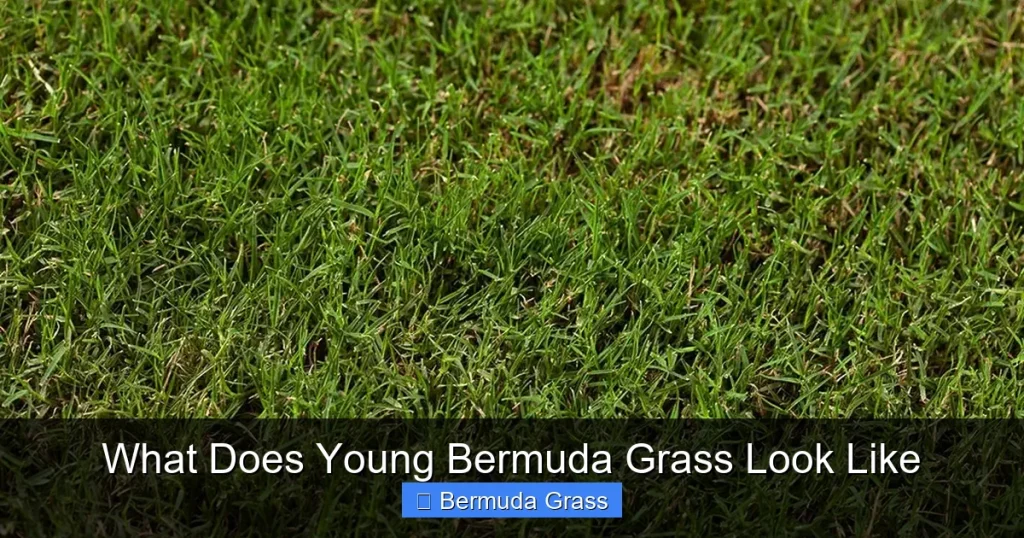
Identifying young Bermuda grass is crucial for successful lawn establishment and maintenance. This guide will walk you through its unique visual characteristics, from its fine blades and distinctive ligule to its early spreading stolons. You’ll learn how to differentiate it from common weeds and other grasses, ensuring you can nurture your lawn correctly from the start and achieve a beautiful, resilient turf.
What Does Young Bermuda Grass Look Like?
Welcome to the world of lawn care! If you’re establishing a new Bermuda grass lawn or trying to identify young turf emerging in your yard, knowing what young Bermuda grass looks like is absolutely essential. It can be tricky, especially when you’re dealing with new growth, and it’s easy to confuse it with common weeds or other grass types. But don’t worry, this guide is designed to make you an expert identifier.
Understanding the appearance of young Bermuda grass will not only help you ensure you’re nurturing the right plant but also allow you to spot and eliminate unwelcome guests like weeds early on. We’ll dive into its unique visual characteristics, from its delicate initial blades to its tell-tale spreading habits, giving you all the tools you need for successful identification and a thriving lawn.
Key Takeaways
- Fine Blade Appearance: Young Bermuda grass typically has fine to medium-textured blades that are pointed at the tip and often appear slightly folded or V-shaped.
- Distinctive Ligule: A key identifier is its ligule, which is a tiny fringe of hairs (membranous with hairy edges) located where the blade meets the sheath, with no auricles present.
- Early Spreading via Stolons: Even when young, Bermuda grass quickly develops above-ground runners (stolons) that spread horizontally, forming a dense mat. This is a crucial distinguishing characteristic.
- Color and Base: It generally exhibits a light to medium green color, and you might notice a slight reddish or purplish tint at the base of the stems or stolons, especially in new growth.
- Distinguish from Weeds: Learn to differentiate young Bermuda grass from common look-alikes like crabgrass (broader blades, different ligule) and fescue (coarser texture, distinct growth habit).
- Growth from Seed vs. Sprig: Seedlings start as very fine, delicate blades, while sprigs or plugs show small, established clumps of grass that begin to root and spread.
- Proper Early Care is Key: Consistent, shallow watering, light initial mowing at a higher setting, and minimal fertilization are vital for healthy establishment and strong growth.
Understanding Bermuda Grass Basics Before You Look
Before we get into the nitty-gritty of identification, let’s quickly cover some fundamental aspects of Bermuda grass. This will help you understand *why* it looks the way it does, especially in its early stages.
A Warm-Season Wonder
Bermuda grass is a warm-season grass, meaning it loves heat and thrives in full sun. It grows most actively when temperatures are consistently between 80-95°F (27-35°C). This is important because if you’re seeing new grass growth during cooler seasons, it might not be Bermuda. It typically goes dormant and turns brown in winter, only to green up again when the warm weather returns.
The Aggressive Spreader
One of Bermuda grass’s most defining characteristics is its aggressive growth habit. It spreads rapidly through both above-ground runners called stolons and underground runners called rhizomes. This makes it excellent for creating a dense, durable turf, but also means it can be considered a weed in flowerbeds if not contained. This spreading habit is key to identifying young Bermuda grass.
Common Uses
You’ll find Bermuda grass in many home lawns, golf courses, and sports fields across warmer climates due to its exceptional drought tolerance and ability to withstand heavy traffic once established. Knowing its typical use helps confirm its presence in a landscape context.
Identifying Young Bermuda Grass from Seedling
When you’re starting a lawn from seed, identifying young Bermuda grass seedlings requires a keen eye. They are quite delicate in their initial stages.
The First Glimmer: Seedling Appearance
Once Bermuda grass seeds germinate, usually within 7-21 days depending on soil temperature and moisture, you’ll see tiny, hair-like sprouts. These are the very first signs of young Bermuda grass.
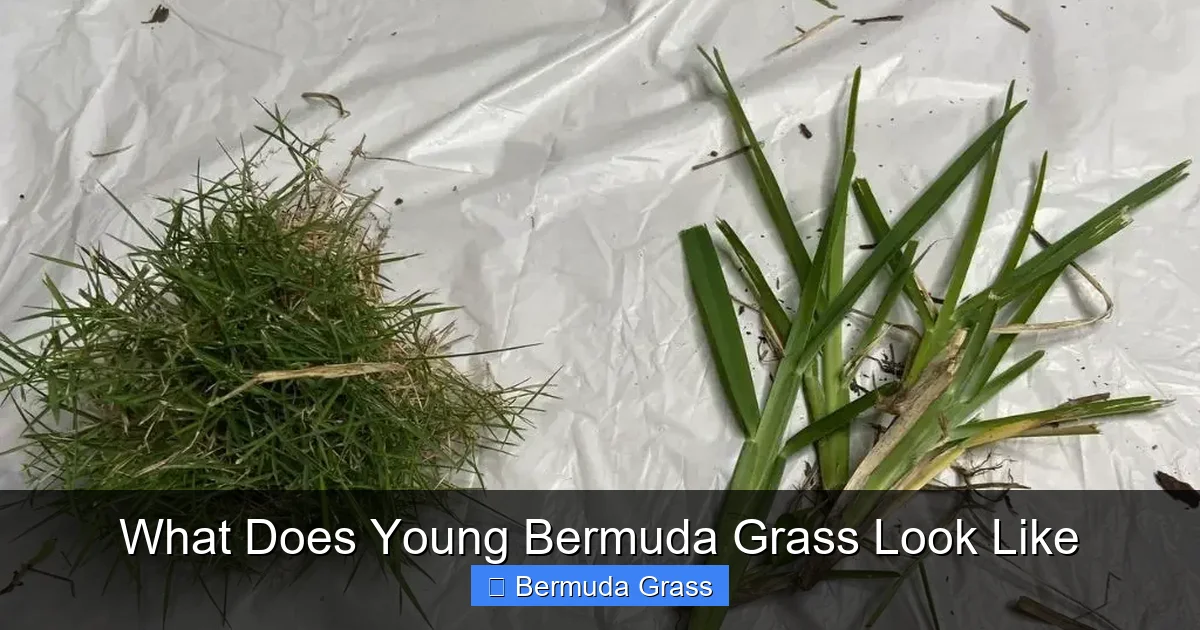
Visual guide about What Does Young Bermuda Grass Look Like
Image source: batonrougesod.com
- Initial Blades: The first blades will be incredibly fine and needle-like, almost like thin threads emerging from the soil. They are very delicate and easily mistaken for tiny weed seedlings if you’re not looking closely.
- Color: At this stage, the color will be a very light, vibrant green. As they grow slightly, they’ll deepen to a more medium green.
- Texture: The texture is soft and fine to the touch.
Early Growth Rate
Initially, the growth of young Bermuda grass from seed can seem slow. The plant is focusing its energy on developing a strong root system. However, once the roots are established and temperatures are consistently warm, you’ll notice a rapid acceleration in growth. This is when the characteristic spreading begins.
Identifying Young Bermuda Grass from Sprigs or Plugs
If you’ve opted for sprigs (individual stolons or rhizomes with nodes) or plugs (small pieces of established sod), the initial appearance of your young Bermuda grass will be different from seedlings.
Sprigs: Pieces of Life
When you plant sprigs, you’re essentially planting small segments of existing Bermuda grass. Each sprig will have a node (a joint on the stem) from which new roots and shoots will emerge.
- Initial Look: You’ll see small pieces of stem, often with a few tiny, already-formed blades attached. The goal is for these nodes to root into the soil and send up new shoots.
- Spreading: Once established, these sprigs will rapidly send out new stolons, quickly covering the bare ground. This is the primary way they establish.
Plugs: Miniature Lawns
Plugs are small, pre-grown sections of Bermuda grass sod. They offer a quicker establishment than seeds or sprigs.
- Initial Look: You’ll see small, established clumps of Bermuda grass, already showing the characteristic fine blades and medium green color. They look like miniature versions of a mature lawn.
- Filling In: The young Bermuda grass within the plugs will immediately begin to spread via stolons and rhizomes, connecting with adjacent plugs to form a contiguous lawn.
Key Visual Characteristics of Young Bermuda Grass
Now, let’s zoom in on the specific visual cues that will help you confidently identify young Bermuda grass, regardless of whether it started as a seed, sprig, or plug.
Blade Appearance
The blades of young Bermuda grass are one of the most reliable identifiers.
- Texture: Generally fine to medium in texture. Run your fingers over it; it should feel relatively soft, not coarse or stiff.
- Shape: The blades are typically narrow and pointed at the tip. When you look closely, they often appear slightly folded or V-shaped in cross-section, rather than flat.
- Color: A healthy young Bermuda grass will be a light to medium green. Sometimes, especially with new shoots or under certain conditions, you might notice a slight reddish or purplish tint at the base of the blade or stem.
- Size: While overall plant size is small, individual blades can range from 1 to 3 inches long.
Ligule and Auricle (The “Collar” Region)
This is where Bermuda grass really stands out from many other grasses and weeds. The “collar” region is where the grass blade meets the stem (sheath). Using a small magnifying glass can be very helpful here.
- Ligule: Young Bermuda grass has a distinct ligule. It’s a small, fringed membrane, often described as a tiny fringe of hairs. It’s not a solid, papery membrane, nor is it entirely absent. Look for these tiny, hair-like projections.
- Auricle: Bermuda grass does NOT have auricles. Auricles are claw-like appendages that extend from the collar and clasp the stem. Their absence is a key identification feature.
Growth Habit (Early Spreading)
This is perhaps the most defining feature of Bermuda grass, even when it’s young.
- Stolon Development: Even relatively young Bermuda grass, especially when grown from sprigs or plugs, will quickly start to develop stolons. These are above-ground runners that creep horizontally across the soil surface. They will have nodes (joints) from which new roots and shoots emerge. Seeing these visible runners is a strong indicator of young Bermuda grass.
- Rhizome Development: While not as immediately visible as stolons, young Bermuda grass also begins to form rhizomes, which are underground runners. These help anchor the plant and contribute to its dense, mat-forming habit. You might see evidence of them if you gently lift a small patch of young grass.
- Mat-Forming Tendency: As the stolons and rhizomes develop, young Bermuda grass will start to form a dense, interwoven mat, effectively covering the ground. This spreading growth is distinct from clumping grasses.
Root System Development
While you won’t typically dig up your young grass, understanding its root system helps confirm its identity and health.
- Fibrous and Extensive: Young Bermuda grass develops a strong, fibrous root system that can quickly become quite extensive. Healthy roots will appear white and numerous.
Distinguishing Young Bermuda Grass from Common Weeds or Other Grasses
This is where proper identification becomes crucial. Many weeds can look similar to young Bermuda grass, especially in their early stages.
Crabgrass
Crabgrass is a common weed that is often confused with young Bermuda grass, as both spread and thrive in warm conditions.
- Blade Appearance: Crabgrass typically has broader blades than Bermuda grass, and they are often flatter and less V-shaped. The blades can also have a distinct purplish tint at their base.
- Ligule/Auricle: Crabgrass has a prominent, translucent, membranous ligule (no hairs) and no auricles. This is a key differentiator from Bermuda grass’s fringed ligule.
- Growth Habit: While crabgrass also spreads, it often grows in more distinct clumps initially before sending out its stolons. Young Bermuda grass forms a more uniform, spreading network.
Tall Fescue (if in a cool-season climate mix)
If you live in a transition zone or a cooler climate where tall fescue might be present, it’s easy to tell the difference.
- Blade Appearance: Tall fescue has significantly broader, coarser blades than young Bermuda grass. The blades are also often ribbed or veined and have a boat-shaped tip.
- Growth Habit: Tall fescue is a bunch-type grass, meaning it grows in clumps and does not spread by stolons or rhizomes.
Zoysia Grass
Zoysia is another warm-season grass, but it has distinct differences.
- Blade Appearance: Young Zoysia blades are generally stiffer and more upright than Bermuda grass, with a characteristic boat-shaped tip. They also feel coarser.
- Growth Habit: While Zoysia also spreads via stolons and rhizomes, its spreading is much slower and less aggressive than Bermuda grass, especially when young.
Annual Ryegrass
Often used for overseeding or temporary lawns.
- Blade Appearance: Annual ryegrass blades are typically broader and have a glossy appearance on the underside.
- Ligule/Auricle: It has a prominent, membranous ligule and distinct, clasping auricles, unlike Bermuda grass.
Tip: Always carry a small hand lens when inspecting young grass. The details of the ligule and auricles are often too small to see with the naked eye.
Caring for Young Bermuda Grass to Promote Healthy Growth
Once you’ve confidently identified your young Bermuda grass, proper care is paramount for its successful establishment.
Watering for Success
Consistent moisture is vital for young Bermuda grass, especially during germination and early root development.
- Frequent and Shallow: Water frequently (1-2 times daily) for short durations (5-10 minutes) during the first few weeks. The goal is to keep the top inch or two of soil consistently moist, but not soggy.
- Deepen Over Time: As the grass matures (after 3-4 weeks), gradually reduce watering frequency and increase duration, encouraging roots to grow deeper. Aim for 1 inch of water per week, applied in fewer, longer sessions.
Mowing for Density
Proper mowing encourages spreading and density in young Bermuda grass.
- First Mow: Wait until the young Bermuda grass is about 2-3 inches tall before its first mow. Use a sharp blade to prevent tearing the delicate grass.
- Higher Cut Initially: Set your mower to a higher setting (around 2 inches) for the first few mows. This helps the young plants photosynthesize efficiently and build strength.
- Gradual Lowering: Once the lawn is more established and spreading well, you can gradually lower the mowing height to its desired level (typically 0.5 to 1.5 inches for Bermuda grass). Never remove more than one-third of the blade height at once.
Light Fertilization
Young Bermuda grass benefits from a gentle nutrient boost.
- Starter Fertilizer: Use a high-phosphorus “starter fertilizer” specifically designed for new lawns. Apply it according to package directions, typically a few weeks after germination or planting.
- Avoid Over-Fertilizing: Too much nitrogen too early can burn delicate young grass or promote excessive top growth at the expense of root development.
Weed Control in Young Lawns
Weeds are the biggest threat to young Bermuda grass.
- Manual Removal: For very young lawns, manual removal of weeds is often the safest and most effective method. Carefully pull weeds by hand, especially before they go to seed.
- Pre-Emergents: Do NOT use pre-emergent herbicides until your Bermuda grass is fully established (usually after the first growing season) as they can prevent your desired grass from spreading.
- Post-Emergent Herbicides: If weeds become a significant problem, look for post-emergent herbicides specifically labeled as safe for young Bermuda grass. Always read product labels carefully.
Troubleshooting Common Issues with Young Bermuda Grass
Even with the best care, you might encounter some challenges.
Slow Growth or Thinning Patches
If your young Bermuda grass isn’t spreading as expected or looks thin, several factors could be at play.
- Check Soil Temperature: Bermuda grass needs warm soil to thrive. If temperatures are consistently below 70°F (21°C), growth will be slow.
- Watering Issues: Either too little or too much water can hinder growth. Ensure consistent moisture without waterlogging.
- Nutrient Deficiency: A lack of essential nutrients, particularly phosphorus (for roots) or nitrogen (for green growth), can be a factor. A light starter fertilizer can help.
- Compacted Soil: Young roots struggle in compacted soil. Light aeration (poking holes) can help improve air and water penetration.
Yellowing Grass
Yellowing can indicate a few problems:
- Nutrient Deficiency: Often, a lack of nitrogen can cause a general yellowing. Iron deficiency causes a more interveinal yellowing (veins stay green).
- Overwatering: Saturated soil deprives roots of oxygen, leading to yellowing.
- Underwatering: Severely underwatered grass can also turn yellow or brown.
- Pests/Disease: While less common in very young grass, inspect closely for any signs of insect damage or fungal spots.
Weed Invasion
If weeds are taking over, it’s a sign that your young Bermuda grass isn’t dense enough to outcompete them.
- Vigilant Removal: Continue hand-pulling weeds.
- Promote Bermuda Growth: Ensure optimal watering, light fertilization, and proper mowing to help your Bermuda grass fill in and naturally suppress weeds.
Conclusion
Identifying young Bermuda grass might seem daunting at first, but by focusing on a few key characteristics, you’ll become proficient in no time. Remember its fine, pointed blades, the distinctive fringed ligule, and most importantly, its rapid development of spreading stolons. These traits, combined with proper care, are your best tools for nurturing a healthy, beautiful Bermuda lawn.
Stay vigilant in distinguishing it from weeds, provide consistent watering, mow at appropriate heights, and fertilize lightly. With patience and attention, you’ll watch your young Bermuda grass grow into the dense, resilient turf you envisioned. Happy lawn care!