If you've ever found a pale, squirming critter in your garden or lawn and wondered what do itchy grubs turn into, you're not alone. It's one of those backyard questions that seems simple but actually has two very different answers depending on which creature you're touching. Some of those "grubs" become beetles scuttling around your roses.
Others are actually stinging caterpillars that can send you to urgent care.
Getting this wrong can lead you down two completely different paths. Misidentify a harmless grub as a stinging caterpillar, and you spray chemicals you never needed. Misidentify a stinging caterpillar as a grub, and someone in your household ends up with a nasty skin reaction.
Sorting them out upfront saves that headache. Here's what actually happens with each type, and why the distinction matters more than most people realize.
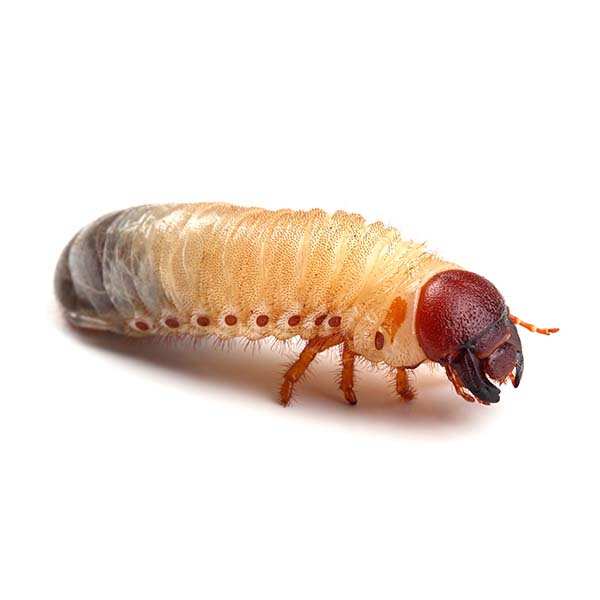
Image source: Bing (Web (fair-use with source credit))
Why Getting "Itchy Grubs" Right Actually Matters
People treat lawn grubs and stinging "grubs" as the same problem because they're small, pale, and found in the soil or low vegetation. But these are two completely different biological classes with different risk profiles. One category rarely harms humans directly.
The other contains species that cause documented medical problems.
The stakes here are personal health and environmental impact. If you wrongly assume every pale larva is a beetle grub, you might grab one with bare hands and touch your face. With certain caterpillars, that's a mistake you only make once.
The skin reactions can range from burning pain to full-blown respiratory distress if setae reach mucous membranes.
There's also a big lawn-care decision at stake. Applying grub-specific preventive insecticides won't touch caterpillars, and treating for caterpillars doesn't solve grub root damage. Both waste money.
Both leave the real problem unaddressed. And both introduce pesticides into soil where they may not belong.
Stinging caterpillar setae can trigger:
- Immediate burning pain, redness, and swelling
- Rash appearing in a distinctive whip-like or linear pattern
- Headache, nausea, or muscle cramps in sensitive individuals
- Rare but documented difficulty breathing if setae contact airway
The Two Totally Different Answers You Might Not Expect
Here's the core reality that surprises most people. Not every pale, curling larva in your yard is a grub. Beetle grubs have a specific body plan you can learn to recognize.
Many "grubs" that make skin itchier on contact are actually caterpillars covered in urticating hairs.
The common name "itchy grub" is a backyard label, not a scientific one. Extension offices get photos of "itchy grubs" that turn out to be saddleback caterpillars, asp caterpillars, or puss moth caterpillars. All three pack a potent sting you'll feel immediately.
White lawn grubs, by contrast, have no stingers, venom, or urticating hairs whatsoever. You can handle them safely.
Your first job is identifying which group you're dealing with. From there, everything changes: the adult insect you'll see later, the treatment approach, the safety precautions. This is a classic case where a quick ID prevents a cascade of wrong reactions.
What White Lawn Grubs Actually Turn Into
True white grubs belong to the family Scarabaeidae. This includes the Japanese beetle (Popillia japonica), European chafer (Amphimallon majale), and various Phyllophaga species commonly called May beetles or June bugs. All of them share a distinctive body shape: creamy-white, C-shaped, with a brown head capsule and six obvious legs near the front.
These are the grubs that open a can of worms for lawn owners. They feed on roots of cool-season turfgrass through fall and spring. Damage shows up as irregular dead patches that peel back like loose carpet.
Meanwhile, they're living their whole lives in soil. No stinging capability. No contact risk.
You could hold one without breaking the adults unless you pulled a surprise.
What they turn into is everything: June beetles, European chafers, Asiatic garden beetles. The adults emerge, usually in early to midsummer depending on species. Japanese beetles peak in late June through July in most of the eastern United States.
European chafers follow about two weeks later. Mating and egg-laying happen amid grass canopies before the next generation dives underground.
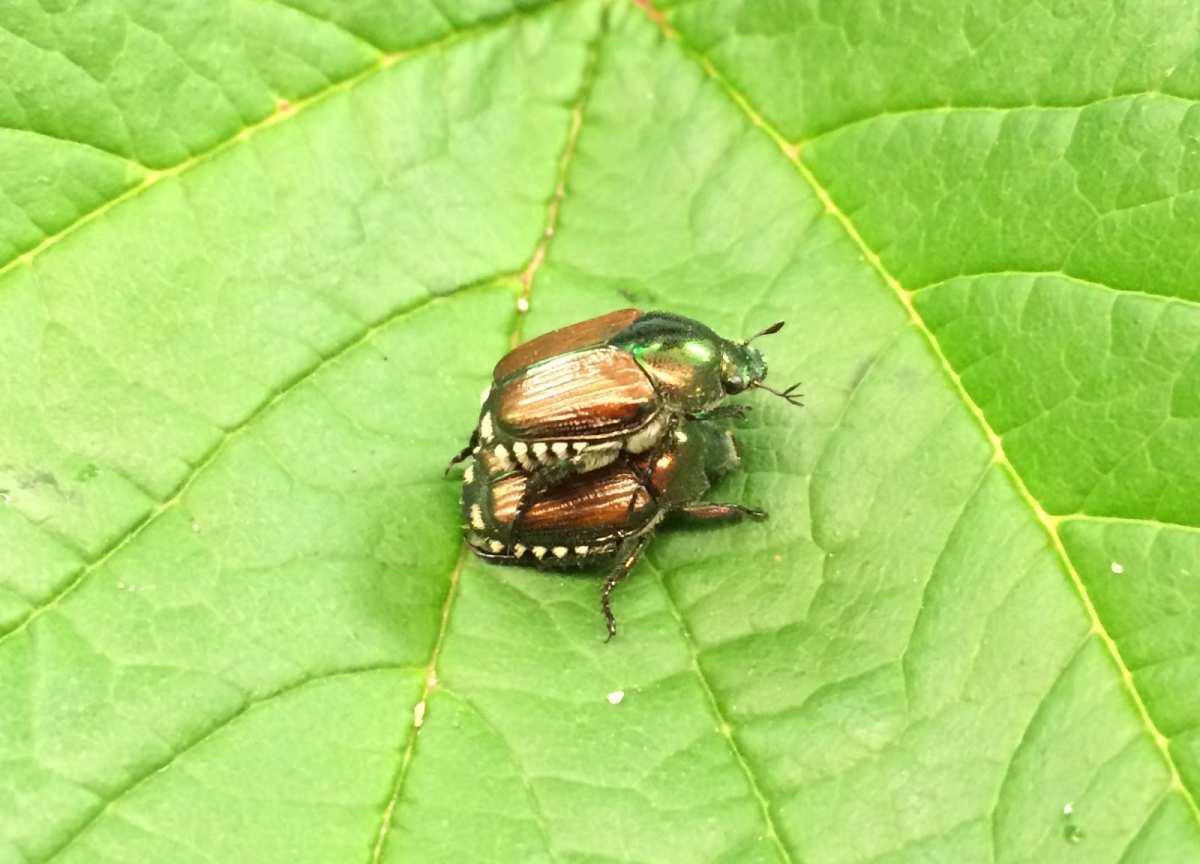
Image source: Bing (Web (fair-use with source credit))
White grubs have a one-year life cycle in most regions. Eggs laid in July hatch in early August. Larvae grow through three instars, feed until soil temperatures drop below about 50°F, then burrow deep to overwinter.
They return to root zones in spring, feed again briefly, then pupate in late May to June. Adults emerge shortly after.
Key traits of white lawn grubs:
- C-shaped posture, legs visible near the front
- Creamy-white body, brown head capsule
- Found in soil within the root zone, often in clusters
- No visible hairs or spines
- Easily scooped up with minimal disturbance
Stinging "Grubs" That Are Actually Caterpillars
This is where confusion turns serious. Several caterpillar species look pale, plump, and use low vegetation for habitat. They get lumped into "grubs" by people who don't know the difference.
The painful caterpillars are the asp (puss moth caterpillar, Megalopyge opercularis), the saddleback caterpillar (Acharia stimulea), and the io moth caterpillar (Automeris io). All have a coat of venomous spines.
These caterpillars look deceptively soft. They're almost furry. That's the warning.
Those hairs are modified spines that break off easily on skin contact. Each spine connects to a venom gland. The saccharine appearance is a lie.
You don't want to pick one up, even with two fingers.
What do they turn into? Not beetles at all. They become moths.
The asp becomes the southern flannel moth, a gentle-looking fuzzy adult that carries no sting. The saddleback becomes a small chocolate-brown slug moth. The io moth caterpillar becomes a striking eyed moth with beautiful hindwing eyespores.
The danger exists only in the larval stage.
Species most commonly mistaken for grubs:
- Puss moth caterpillar (asp): dense, peach-colored hairs
- Saddleback caterpillar: brown with green "saddle" marking and prominent spines at both ends
- Io moth caterpillar: bright green with red and white lateral stripe, clusters of branched spines
- Scarlet-waisted wasp caterpillar: often mistaken, less severe sting but still capable of significant pain
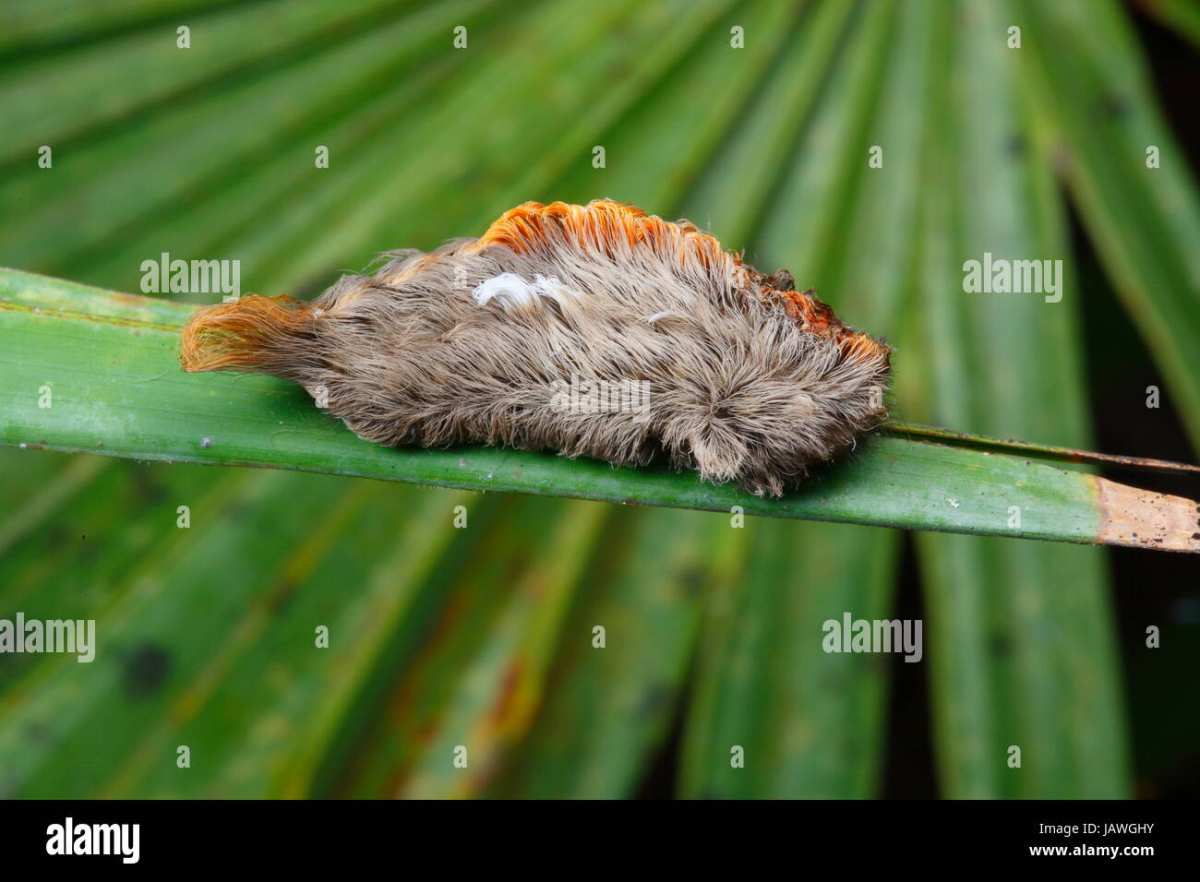
Image source: Bing (Web (fair-use with source credit))
Contact with stinging caterpillars produces immediate burning, unlike poison ivy which takes hours to appear. The rash often tracks in the pattern of contact if a caterpillar crawls on you. Embedded spines may require cellophane tape removal, much like tick removal technique.
Anyone experiencing difficulty breathing or widespread swelling needs medical attention without delay.
How to Tell Beetle Grubs from Stinging Caterpillars (For Sure)
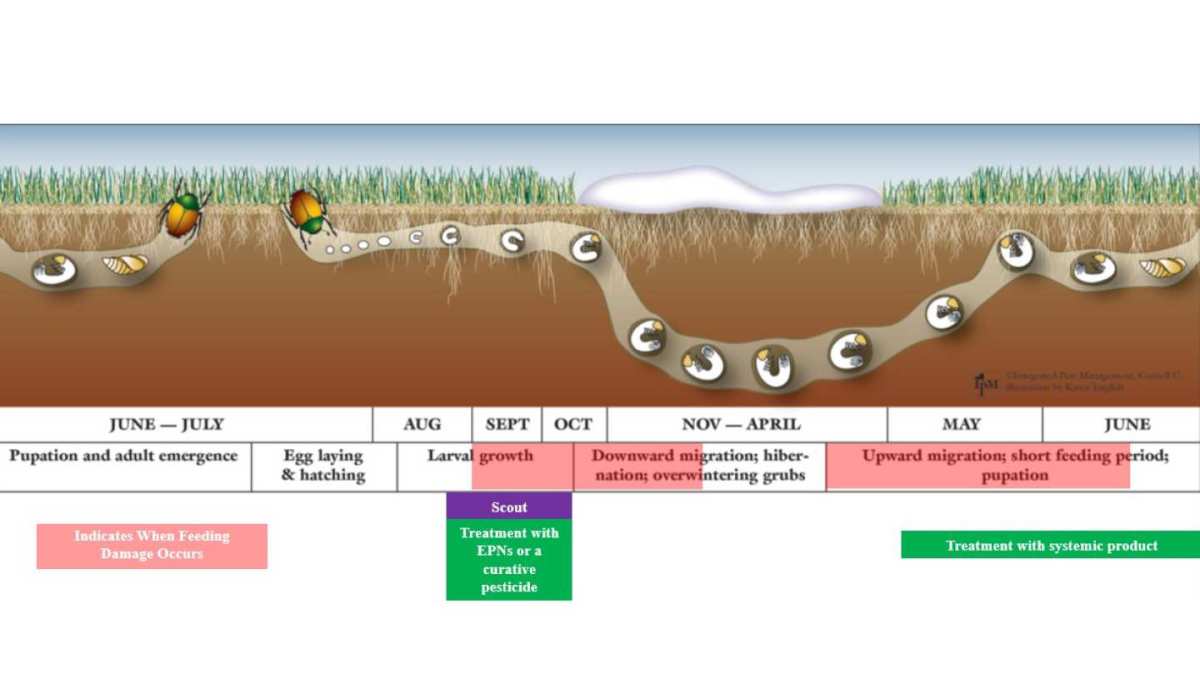
Image source: Bing (Web (fair-use with source credit))
The differences are stark once you know what to look at. Check these features before handling anything questionable.
Body shape and legs:
- White grubs: C-shaped, legs only at the thorax, no fleshy abdominal appendages
- Caterpillars: Elongated or slightly plump, legs at thorax plus prolegs on abdomen
Surface texture:
- White grubs: Smooth, bare skin with visible internal organization
- Stinging caterpillars: Dense, hair-like spines or branched urticating setae
Location:
- White grubs: Definitely in soil, usually near grass roots
- Stinging caterpillars: On leaf undersides, low woody plants, or wandering across sidewalks
Defense mechanism:
- White grubs: None against humans; curl into a defensive C-shape when disturbed
- Stinging caterpillars: Visible spines and hairs that deliver venom on contact
If the specimen has visible spines, fuzzy hair, or any bristles, do not pick it up. That's a caterpillar with a sting. If it's smooth, pale, legs are tiny and clustered forward, and it was living in soil, you've got a scarab grub.
Our recommendation is to snap a photo and compare against images from your state's Cooperative Extension rather than handling unknown larvae by guesswork.
Why This Mistake Can Cost You Money, Time, and Skin
Misidentification creates a predictable cascade of wasted effort. Homeowners see pale larvae and reach for whatever product they used last year. That approach fails twice.
First, if they treat caterpillars with a grub-specific application, nothing works. Second, if they treat grubs with a broad pesticide without verifying need, they kill beneficial organisms in the soil.
The health consequences are the bigger concern. Stinging caterpillar incidents are heavily underreported because people attribute them to "some bug bite." Medical literature documents emergency department visits from asp caterpillar contact each year in the southeastern United States. Reactions can range from localized pain lasting hours to systemic symptoms requiring treatment.
Practically speaking, a family whose child picks up an unidentified "fur" caterpillar asks for immediate and substantial medical help they didn't budget for. When the picture is enough to identify the culprit, the situation becomes manageable. The pain is intense but not usually catastrophic.
Any breathing difficulty though warrants emergency evaluation.
Financial costs of misidentification:
- Unnecessary pesticide application: $150-400 per professional visit for most residential lawns
- Lawn renovation after failing to treat actual grub damage: $0.50-1.50 per square foot
- Medical visit for caterpillar sting: varies widely, but even a basic urgent care visit often exceeds $200 without insurance
- Soil ecosystem damage from misapplied insecticide: hard to quantify, but takes years of healthy soil biology to restore
The Pesticide Problem
When someone dumps insecticide on a "grub problem" that turns out to be caterpillars on plant leaves, the application misses entirely. Caterpillars don't live in the top inch of soil where grubs do. They're feeding on foliage.
The chemical hits soil organisms and runs off with the next rain. Nothing in the plant canopy gets affected.
That same misapplication timing matters enormously. The popular preventive product imidacloprid needs to be applied in May or June, before Japanese beetle eggs hatch. Most people don't even notice grubs until August or September, when damage appears.
By then, preventive products are useless. You'd need a curative option like trichlorfon, which has its own restrictions and shorter application window.
Beneficial nematodes (Heterorhabditis bacteriophora) offer a biological alternative that targets grubs specifically. They require moist soil and proper temperature range, roughly 60-85°F at application. They won't touch caterpillars either.
The point is that every treatment has a specific target and a specific window. Guessing wastes money and delays real solutions.
The Skin Reaction Problem
Stinging caterpillar reactions are immediate and unmistakable. Unlike poison ivy, which takes 12-48 hours to develop, asp caterpillar contact produces burning pain within seconds. The rash often appears in a grid or linear pattern matching where the caterpillar touched skin.
Embedded spines may remain visible as tiny dark dots.
First aid focuses on spine removal. Clear cellophane tape pressed against the affected area and pulled away can extract many spines. Repeat with fresh tape several times.
Wash the area with soap and cool water. Avoid scratching, which drives spines deeper. Over-the-counter hydrocortisone cream and oral antihistamines help mild reactions.
Seek medical attention if you experience difficulty breathing, swelling of the face or throat, dizziness, or nausea. These indicate a systemic reaction that needs professional management. People with known severe insect allergies should treat any caterpillar sting as a potential emergency and carry epinephrine if prescribed.
When to Treat Lawn Grubs and When to Do Nothing
Not every grub in your lawn needs treatment. Healthy turfgrass tolerates a surprising number of grubs without visible damage. The threshold for cool-season grasses like Kentucky bluegrass and tall fescue is roughly 5-10 grubs per square foot.
Warm-season grasses like Bermuda and zoysia can tolerate fewer, sometimes as low as 1-2 per square foot.
The simple test is to cut a one-foot square of sod and peel it back. Count the grubs in the root zone. Do this in three or four spots across the lawn.
If you're below threshold, skip treatment. Your lawn will recover naturally, and you'll preserve the beneficial insects that keep soil healthy.
If you're above threshold, timing determines your options. Preventive products work best applied in late May through June, targeting newly hatched larvae. Curative products target larger, actively feeding grubs in August and September.
Neither works well outside those windows. Biological options like milky spore (Paenibacillus popilliae) take longer to establish but can provide 10 years or more of control for Japanese beetle grubs specifically.
Treatment decision guide:
- Below threshold: No treatment needed, monitor next year
- Above threshold, May-June: Preventive insecticide or biological nematodes
- Above threshold, August-September: Curative insecticide only
- Repeated high counts: Consider milky spore for long-term Japanese beetle management
Safe Ways to Handle Stinging Caterpillars If You Find Them
If you spot a caterpillar with visible spines or dense hair, don't touch it with bare hands. That's the single most important rule. Use a stick, leaf, or piece of paper to move it if necessary.
Wear gloves if you must handle one directly, and even then, treat it as potentially dangerous.
For caterpillars on walkways or play areas, relocation beats killing. Gently coax one onto a piece of cardboard and move it to a wooded area away from foot traffic. If you're dealing with a heavy infestation on a specific tree or shrub, your local Cooperative Extension can advise on targeted treatments that minimize impact on beneficial insects.
Never crush a stinging caterpillar with bare skin. The spines release on impact and can become airborne. This is how people end up with rashes on their arms from caterpillars they "squished" on their legs.
The setae can also transfer to clothing, so wash any garments that contacted a stinging caterpillar separately.
If someone is stung:
- Apply cellophane tape to remove visible spines
- Wash with soap and cool water
- Apply ice pack for pain relief
- Use hydrocortisone cream and oral antihistamine for mild reactions
- Seek emergency care for breathing difficulty, facial swelling, or systemic symptoms
When It's Time to Call Your Local Extension Office
State Cooperative Extension services exist specifically for situations like this. They offer free or low-cost identification from trained entomologists. Most accept photos submitted through their websites or email.
Some offices will examine physical specimens in person.
This is your best resource when you can't confidently identify what you're dealing with. Extension agents know which species are common in your area and which are spreading. They can tell you whether a particular caterpillar is a seasonal nuisance or a genuine health concern.
They'll also know about any local regulations, especially for invasive species like the oak processionary moth in parts of Europe.
The USDA Animal and Plant Health Inspection Service (APHIS) handles regulated pests at the federal level. If you suspect an invasive species not previously documented in your area, your extension agent can escalate the identification. This matters for tracking spread and triggering management responses.
When to contact extension:
- You can't confidently identify the larva from photos
- You're seeing unusual numbers of stinging caterpillars
- You suspect an invasive species
- You need treatment recommendations specific to your region
- You're experiencing repeated lawn damage and previous treatments failed
What to Do Next: A Practical Checklist
Here's a straightforward action plan for anyone dealing with unidentified larvae in their yard or garden.
Step 1: Observe without touching. Note the location, color, size, and any visible spines or hairs. Take a clear photo from above and from the side.
Step 2: Check the body plan. C-shaped with legs only at the front means grub. Elongated with prolegs on the abdomen means caterpillar. Visible spines or dense hair means potential sting risk.
Step 3: Assess the situation. For grubs, do the square-foot count to determine if treatment is warranted. For caterpillars, note whether they're on plants or wandering across surfaces where people or pets contact them.
Step 4: Decide on action. Below-threshold grubs need monitoring, not treatment. Above-threshold grubs get timed intervention based on the calendar. Stinging caterpillars get relocated or professionally managed if they're in high-traffic areas.
Step 5: Document and follow up. Keep notes on what you found and when. This helps track patterns year to year. If you submitted a photo to extension, follow their recommendations rather than guessing.
Quick reference table:
| Feature | White Grub | Stinging Caterpillar |
|---|---|---|
| Body shape | C-shaped | Elongated |
| Legs | 6 near head | 6 near head plus prolegs |
| Surface | Smooth, bare | Spiny or hairy |
| Location | In soil | On plants or surfaces |
| Human risk | None | Painful sting |
| Adult form | Beetle | Moth |
Frequently Asked Questions
Can white grubs hurt you?
No. White lawn grubs have no stingers, venom, or irritating hairs. You can handle them safely with bare hands.
The damage they cause is to grass roots, not people.
What happens if you touch a saddleback caterpillar?
You'll feel immediate burning pain, followed by redness and swelling. The rash often appears in a linear pattern matching contact. Remove any visible spines with tape, wash the area, and treat symptoms with ice and hydrocortisone.
Seek medical help if symptoms spread or breathing becomes difficult.
How do I know if my lawn has a grub problem?
Look for irregular dead patches that peel back easily, indicating severed roots. Skunks and raccoons digging at night also signal grub activity. The definitive test is cutting a one-foot square of sod and counting grubs in the root zone.
When is the best time to treat grubs?
Preventive treatments work best in late May through June. Curative treatments target August and September. Biological options like milky spore can be applied spring through fall but take longer to establish.
Are all fuzzy caterpillars dangerous?
No. Many fuzzy caterpillars, like woolly bears, are harmless. The dangerous ones typically have spines hidden within dense hair rather than soft fuzz alone.
When in doubt, don't touch any caterpillar with visible spines or dense bristles.
Do stinging caterpillars turn into butterflies?
No. Stinging caterpillars become moths, not butterflies. The asp becomes the flannel moth, the saddleback becomes the slug moth, and the io caterpillar becomes the io moth.
The adult moths are generally harmless.