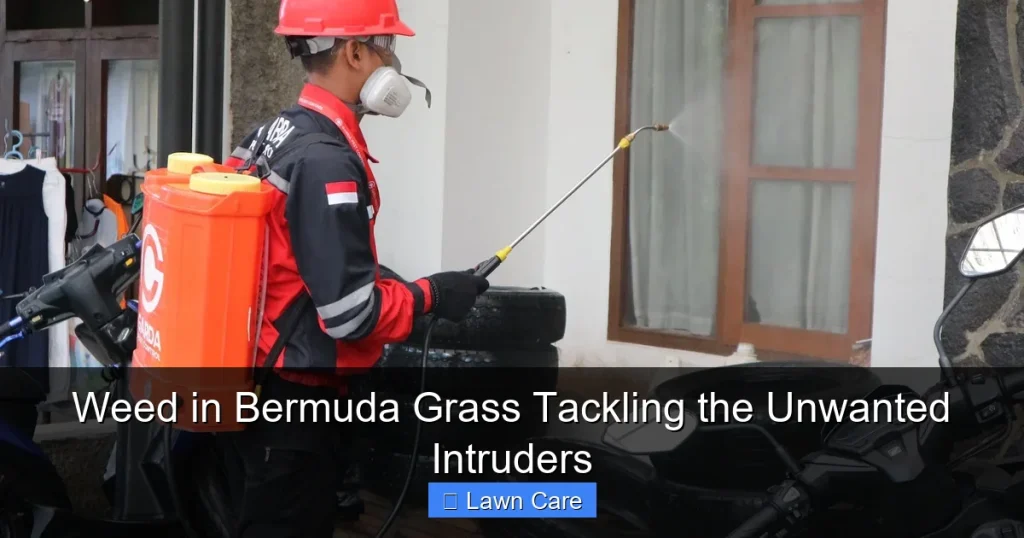
Dealing with weed in Bermuda grass can be frustrating, but a healthy, well-maintained lawn is your best defense. This guide explores common weeds, prevention techniques, and effective treatment options to reclaim your beautiful Bermuda turf.
## Weed in Bermuda Grass: Tackling the Unwanted Intruders
Ah, the Bermuda grass lawn. It’s the epitome of a lush, green carpet, especially in warmer climates. It’s tough, it’s beautiful, and it’s a favorite for many homeowners. But as any seasoned lawn enthusiast knows, even the most robust turf can fall victim to the sneaky invasion of weeds. These unwelcome guests can quickly mar the appearance of your meticulously manicured yard, competing with your precious Bermuda for vital nutrients, water, and sunlight. Tackling weed in Bermuda grass requires a proactive and informed approach. Let’s dive into how you can identify, prevent, and effectively eliminate these intruders to keep your Bermuda looking its absolute best.
### Understanding Your Enemy: Common Weeds in Bermuda Grass
Before you can wage war on weeds, you need to know what you’re up against. Bermuda grass, being a warm-season grass, is susceptible to different types of weeds depending on your region and the time of year. Recognizing these invaders is the first step to successful weed control.
#### Warm-Season vs. Cool-Season Weeds
Bermuda grass thrives in the heat, typically growing most actively from late spring through early fall. This means it often competes with **warm-season annual weeds** that sprout and grow during the same hot months. However, **cool-season weeds** can also be a problem, often appearing in early spring or late fall when temperatures are milder and Bermuda grass may be dormant or growing slowly. Understanding this distinction helps in timing your weed control efforts.
#### Common Culprits
Some of the most frequent offenders you’ll find sneaking into your Bermuda grass include:
* Crabgrass: This is a notorious annual weed that loves hot weather. It has a clumpy growth habit and spreads aggressively, forming thick mats that choke out your desired turf. It’s crucial to prevent crabgrass germination in the spring.
* Goosegrass: Similar in appearance and growth habit to crabgrass, goosegrass is another tough annual weed that thrives in compacted, poorly maintained turf.
* Dandelions: While often thought of as a cool-season weed, dandelions can pop up in Bermuda grass lawns throughout the growing season, especially when the grass is stressed. Their deep taproots make them difficult to remove.
* Clover: This nitrogen-fixing plant can be beneficial in some contexts, but in a lawn, it can spread rapidly and create uneven patches.
* Nutsedge: Not technically a weed, but a sedge, nutsedge has triangular stems and grows in clumps, often taller than the surrounding grass. It’s notoriously difficult to control due to its underground tubers.
* Dollarweed: Characterized by its round, scalloped-edged leaves, dollarweed prefers moist, compacted soil conditions.
Knowing which weeds are plaguing your lawn will inform your choice of herbicides and other control methods.
### Prevention: The Best Defense Against Weed in Bermuda Grass
The most effective way to manage weed in Bermuda grass is to prevent them from taking hold in the first place. A healthy, dense Bermuda lawn is your best natural defense. When your grass is thick and vigorous, it leaves little room for weeds to germinate or establish.
#### Promote a Healthy Lawn
* Proper Mowing: Mow your Bermuda grass at the recommended height. For most varieties, this is between 0.5 to 1.5 inches. Mowing too short stresses the grass, making it more vulnerable to weeds and drought. Consistent mowing encourages denser growth.
* Adequate Watering: Bermuda grass needs deep, infrequent watering. Aim to water deeply once or twice a week, allowing the soil to dry slightly between waterings. This encourages deep root growth, making the grass more resilient. Avoid light, frequent watering, which can promote shallow roots and favor weed germination.
* Balanced Fertilization: Your Bermuda grass needs the right nutrients to thrive. Use a fertilizer specifically formulated for Bermuda grass, and follow a regular fertilization schedule. Too little fertilizer weakens the grass, while too much can burn it or encourage excessive, weak growth. A healthy, well-fed lawn can better compete with weeds. You can learn more about what is the best fertilizer for Bermuda grass to ensure your lawn gets what it needs.
* Aeration: Over time, soil can become compacted, hindering water and nutrient penetration and creating ideal conditions for some weeds. Core aeration, typically done in late spring or early summer when Bermuda grass is actively growing, can significantly improve soil health and grass vigor.
* Dethatching: A thick layer of thatch (dead grass stems and roots) can prevent water and nutrients from reaching the soil and can harbor pests and diseases. Dethatching, or power raking, can be beneficial if your thatch layer exceeds half an inch. This is often best done in late spring or early summer.
#### Pre-Emergent Herbicides
One of the most effective preventative measures against many common annual weeds, especially crabgrass, is the application of pre-emergent herbicides. These chemicals don’t kill existing weeds but prevent weed seeds from germinating and sprouting.
* Timing is Crucial: Pre-emergents must be applied *before* weed seeds germinate. For warm-season annual weeds like crabgrass, this typically means applying in early spring, just before soil temperatures consistently reach 55-60°F. Applying too early can reduce effectiveness, and applying too late means they won’t stop the weeds from sprouting.
* Application: Always follow the product label instructions carefully. Most pre-emergents need to be watered in after application to be activated. Be aware that some pre-emergents can inhibit the germination of grass seed, so avoid using them if you plan to overseed. This is especially important to consider for lawns in regions like Pennsylvania where timing is critical for warm-season grass establishment.
### Tackling Existing Weed in Bermuda Grass: Post-Emergent Solutions
Once weeds have taken root, pre-emergent herbicides are no longer effective. You’ll need to switch to post-emergent solutions. The key here is to choose a product that will kill the weed without harming your Bermuda grass.
#### Understanding Post-Emergent Herbicides
Post-emergent herbicides are designed to kill weeds that have already germinated and are actively growing. There are two main types:
* Selective Herbicides: These are formulated to target specific types of weeds while leaving your desired lawn grass unharmed. When dealing with weed in Bermuda grass, you need a selective herbicide that is safe for Bermuda but toxic to the weeds you’re targeting.
* Non-Selective Herbicides: These herbicides kill virtually all plant life they come into contact with, including your Bermuda grass. They are typically used for spot treatment of stubborn weeds or for clearing an area completely before reseeding. Use these with extreme caution to avoid damaging your lawn.
#### Choosing the Right Post-Emergent
Selecting the best post-emergent weed killer for Bermuda grass depends on the types of weeds present. Some common active ingredients found in herbicides safe for Bermuda include:
* 2,4-D: Effective against many broadleaf weeds like dandelions, clover, and plantain.
* Mecoprop (MCPP): Also targets broadleaf weeds.
* Dicamba: Works on broadleaf weeds and is often combined with other herbicides.
* Quinclorac: Particularly effective against crabgrass and some broadleaf weeds.
* MSMA/DSMA (historically): These were once common but are now restricted or banned in many areas due to environmental concerns. Always check local regulations.
It’s crucial to select a product that lists your specific weed on the label and confirms its safety for Bermuda grass. For specific recommendations, consult resources on what is the best weed killer for Bermuda grass.
#### When to Apply Post-Emergents
The effectiveness of post-emergent herbicides is highly dependent on the weed’s growth stage and the weather conditions.
* Weed Growth Stage: Most post-emergent herbicides work best on young, actively growing weeds. Older, well-established weeds, especially those with deep root systems, can be much harder to kill.
* Temperature: Many herbicides are less effective or can even damage your lawn in extreme heat. Ideal application temperatures are typically between 60°F and 85°F. Avoid applying on days when temperatures are expected to exceed 90°F or during a drought.
* Rainfall: Do not apply herbicides if rain is expected within 24-48 hours, as rain can wash the herbicide off the weeds before it can be absorbed.
* Dormant vs. Active Grass: It’s generally best to apply post-emergent herbicides when your Bermuda grass is actively growing and healthy. However, some treatments can be applied during dormancy. Always check the product label. For instance, if you’re dealing with issues in the spring, you might look into weed killer for Bermuda grass in spring.
#### Spot Treatment vs. Broadcast Application
* Spot Treatment: For isolated weed patches, mixing and applying herbicide to just the affected areas is more economical and reduces the overall chemical usage in your yard. This requires careful application to ensure you cover the weed without overspraying onto the healthy grass.
* Broadcast Application: If your lawn has a widespread weed problem, a broadcast application might be necessary. This involves using a spreader or sprayer to cover the entire lawn. Using a “weed and feed” product can sometimes simplify this process, but it’s essential to ensure it’s suitable for Bermuda grass and timed correctly. Some find what is the best weed and feed for Bermuda grass to be a convenient solution.
### Manual Weed Removal
For smaller lawns or for those who prefer a more organic approach, manual weed removal can be effective.
#### Hand Pulling
* Best Time: Pull weeds when the soil is moist, as they will come out more easily, roots and all.
* Technique: Grasp the weed firmly at its base and pull upwards with a steady motion. Try to get the entire root system. If roots break off, the weed can often regrow.
* Tools: A weeding tool or a trowel can help loosen the soil around the base of stubborn weeds and lever them out.
#### Tools for the Job
There are various weeding tools available, from simple hand cultivators to specialized weeding knives and dandelion pullers. Invest in a few good tools that make the job easier and more effective.
### Dealing with Difficult Weeds
Some weeds are notoriously difficult to eradicate, requiring persistent effort and specialized strategies.
#### Nutsedge Control
Nutsedge is a common challenge for Bermuda grass lawns. It spreads via rhizomes and tubers, making it hard to get rid of completely.
* Herbicides: Certain herbicides, often containing the active ingredient halosulfuron, are specifically labeled for nutsedge control in warm-season grasses. Multiple applications may be needed.
* Cultural Practices: Maintaining a healthy, dense turf can help suppress nutsedge, as can improving soil drainage.
#### Persistent Broadleaf Weeds
For weeds like bindweed or thistles, which have extensive root systems, repeated applications of appropriate broadleaf herbicides may be necessary. Spot treatment is often the most effective way to target these. For advice on specific herbicides, looking into best post emergent weed killer for Bermuda grass can be helpful.
### The Importance of Patience and Persistence
Managing weed in Bermuda grass isn’t a one-time fix. It’s an ongoing process that requires vigilance and consistent effort.
* Regular Monitoring: Walk your lawn frequently to spot new weeds as soon as they appear. Early detection makes control much easier.
* Integrated Approach: The most successful weed management programs combine multiple strategies: healthy cultural practices (mowing, watering, fertilizing), pre-emergent herbicides for prevention, and post-emergent herbicides or manual removal for existing weeds.
* Seasonal Considerations: Remember that weed issues can change with the seasons. What works in the spring might need to be adjusted for summer or fall. Understanding weeds that grow in Bermuda grass throughout the year will help you adapt your strategy.
### Conclusion: A Beautiful Bermuda Lawn Awaits
A weed-free Bermuda grass lawn is achievable with the right knowledge and a consistent approach. By understanding the common invaders, prioritizing prevention through a healthy lawn, and employing targeted treatments when necessary, you can keep those unwanted guests at bay. Remember, a thriving Bermuda grass lawn is your best defense. Invest in its health, monitor it regularly, and don’t be afraid to tackle problems head-on. With a little patience and persistence, you’ll enjoy a beautiful, lush, and weed-free oasis all season long.
- Prevention is key: A dense, healthy Bermuda grass lawn is the most effective barrier against weed invasion.
- Identify your enemy: Knowing the specific type of weed helps in choosing the right control method.
- Timing matters: Applying treatments at the right time of year and when weeds are actively growing yields the best results.
- Integrated approach: Combining cultural practices with targeted treatments offers the most sustainable weed control.
- Healthy soil, healthy grass: Proper fertilization and soil aeration promote vigorous Bermuda growth that can outcompete weeds.
- Read labels carefully: Always follow product instructions for safe and effective weed control.
Quick Answers to Common Questions
What is the best time to apply pre-emergent herbicides to Bermuda grass?
The best time is in early spring, just before weed seeds like crabgrass germinate. This typically occurs when soil temperatures consistently reach 55-60°F.
Can I use a weed and feed product on my Bermuda grass?
Yes, but it’s essential to ensure the product is specifically labeled as safe for Bermuda grass and to apply it at the correct time of year, usually when the grass is actively growing.
How do I get rid of nutsedge in my Bermuda grass?
Nutsedge is tough. You’ll likely need repeated applications of herbicides specifically formulated for nutsedge control in warm-season grasses. Improving soil drainage can also help.
Is it safe to pull weeds by hand in my Bermuda grass lawn?
Yes, hand-pulling is a safe and effective method, especially for smaller lawns or isolated weeds. Ensure you get the entire root system for best results.
How often should I water my Bermuda grass to help prevent weeds?
Water deeply and infrequently, typically once or twice a week, allowing the soil to dry slightly between waterings. This encourages deep root growth and helps Bermuda grass outcompete weeds.
Frequently Asked Questions
What are the most common weeds found in Bermuda grass?
Common weeds include crabgrass, goosegrass, dandelions, clover, nutsedge, and dollarweed. Identifying the specific weed is crucial for effective treatment.
When is the best time to overseed Bermuda grass?
Overseeding is typically done in the late spring or early summer when Bermuda grass is actively growing and soil temperatures are warm enough. This helps the new seed establish quickly and compete with any emerging weeds.
How can I tell if my Bermuda grass is healthy enough to fight off weeds?
A healthy Bermuda grass lawn will be dense, with deep green color and vigorous growth. Signs of weakness include thin patches, yellowing, or slow recovery after mowing, making it more susceptible to weed invasion.
Are there any natural or organic ways to control weeds in Bermuda grass?
Yes, maintaining a healthy lawn through proper mowing, watering, and fertilization is the most effective organic method. Hand-pulling weeds and using corn gluten meal as a pre-emergent are also organic options.
What should I do if I applied the wrong weed killer to my Bermuda grass?
If you applied a weed killer that damaged your Bermuda grass, water the area thoroughly to dilute the chemical. You may need to repair the damaged sections by reseeding or patching with sod once the grass recovers.
How do I know when my Bermuda grass is dormant and if it’s safe to apply herbicides?
Bermuda grass turns brown and goes dormant in cooler weather, typically late fall or winter. Some herbicides can be applied during dormancy, but it’s crucial to check the product label as some may still cause injury to dormant grass.