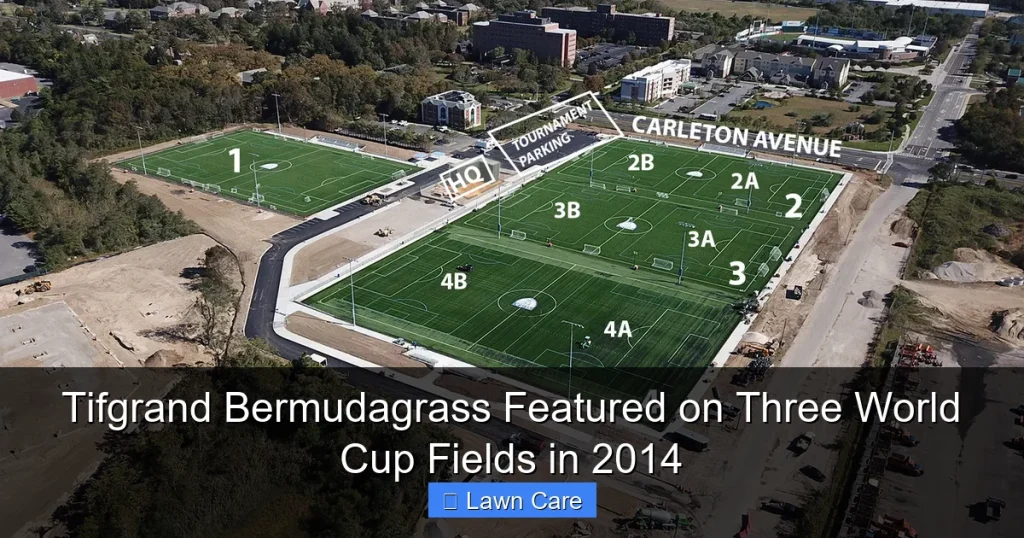
Tifgrand Bermudagrass achieved a significant milestone in 2014, being chosen as the playing surface for three prestigious World Cup soccer stadiums. This selection highlights its exceptional durability, resilience, and ability to maintain a high-quality playing surface under intense conditions. The success of Tifgrand Bermudagrass on these global stages underscores its status as a premier turfgrass for professional sports.
The roar of the crowd, the electrifying energy, the sheer skill on display – the FIFA World Cup is a global spectacle. Millions tune in, not just for the sport, but also for the breathtaking stadiums and immaculate playing surfaces. In 2014, a specific type of grass made headlines, not for scoring goals, but for providing the very foundation upon which dreams were played out. That grass was Tifgrand Bermudagrass, a champion in its own right, gracing no fewer than three of the prestigious World Cup fields.
This wasn’t just any turfgrass; this was a carefully selected, high-performance variety chosen for its ability to withstand the immense pressure of a global tournament. For lawn care enthusiasts and sports turf managers alike, the story of Tifgrand Bermudagrass at the 2014 World Cup is a fascinating insight into what makes a truly elite playing surface. It’s a testament to the advancements in turfgrass science and the dedication required to maintain fields at the highest level.
Let’s dive into why Tifgrand Bermudagrass was such a star player on the world’s biggest soccer stage.
Key Takeaways
- Global Recognition: Tifgrand Bermudagrass was featured on three World Cup fields in 2014, demonstrating its world-class performance.
- Superior Playability: Its dense, wear-tolerant growth provides an ideal, consistent playing surface for high-level soccer matches.
- Durability Under Stress: The grass’s ability to withstand heavy foot traffic and recover quickly was crucial for tournament conditions.
- Aesthetic Appeal: Tifgrand Bermudagrass offers a visually appealing, dark green color that enhances the stadium’s overall look.
- Low Maintenance Potential: While demanding, its robust nature can translate to more predictable maintenance routines for groundskeepers.
- Proven Performance: Its selection for the World Cup validated years of research and development in turfgrass science.
Quick Answers to Common Questions
What is Tifgrand Bermudagrass?
Tifgrand Bermudagrass is a genetically improved variety of Bermudagrass known for its exceptional wear tolerance, density, recuperative potential, and dark green color, making it suitable for high-traffic sports fields.
Why was Tifgrand Bermudagrass chosen for the World Cup fields in 2014?
It was chosen for its ability to withstand the intense wear and tear of professional soccer matches, its rapid recovery from damage, and its consistent, high-quality playing surface, ensuring player safety and optimal game performance.
What are the key benefits of Tifgrand Bermudagrass for sports fields?
Key benefits include superior wear tolerance, fast regrowth, a dense and uniform playing surface, good disease resistance, and excellent aesthetic appeal, all contributing to improved player performance and safety.
How does Tifgrand Bermudagrass compare to other turfgrasses for sports?
Tifgrand Bermudagrass stands out due to its specific genetic improvements for wear and recovery, which are critical for elite sports venues, often outperforming older Bermudagrass varieties in these demanding conditions.
What does it take to maintain a Tifgrand Bermudagrass field at a professional level?
Maintaining such a field requires meticulous attention to detail, including precise mowing, tailored fertilization and irrigation, regular aeration, and proactive disease and pest management, often involving a dedicated team of groundskeepers.
📑 Table of Contents
The Unveiling of a Champion: Tifgrand Bermudagrass’s Rise
Before it graced the World Cup, Tifgrand Bermudagrass was already a well-respected name in the turfgrass industry. Developed through extensive research and breeding programs, Tifgrand is a genetically improved variety of Bermudagrass. Bermudagrass, in general, is renowned for its heat tolerance and ability to thrive in warmer climates, making it a popular choice for lawns, golf courses, and sports fields across many parts of the world.
Tifgrand, however, was engineered to offer superior characteristics. Its development focused on key traits that are essential for high-traffic areas like sports venues: wear tolerance, density, recuperative potential, and a desirable aesthetic. The goal was to create a turf that could handle the punishing demands of professional athletes while maintaining a consistent, aesthetically pleasing surface. The selection for the 2014 World Cup was the ultimate validation of these efforts.
Why Bermudagrass for World Cup Fields?
Bermudagrass is a warm-season grass that thrives in hot weather. This makes it an ideal choice for countries that experience high temperatures, especially during the summer months when major sporting events often take place. Unlike cool-season grasses that can struggle and become stressed in the heat, Bermudagrass can maintain its vigor and color. Its aggressive growth habit allows it to spread and fill in damaged areas quickly, a crucial trait for fields that endure constant play.
This resilience is key. Professional soccer players are constantly running, tackling, and changing direction, which puts immense stress on the turf. A weak or slow-recovering grass would quickly become a patchy, uneven hazard. Bermudagrass’s natural ability to spread via rhizomes (underground stems) and stolons (above-ground stems) means it can repair itself, ensuring a smooth and safe playing surface throughout the tournament.
The Demands of a World Cup Pitch
Visual guide about Tifgrand Bermudagrass Featured on Three World Cup Fields in 2014
Image source: sportsfields.info
Hosting a tournament like the FIFA World Cup places extraordinary demands on the playing surfaces. These fields are not just passive backdrops; they are active participants in the game, influencing ball roll, player traction, and overall performance.
Wear Tolerance: The Ultimate Test
Imagine thousands of hours of intense athletic activity packed into a few weeks. Players sprint, slide, and change direction rapidly, leading to significant wear and tear on the grass. Tifgrand Bermudagrass was selected because it possesses exceptional wear tolerance. This means its blades are strong and resilient, and its root system is robust, allowing it to withstand heavy traffic without thinning out or dying. The dense growth of Tifgrand creates a resilient mat that can handle the constant pounding.
Recuperative Potential: Bouncing Back Strong
Even the toughest grass can be damaged. What separates elite turfgrasses is their ability to recover quickly. Tifgrand Bermudagrass has a remarkable recuperative potential. When divots are made or areas are worn down, the grass can quickly regrow and fill these imperfections. This is vital for maintaining a consistent playing surface. Groundskeepers don’t have time to replant large sections between matches; they need a grass that can heal itself under pressure.
Aesthetic Quality: The Visual Appeal
While function is paramount, the visual aspect of a World Cup field is also important. The green, lush appearance contributes to the spectacle of the event. Tifgrand Bermudagrass is known for its beautiful, dark green color. This rich hue makes the field visually striking and provides a stark contrast that enhances the visibility of the ball and the players’ movements. A uniformly colored, healthy-looking field contributes to the professional and high-stakes atmosphere of the tournament.
Disease and Pest Resistance
High-traffic sports fields can be susceptible to diseases and pests, especially when under stress. Tifgrand Bermudagrass exhibits good resistance to many common turfgrass diseases, which is a significant advantage. This natural resistance reduces the need for chemical interventions and contributes to a healthier, more sustainable playing surface. Preventing outbreaks of conditions like fungus in Bermuda grass is crucial for maintaining game integrity.
Tifgrand’s Role in Player Performance and Safety
The quality of the playing surface has a direct impact on how players perform and their risk of injury. The choice of Tifgrand Bermudagrass was not arbitrary; it was a strategic decision aimed at optimizing both.
Consistent Ball Roll
A smooth, even surface is essential for predictable ball roll, which is fundamental to soccer. Tifgrand’s dense, upright growth habit helps create a firm but yielding surface that allows the ball to travel true. This consistency allows players to execute passes and shots with confidence, knowing the turf will respond predictably.
Traction and Footing
Adequate traction is critical for players to accelerate, decelerate, and change direction without slipping. The strong, interlocking growth of Tifgrand provides excellent footing, reducing the likelihood of slips and falls. This is not only important for performance but also for player safety, helping to minimize ankle and knee injuries.
Impact Absorption
While players need firm footing, the ground must also provide some cushioning to absorb the impact of running and jumping. Tifgrand Bermudagrass, when properly maintained, creates a resilient surface that offers a degree of shock absorption, protecting athletes from the harsh impact of repeated stresses on their bodies.
Groundskeeping at the World Cup: A Monumental Task
Maintaining a World Cup-caliber field is a labor of love and scientific precision. For the groundskeeping teams responsible for the stadiums where Tifgrand Bermudagrass was used, it was a monumental task.
Mowing and Maintenance Regimes
The mowing patterns on a professional sports field are incredibly important. They not only contribute to the aesthetic but also influence turf health and playability. Groundskeepers meticulously manage mowing heights and patterns, often using specialized equipment. While specific mowing patterns can impact water retention on a lawn, for elite fields, the focus is on uniformity and density. The goal is to keep the grass at an optimal height for play, ensuring it is dense enough to support players and allow for a true ball roll. Some groundskeepers even employ unique mowing techniques, like creating checkerboard patterns, for visual appeal and to track mowing progress.
The groundskeepers at the World Cup stadiums would have been employing a sophisticated maintenance program. This would have included precise watering schedules, fertilization tailored to the grass’s needs and the demands of the tournament, and aeration to manage soil compaction. The goal is to constantly ensure the Tifgrand Bermudagrass is in peak condition.
Dealing with the Weather
South America, host of the 2014 World Cup, can experience diverse weather conditions. While Bermudagrass thrives in heat, extreme rainfall or prolonged drought can still pose challenges. Groundskeepers must be adept at managing irrigation and drainage to protect the grass from waterlogging or desiccation. The resilience of Tifgrand helps, but expert management is still essential.
Preparing for Back-to-Back Matches
With multiple games being played at the same venue over a short period, the groundskeeping team has very little recovery time between matches. They must be able to make quick repairs, manage wear, and ensure the field is ready for the next intense game. The rapid recovery of Tifgrand Bermudagrass is a massive advantage in these high-pressure situations.
Tifgrand Bermudagrass: A Legacy of Excellence
The presence of Tifgrand Bermudagrass on three World Cup fields in 2014 cemented its reputation as a top-tier turfgrass. It showcased its ability to perform under the most scrutinizing conditions imaginable.
Beyond the World Cup: Applications for Homeowners and Professionals
While the World Cup is the pinnacle, the qualities that made Tifgrand suitable for such a demanding environment are also beneficial for other applications. For homeowners in suitable climates, selecting a high-quality Bermudagrass variety can mean a more resilient, attractive lawn that requires less intensive care for basic health, although achieving a professional sports-turf look always demands more effort.
For golf courses and other sports facilities, Tifgrand offers a reliable and high-performing option. Its ability to withstand wear and tear makes it ideal for golf fairways and greens, as well as other athletic fields where durability is a priority. For those living in warmer regions, understanding the benefits of Bermudagrass varieties like Tifgrand can lead to better lawn management decisions. For example, understanding when to plant Bermuda grass seed in regions like Mississippi or Texas can significantly impact lawn success.
The Future of Elite Turfgrass
The success of Tifgrand Bermudagrass at the World Cup is a testament to the ongoing innovation in turfgrass breeding. As sports science and athletic performance continue to advance, the demand for increasingly sophisticated playing surfaces will only grow. Tifgrand represents a significant step in this evolution, offering a blend of performance, durability, and aesthetic appeal that sets a high standard.
The story of Tifgrand Bermudagrass at the 2014 World Cup is more than just about grass; it’s about the science, the dedication, and the pursuit of excellence. It’s about providing the perfect stage for athletic achievement, ensuring that the focus remains on the game, not on the turf. Tifgrand proved it had the stamina, the resilience, and the visual appeal to stand tall on the world’s greatest sporting stage.
Frequently Asked Questions
Is Tifgrand Bermudagrass suitable for home lawns?
Yes, Tifgrand Bermudagrass can be a great choice for home lawns in warm-climate regions. Its resilience and attractive appearance make for a beautiful and durable yard, though achieving World Cup-level perfection requires professional-level care.
What climate is best for Tifgrand Bermudagrass?
Tifgrand Bermudagrass is a warm-season grass, meaning it thrives in hot weather and full sun. It is best suited for regions with hot summers and mild winters.
How does Tifgrand Bermudagrass handle shade?
Like most Bermudagrass varieties, Tifgrand performs best in full sun. While it can tolerate some light shade, its density and overall health will be compromised in significantly shaded areas.
What is the mowing height for Tifgrand Bermudagrass on sports fields?
On sports fields, Tifgrand Bermudagrass is typically mowed at very low heights, often between 0.5 and 1.5 inches, to promote density and provide a firm playing surface. The exact height depends on the specific sport and maintenance goals.
Are there any potential downsides to Tifgrand Bermudagrass?
Potential downsides include its need for full sun and warm temperatures, its tendency to go dormant and turn brown in cold weather, and the intensive maintenance required to maintain its peak performance on professional sports fields.
How does Tifgrand Bermudagrass recover from damage?
Tifgrand Bermudagrass has excellent recuperative potential. Its aggressive spreading habit via rhizomes and stolons allows it to quickly fill in divots and recover from wear, making it ideal for high-traffic areas.