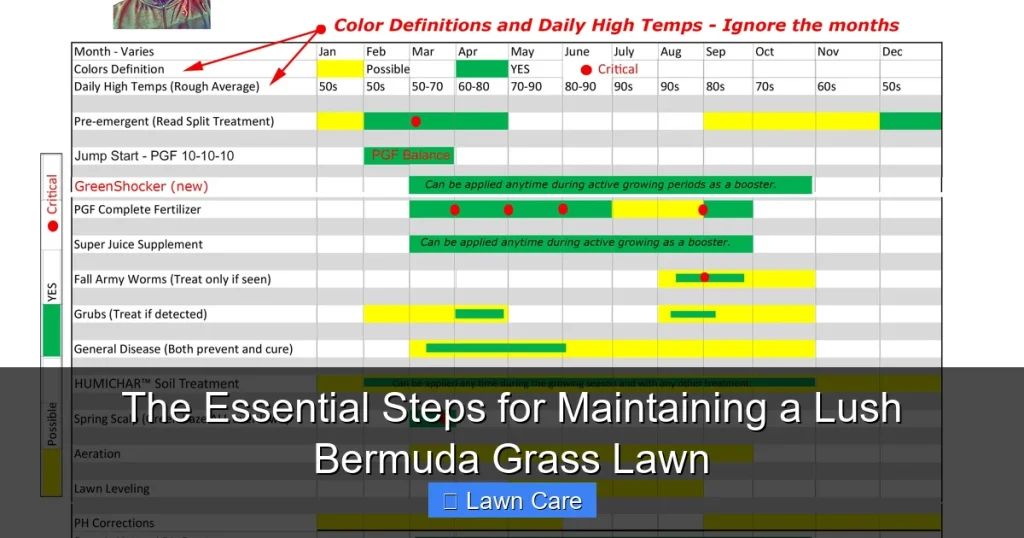
Achieving a lush Bermuda grass lawn is totally doable with the right care! This guide breaks down the essential steps, focusing on proper watering, strategic mowing, timely fertilization, and effective pest management. By following these tips, you’ll be well on your way to a vibrant, healthy, and beautifully green Bermuda grass yard.
So, you’ve got a Bermuda grass lawn and you’re dreaming of that perfectly green, dense carpet of turf that makes your neighbors green with envy? You’re in the right place! Bermuda grass is a fantastic choice for many homeowners, especially in warmer climates, because it’s incredibly resilient, drought-tolerant, and can recover quickly from stress. But like any star athlete, it needs the right training and care to perform at its best.
Achieving that “lush” look isn’t just about luck; it’s about consistent, informed care. Many people think that just watering and mowing occasionally is enough, but to truly unlock the potential of your Bermuda grass, you need to understand its specific needs. Think of it like this: if your lawn were a person, we’d be talking about a balanced diet, regular exercise, and a good defense system. We’re going to break down the essential steps to get your Bermuda grass looking its absolute best.
Let’s dive into what it takes to maintain a truly lush Bermuda grass lawn, from the ground up.
Key Takeaways
- Proper Watering: Bermuda grass thrives on deep, infrequent watering, especially during hot, dry periods, to encourage strong root growth.
- Strategic Mowing: Regular mowing at the correct height (typically 1-2 inches) is crucial for density and health, promoting lateral growth.
- Essential Fertilization: Feed your Bermuda grass with nitrogen-rich fertilizers during its active growing season (spring to fall) for optimal color and vigor.
- Weed and Pest Control: Proactive identification and management of weeds and pests are vital to prevent them from choking out your Bermuda grass.
- Aeration and Dethatching: Periodically aerating and dethatching your lawn improves soil health, water penetration, and nutrient uptake.
- Soil Health Matters: Understanding and improving your soil’s pH and nutrient content provides the foundation for a truly healthy lawn.
Quick Answers to Common Questions
What is the most crucial factor for Bermuda grass health?
Proper watering is the most crucial factor. Deep, infrequent watering encourages strong root systems, making the grass more resilient.
How short should I mow my Bermuda grass?
For optimal health and density, mow Bermuda grass to a height of 1 to 2 inches.
When is the best time to fertilize Bermuda grass?
The best time to fertilize Bermuda grass is during its active growing season, from late spring through early fall, with applications every 4-6 weeks.
Can I water my Bermuda grass at night?
It’s best to avoid watering Bermuda grass at night, as it can leave the grass wet overnight and encourage fungal diseases. Early morning is ideal.
What should I do if my Bermuda grass looks dull and footprints remain visible?
This is a sign your lawn is thirsty. It’s time for deep, infrequent watering to encourage root growth and rehydrate the grass.
📑 Table of Contents
1. Master the Art of Watering
Water is life, and for Bermuda grass, it’s a critical component of its lush appearance. This warm-season grass is known for its drought tolerance once established, but it still needs consistent moisture, especially during its active growing periods and when temperatures soar. The key here isn’t how often you water, but *how* you water.
Deep and Infrequent Watering
This is the golden rule for Bermuda grass. Instead of light, frequent sprinklings that only moisten the top layer of soil, you want to water deeply. This encourages the roots to grow down into the soil in search of moisture. Deeper roots mean a more resilient and drought-tolerant lawn.
* How deep? Aim to moisten the soil to a depth of 4-6 inches. You can check this by pushing a screwdriver or a long probe into the soil after watering. If it goes in easily to that depth, you’ve likely watered sufficiently.
* How often? This depends heavily on your climate, soil type, and the time of year. During the peak of summer heat and drought, you might need to water once or twice a week. In cooler, more humid conditions, you might water only every 10-14 days, or even less.
Timing is Everything
The best time to water your Bermuda grass is in the early morning, between 4 AM and 10 AM. This allows the water to soak in before the heat of the day causes excessive evaporation. Watering in the evening can leave the grass blades wet overnight, which can encourage fungal diseases.
Signs of Thirst
Learn to read your lawn. Your Bermuda grass will give you clues when it’s thirsty:
* Color Change: The grass will start to take on a dull, bluish-grayish hue instead of its vibrant green.
* Footprints Remain: When you walk across the lawn, the blades won’t spring back up quickly, leaving footprints visible for longer than usual.
* Rolled Leaf Blades: Individual blades may start to curl or fold in half lengthwise.
Understanding the best watering techniques is fundamental to maintaining any healthy lawn, and Bermuda grass is no exception.
2. Strategic Mowing for Density and Health
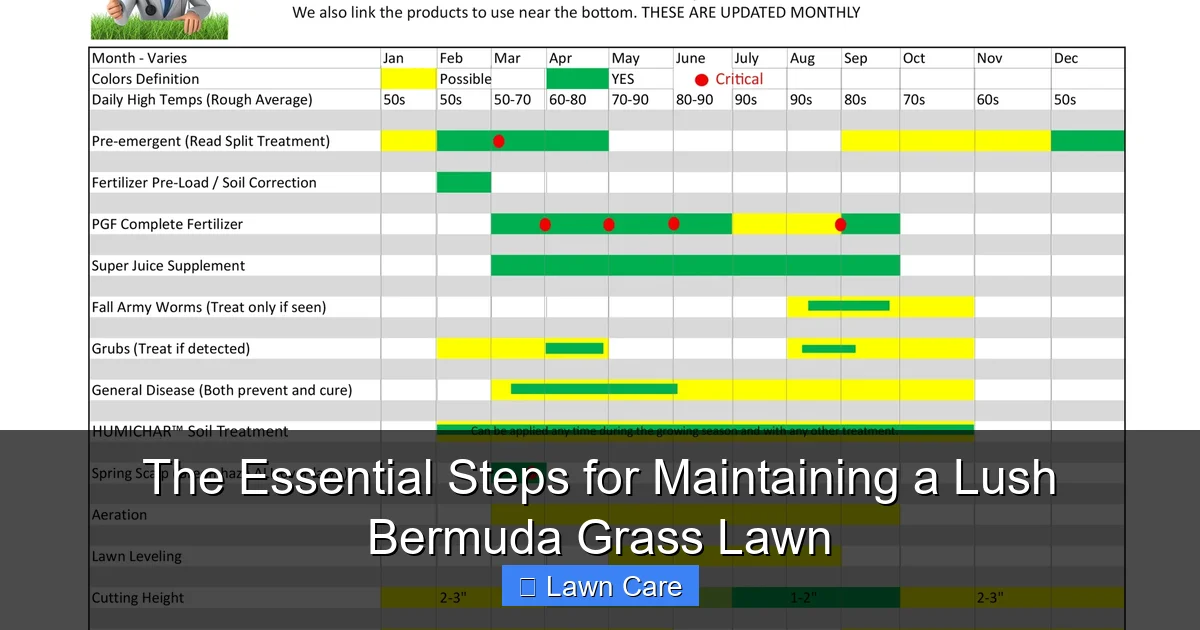
Visual guide about The Essential Steps for Maintaining a Lush Bermuda Grass Lawn
Image source: bermudalawnguide.com
Mowing is more than just keeping your grass short; it’s a critical cultural practice that significantly impacts the density, health, and overall appearance of your Bermuda grass lawn. Bermuda grass is a fine-bladed, low-growing grass that responds very well to frequent mowing.
The Right Height is Key
Bermuda grass prefers to be mowed quite short. The ideal mowing height for most Bermuda grass varieties is between 1 and 2 inches. Mowing at this height encourages the grass to produce more tillers (side shoots), which leads to a thicker, denser turf.
* Why so short? Shorter mowing heights promote lateral growth and prevent the grass from becoming leggy and sparse.
* What if it gets too tall? If you let your Bermuda grass grow too long, it can become thin and prone to scalping, which is damaging. If it gets significantly overgrown, it’s best to gradually lower the mowing height over a few mowing sessions rather than cutting off too much at once to avoid shocking the grass. For more on this, check out our guide on what is the best mowing height for Bermuda grass.
The One-Third Rule
Always follow the “one-third rule” when mowing. Never remove more than one-third of the grass blade’s height in a single mowing. This rule helps to prevent stressing the grass and allows it to recover quickly.
Mowing Frequency
Because Bermuda grass grows so vigorously, especially in warm weather, you’ll likely need to mow frequently – sometimes every 3-5 days during its peak growing season.
Sharp Blades are Non-Negotiable
This is crucial! Dull mower blades tear the grass blades instead of cutting them cleanly. This ragged tearing not only looks bad but also weakens the grass, making it more susceptible to disease and stress. Sharpen your mower blades regularly, at least once or twice during the growing season. If you’re unsure how to start your mower or ensure it’s ready for action, consulting resources like how to start a lawn mower for the first time can be helpful.
Mowing Patterns
Vary your mowing pattern each time. Mowing in the same direction repeatedly can cause the grass blades to bend and lay over, creating ruts and uneven growth. Alternating patterns (e.g., north-south one week, east-west the next) helps keep the grass upright and promotes even growth.
3. The Power of Proper Fertilization
Fertilizing is like giving your Bermuda grass the nutrients it needs to thrive. Because it’s a heavy feeder, especially during its active growing season, a consistent and appropriate fertilization schedule is key to achieving that lush, vibrant green color.
When to Fertilize
Bermuda grass is a warm-season grass, meaning it’s most active and grows vigorously when temperatures are consistently warm. The primary fertilization window is from late spring through early fall.
* Spring: Start fertilizing after the grass has fully greened up and is actively growing (typically when soil temperatures reach around 65-70°F or 18-21°C).
* Summer: Continue fertilizing every 4-6 weeks throughout the summer.
* Fall: Apply a final dose of fertilizer in early fall to help the grass store energy for winter dormancy. Avoid fertilizing too late in the fall, as this can encourage tender new growth that is susceptible to frost damage.
What Type of Fertilizer?
Bermuda grass needs a good balance of nutrients, but it particularly benefits from nitrogen for lush, green growth. Look for fertilizers with a higher percentage of nitrogen (the first number in the N-P-K ratio). For Bermuda grass, a fertilizer with an analysis like 21-0-0, 10-10-10, or a specific Bermuda grass blend is often recommended. You can find more specific advice on what is the best fertilizer for Bermuda grass.
* Slow-Release vs. Quick-Release: Slow-release fertilizers provide a steady supply of nutrients over time, reducing the risk of burning the lawn and requiring fewer applications. Quick-release fertilizers offer a fast green-up but can require more frequent application and carry a higher risk of burning. A good strategy is often a blend of both or primarily slow-release options.
* Soil Test: For the most accurate fertilization plan, consider getting a soil test. This will tell you your soil’s pH and nutrient deficiencies, allowing you to choose a fertilizer that specifically addresses your lawn’s needs.
Application Tips
Always follow the instructions on the fertilizer packaging carefully. Apply fertilizer evenly to avoid streaks or burnt patches. Using a broadcast spreader is generally recommended for even distribution. Water your lawn lightly after fertilizing to help the granules dissolve and move into the soil, but avoid watering heavily if a heavy rain is expected soon after.
4. Vigilant Weed, Pest, and Disease Management
A lush lawn is a healthy lawn, and a healthy lawn is one that is protected from invaders. Weeds, insects, and diseases can quickly turn a beautiful expanse of green into a patchy, unsightly mess. Proactive management is far easier than trying to fix problems after they’ve taken hold.
Weed Control
Weeds compete with your Bermuda grass for water, nutrients, and sunlight. The best defense against weeds is a thick, healthy turf that crowds them out.
* Pre-Emergent Herbicides: Apply these in early spring before many common summer weeds (like crabgrass) germinate. This creates a barrier in the soil that prevents weed seeds from sprouting.
* Post-Emergent Herbicides: If weeds have already appeared, use a selective post-emergent herbicide that targets specific weeds without harming your Bermuda grass. Always ensure the product is labeled for use on Bermuda grass. You might find that what is the best weed killer for Bermuda grass can offer specific solutions.
* Manual Removal: For small infestations, hand-pulling weeds when the soil is moist is effective.
Pest Control
Common pests that can damage Bermuda grass include grubs, chinch bugs, and armyworms.
* Identification is Key: Learn to identify the signs of pest infestation, such as brown patches that don’t respond to watering, chewed grass blades, or visible insects.
* Treatment Options: Insecticides are available to control these pests. Opt for targeted treatments that are safe for beneficial insects where possible. Natural or organic pest control methods can also be effective for milder infestations.
Disease Management
Bermuda grass can be susceptible to fungal diseases, especially in conditions of high humidity, poor air circulation, or overwatering. Common issues include dollar spot, brown patch, and gray leaf spot.
* Cultural Practices: Proper mowing height, adequate watering, and good air circulation are your first line of defense. Avoid excessive thatch buildup.
* Fungicides: If disease becomes a persistent problem, fungicides can be used. Apply them at the first sign of disease.
5. The Importance of Aeration and Dethatching
Over time, soil can become compacted, and a layer of thatch (dead grass stems and roots) can build up on the soil surface. Both of these conditions can hinder the health of your Bermuda grass lawn by impeding water and nutrient penetration and reducing air circulation.
Aeration
Core aeration involves using a machine to pull small plugs of soil from your lawn. This process relieves soil compaction, allowing water, air, and nutrients to reach the root zone more effectively.
* When to Aerate: The best time to aerate Bermuda grass is during its active growing season, typically late spring or early summer. This allows the lawn to recover quickly.
* Frequency: Aerate once every 1-2 years, or more frequently if your soil is particularly heavy clay or experiences heavy traffic.
Dethatching
Thatch is a natural byproduct of grass growth, but when it becomes too thick (more than half an inch), it can create problems. It acts like a barrier, preventing water and fertilizer from reaching the soil.
* When to Dethatch: Like aeration, dethatching is best done during the active growing season of Bermuda grass, in late spring or early summer.
* Methods: You can rent a power rake or a dethatching machine. For smaller lawns, a stiff garden rake might suffice, though it’s much more labor-intensive.
* After Dethatching: After dethatching, it’s a good idea to fertilize and water your lawn to help it recover and promote new growth. You might also want to consider overseeding with what is the best grass seed for lawn repair in any bare spots that appear.
6. Soil Health: The Foundation of a Lush Lawn
You can do everything else right, but if your soil isn’t healthy, your Bermuda grass will struggle. Healthy soil provides the essential foundation for strong root development, nutrient uptake, and overall plant vigor.
Soil pH
Bermuda grass prefers a slightly acidic to neutral soil pH, generally between 5.8 and 7.0. If your soil is too acidic or too alkaline, it can lock up essential nutrients, making them unavailable to the grass, even if they are present in the soil.
* Testing Your pH: You can get a soil test from your local cooperative extension office or purchase a home testing kit.
* Adjusting pH: If your soil is too acidic, you can add lime. If it’s too alkaline, you can add sulfur. Follow product instructions carefully for application rates.
Nutrient Balance
Beyond the nitrogen needed for green growth, Bermuda grass requires phosphorus for root development and potassium for stress tolerance and overall health. A soil test will reveal if your soil is deficient in these or other micronutrients.
* Composting: Amending your soil with compost is one of the best ways to improve its structure, water retention, and nutrient content naturally. Check out the benefits of composting for a healthier lawn.
* Balanced Fertilizers: When fertilizing, ensure you’re using a balanced fertilizer that provides the necessary macronutrients (N-P-K) and consider products that also contain essential micronutrients.
Conclusion
Maintaining a lush Bermuda grass lawn is a rewarding endeavor that requires understanding and applying consistent care practices. By mastering the art of watering, mowing strategically, fertilizing appropriately, managing pests and diseases proactively, and focusing on soil health through aeration, dethatching, and pH management, you’ll be well on your way to achieving that dream lawn.
Remember, Bermuda grass is a resilient and beautiful grass type. With a little dedication and the right knowledge, you can cultivate a lawn that’s not only visually stunning but also robust and healthy, providing a perfect backdrop for your outdoor enjoyment. So, get out there, apply these essential steps, and watch your Bermuda grass transform into the lush paradise you’ve always wanted!
Frequently Asked Questions
How often should I water my Bermuda grass?
Water your Bermuda grass deeply but infrequently. Aim to moisten the soil 4-6 inches deep, which might mean watering once or twice a week during hot, dry periods, and much less often during cooler, more humid weather.
What is thatch, and why is it bad for my Bermuda grass?
Thatch is a layer of dead grass stems and roots that accumulates on the soil surface. If it becomes too thick, it can prevent water, air, and nutrients from reaching the grass roots, stressing the lawn.
How can I tell if my Bermuda grass has a pest problem?
Look for signs like irregular brown patches that don’t respond to watering, chewed grass blades, or visible insects in the lawn. Early detection is key to effective pest management.
Is it okay to mow my Bermuda grass very short?
While Bermuda grass can be mowed short (1-2 inches), never remove more than one-third of the grass blade’s height in a single mowing session. This prevents stressing the grass and allows it to recover.
What is the ideal soil pH for Bermuda grass?
Bermuda grass thrives in a slightly acidic to neutral soil pH, ideally between 5.8 and 7.0. If your soil pH is outside this range, it can affect nutrient availability.
How often should I aerate my Bermuda grass lawn?
Aerate your Bermuda grass lawn once every 1-2 years, or more often if you have heavy clay soil or significant foot traffic. The best time is during its active growing season in late spring or early summer.