You've walked out to your raspberry patch and noticed the leaves have taken on a reddish or purple hue. It's a common sight, and it can mean a few different things depending on when it's happening and what else you're seeing on the plant. The good news is that in most cases, it's not a crisis.
The tricky part is that raspberry leaves turning red can be a perfectly normal seasonal response, or it can be an early warning sign of a nutrient deficiency, water stress, or disease. The key is learning to read the pattern, timing, and accompanying symptoms so you know whether to relax or take action. Let's walk through it step by step.
Quick Answer: It's Usually Normal — But Not Always
Raspberry leaves turning red is most often a natural response to cold temperatures or seasonal change. It happens when anthocyanin pigments build up in the leaf tissue as chlorophyll breaks down. This is especially common in autumn when nighttime temperatures drop below 50°F (10°C).
If the plant otherwise looks healthy and it's late in the growing season, you probably don't need to worry. But if red leaves appear early in summer, spread rapidly, or come with wilting or spotting, it's time to investigate further.
The 4 Main Reasons Raspberry Leaves Turn Red
Before you panic or start dumping fertilizer on your plants, it helps to understand the four primary causes. Each one has its own set of clues.
Seasonal color change. As days shorten and temperatures cool, raspberry plants naturally reduce chlorophyll production. Anthocyanin pigments become visible, turning leaves red or purple. This is completely normal and harmless.
Phosphorus deficiency. When raspberries don't get enough phosphorus, leaves develop a reddish-purple tint, often starting on the undersides or older leaves. This is more common in acidic or very alkaline soils where phosphorus becomes unavailable to roots.
Water stress. Both overwatering and drought can cause reddening. Overwatering suffocates roots and limits nutrient uptake. Drought forces the plant into survival mode, triggering pigment changes.
Disease or pest pressure. Certain fungal infections and root diseases can disrupt nutrient flow and cause discoloration. These usually come with other visible signs like spots, canes, or wilting.
The cause you're dealing with depends on timing, weather, soil conditions, and what variety you're growing. That's why a quick diagnostic check is worth doing before you act.
How to Tell the Difference: A Simple Diagnostic Flow
Think of this as a decision tree. Start at the top and work your way down.
Step 1: Check the calendar. Is it late September or October? Are nighttime temperatures regularly dropping into the 40s? If yes, seasonal color change is the most likely explanation.
No action needed.
Step 2: Look at the pattern. Are the red leaves mostly on the lower and older growth? That points toward phosphorus deficiency. Are they scattered randomly across the plant?
That's more typical of water stress or disease.
Step 3: Check the soil moisture. Stick your finger 3 to 4 inches into the soil near the root zone. Is it bone dry? Underwatering.
Is it soggy or waterlogged? Overwatering or poor drainage.
Step 4: Inspect for other symptoms. Are there dark spots on the leaves? Are canes oozing or cracking? Is the plant wilting despite adequate moisture?
These are red flags for disease.
Step 5: Consider your variety. Some raspberry varieties naturally produce more anthocyanin and may have slightly reddish-tinged foliage even in healthy conditions. If you're not sure what variety you have, check any plant tags or receipts from when you bought the canes.
If you've gone through these steps and still aren't sure, a basic soil test from your local extension service can confirm or rule out nutrient issues in a few days.
Seasonal Color Change: The Most Common Cause
This is the one that catches most new raspberry growers off guard. You've had green, healthy-looking plants all summer, and suddenly in fall the leaves start turning red, burgundy, or deep purple. It looks alarming, but it's actually a sign that your plant is preparing for dormancy the way it's supposed to.
Here's what's happening at the biological level. As temperatures drop and daylight hours shrink, the plant stops producing chlorophyll, the green pigment responsible for photosynthesis. As chlorophyll fades, other pigments that were always present in the leaf tissue, particularly anthocyanins, become visible.
Anthocyanins are the same pigments that give raspberries their red color. They act as a kind of sunscreen for the plant, protecting leaf cells from light damage as the plant winds down for winter.
This process typically kicks in when nighttime temperatures consistently fall below 50°F (10°C). In cooler climates like the Pacific Northwest or northern US states, you might see it start in early September. In warmer zones, it may not happen until late October or November.
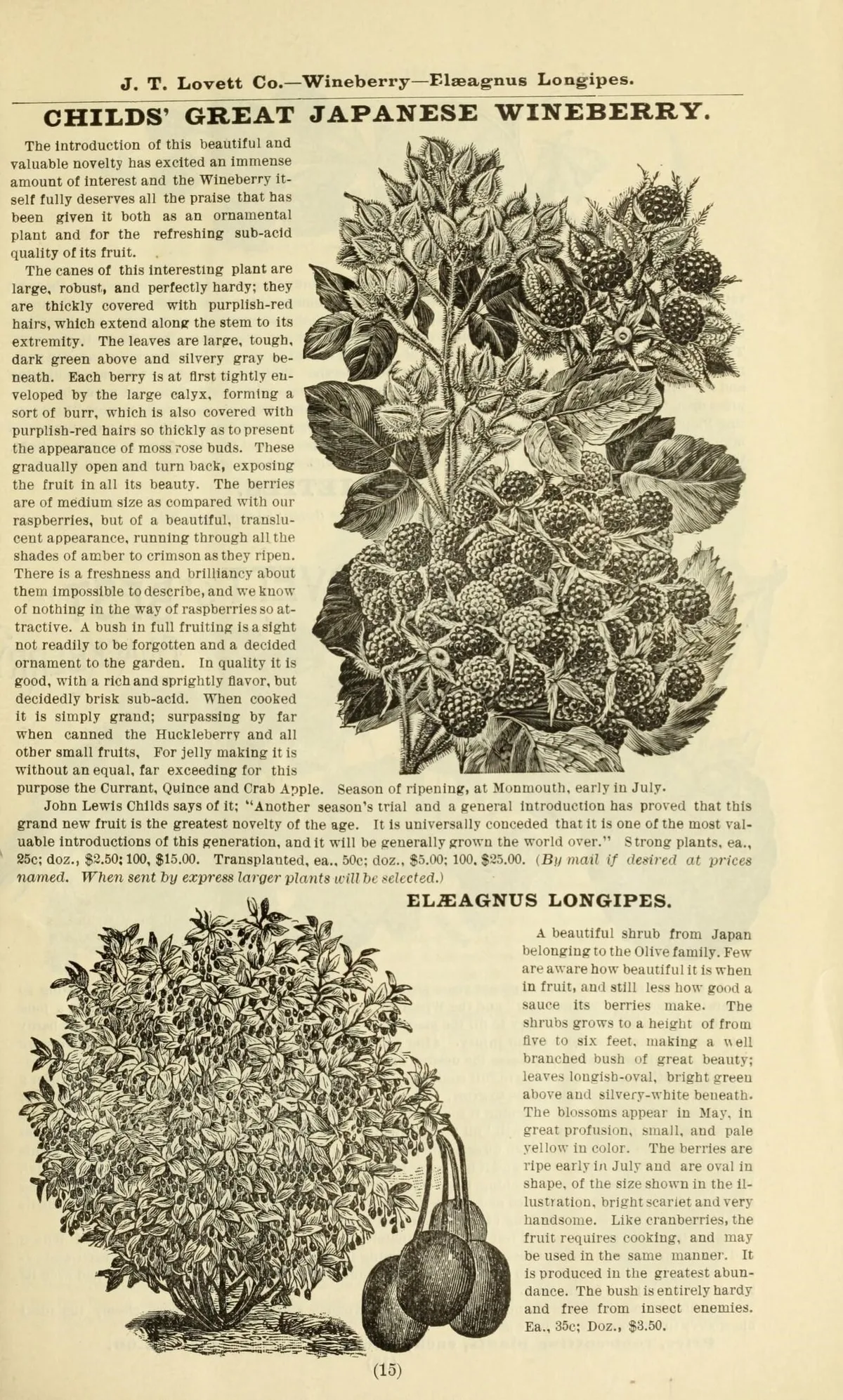
Image source: Wikimedia Commons / Henry G. Gilbert Nursery and Seed Trade Catalog Collection.; J.T. Lovett Company.; J.T. Lovett Company.
The key indicators that you're dealing with normal seasonal change are:
- The color change starts from the outside of the plant and moves inward
- Leaves eventually turn brown and drop, which is normal leaf senescence
- Canes remain firm and healthy with no oozing or cracking
- Fruit production has already finished for the season
- The plant looks otherwise vigorous with no wilting or stunted growth
There's nothing you need to do here. In fact, trying to "fix" it with fertilizer or extra water can actually cause problems by pushing new growth that won't survive winter. Just let the plant do its thing.
Clean up fallen leaves after they drop to reduce overwintering disease pressure, and your raspberries will come back strong next spring.
Nutrient Deficiency: When Red Leaves Signal a Problem
If you're seeing red or purple leaves in the middle of the growing season, especially in late spring or summer, that's a different story. The most common nutrient-related cause is phosphorus deficiency, and it's worth understanding why it happens and how to fix it.
Phosphorus is critical for root development, energy transfer, and fruit production in raspberry plants. When it's in short supply, the plant can't move energy efficiently, and anthocyanin pigments accumulate in the leaves. You'll typically notice a reddish-purple discoloration that starts on the older, lower leaves first.
The leaves may also appear darker green than normal before the red tones set in.
The tricky part is that the soil might actually contain plenty of phosphorus. The problem is often availability, not presence. Soil pH plays a huge role here.
Raspberries prefer a soil pH between 5.6 and 6.2. When the pH drops below 5.5 or rises above 6.5, phosphorus binds to other minerals and becomes unavailable to the plant's roots. This is why a soil test is so valuable.
You might be dealing with a pH problem rather than a true nutrient shortage.
Other factors that can contribute to phosphorus deficiency include:
- Cold, wet soil early in the season, which slows root activity
- Compacted soil that restricts root growth
- Excessive nitrogen fertilization, which promotes leafy growth at the expense of root development
- Sandy soils that leach nutrients quickly
If a soil test confirms low phosphorus levels, you can correct it with bone meal, rock phosphorus, or a balanced fertilizer with a higher phosphorus ratio. Apply according to the soil test recommendations rather than guessing. Over-applying phosphorus can cause its own problems, including zinc and iron deficiencies.
For a quicker but temporary fix, a foliar spray of liquid phosphorus can green up leaves within a couple of weeks. But the real solution is getting the soil pH and nutrient levels right for the long term. Retest your soil the following season to make sure the correction stuck.