Every spring, the same question comes up: should you stick with a lawn mower or step up to a tractor? The answer isn’t about brand loyalty or horsepower numbers — it’s about the size of your yard, the terrain you’re dealing with, and the tasks you actually need to do. A push mower on two acres will waste your time, and a 60-inch tractor in a tiny city lot will waste your money. This guide walks you through every factor so you can match the machine to your property — no guesswork, no regret.
What Defines a Lawn Mower vs a Lawn Tractor
The terms “lawn mower” and “tractor” get used interchangeably, but they are distinct categories of equipment. Understanding the difference is the first step toward a smart purchase.
Lawn Mowers — From Push to Riding
A lawn mower is any machine whose primary (often only) purpose is cutting grass. They come in three main types:
- Push mowers — manual or electric, best for lots under ¼ acre. You provide the forward motion.
- Self-propelled mowers — the drive system moves the wheels, so you just steer. Ideal for ¼ to ½ acre, especially with gentle slopes. If you’re dealing with hills, a well-designed self-propelled model can make a big difference — check out our guide on handling steep slopes.
- Riding mowers — you sit on the machine. These include lawn tractors (the most common) and zero-turn mowers. They cover ½ to 2 acres efficiently.
Lawn Tractors — More Than a Mower
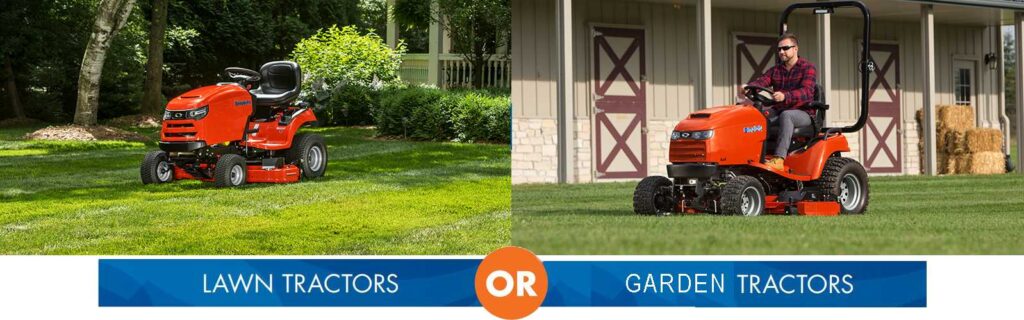
A lawn tractor is essentially a riding mower with a hitch and the ability to accept front and rear attachments. True garden tractors are heavier, have larger frames, and can handle ground-engaging implements like tillers and plows. Sub-compact and compact tractors are in a different league — they are built for construction and agricultural work, not just lawn care.
| Feature | Lawn Mower (Push/Self-Propelled) | Riding Mower / Lawn Tractor | Garden Tractor / Sub-Compact |
|---|---|---|---|
| Typical deck size | 16–22 inches | 38–54 inches | 48–72 inches |
| Engine power | 4–7 hp | 14–25 hp | 20–30+ hp |
| Attachments | None (or bagger only) | Bagger, cart, light-duty dethatcher | Snow blower, tiller, front loader, sprayer |
| Average speed | 2–3 mph | 4–6 mph | 6–12 mph |
| Turning radius | Tight (walk-around) | 16–20 inches (zero-turn can be zero) | 12–18 inches |
| Price range | $150–$1,200 | $1,500–$4,000 | $4,000–$15,000+ |
Matching Equipment to Your Yard Size and Terrain
Yard Size — The First and Most Important Factor
The size of your lawn dictates the machine you need. Trying to mow a large area with a small mower leads to fatigue and uneven cuts. Using a giant deck on a small yard damages turf and wastes fuel.
- Under ¼ acre — A push mower (electric or gas) or a small self-propelled model is plenty. You’ll finish in under 30 minutes.
- ¼ to ½ acre — A self-propelled mower is the sweet spot. It cuts time in half compared to pushing. For a detailed look at the best options, read our best options for larger lawns article.
- ½ to 1 acre — A riding mower or lawn tractor saves serious time. Expect a 38–42 inch deck.
- 1 to 2 acres — A lawn tractor with a 42–54 inch deck or a zero-turn mower is ideal. If you have many obstacles, a zero-turn’s maneuverability wins.
- Over 2 acres — A garden tractor or a compact utility tractor. You’ll also want to consider a large zero-turn for speed, but tractors offer more versatility for year-round chores.
Terrain and Slope Handling
Flat ground is easy for any machine. Slopes change everything.
- Gentle slopes (under 10°) — Most self-propelled and riding mowers handle this fine. For self-propelled models, rear-wheel drive provides better traction uphill. Our comparison of rear-wheel vs front-wheel drive explains the difference.
- Steep slopes (10–15°) — Irrigation or drainage ditches, hillsides. A self-propelled mower with large rear wheels and a good transmission is safer than a riding mower, which can tip. Always check the manufacturer’s slope rating.
- Very steep or uneven terrain — You need a tractor with a roll-over protection system (ROPS) and seat belt. Never use a zero-turn mower on a slope over 15° — they are prone to sliding sideways.
A common mistake is buying a riding mower for a hilly lot without considering stability. If your property has significant grades, a self-propelled walk-behind with good traction or a dedicated tractor with ROPS is the safer choice.
Versatility Beyond Mowing
Attachments and Year-Round Use
A lawn mower cuts grass. A tractor can also move snow, till garden beds, aerate, spread fertilizer, and haul firewood. That difference alone can justify the higher price.
- Lawn tractors typically accept a rear bagger, a cart, a light-duty dethatcher, and sometimes a front-mounted snow blade. Most will not handle a tiller or a snow blower well because the drivetrain isn’t built for heavy torque.
- Garden tractors have a heavy-duty transmission, a rear PTO (power take-off), and a hydraulic lift. They can run a tiller, a snow blower, a rear grader blade, and a front-end loader.
- Sub-compact tractors are essentially mini construction machines. They can do everything a garden tractor does plus heavy digging, backhoe work, and pallet moving.
If you live in a snowy climate, a tractor with a snow blower can pay for itself in time and back pain. If you only need to cut grass, the extra capacity is wasted.
Mowing Quality and Finish
A clean cut depends more on the deck design than whether it’s a mower or a tractor. Key factors:
- Deck shape — Stamped steel decks are lighter and cheaper; fabricated (welded) decks are heavier, last longer, and cut better.
- Airflow — A deep-deck design with a high-lift blade creates strong vacuum, standing grass up for a uniform cut and better bagging.
- Mulching vs. side discharge — Most residential decks offer a mulch kit. Dedicated mulching decks have a specially shaped blade and baffle system.
In practice, a well-maintained 21-inch self-propelled mower with a sharp blade can produce a finish as good as a 54-inch lawn tractor. The difference is speed, not quality.
Cost, Maintenance, and Lifespan
Upfront Cost and Long-Term Value
| Type | Typical New Price | Expected Lifespan (Years) | Annual Maintenance Cost (Est.) |
|---|---|---|---|
| Push mower (gas) | $150–$400 | 5–8 | $30–$60 |
| Self-propelled (gas) | $300–$1,000 | 7–10 | $50–$100 |
| Riding mower/lawn tractor | $1,500–$4,000 | 10–15 | $100–$200 |
| Garden tractor | $4,000–$8,000 | 15–20 | $150–$300 |
| Sub-compact tractor | $8,000–$15,000+ | 20–30 | $200–$500 |
A $3,000 lawn tractor used for 12 years costs about $250 per year. A $500 self-propelled mower that lasts 8 years costs about $62 per year. The tractor is four times the annual cost, but if it replaces a snow blower, tiller, and cart, the total cost can be lower.
Maintenance Requirements
Small engines need regular care regardless of machine size. The basics are the same: change oil, sharpen the blade, replace the air filter, and keep the underside of the deck clean.
- Self-propelled mowers have a simpler drivetrain — a single belt and a few pulleys. Routine upkeep is straightforward. Our maintenance guide covers the full process.
- Lawn tractors have more parts: transaxle, multiple belts, battery, and a charging system. You’ll also need to grease spindles and check tire pressure. Many owners prefer to do the work themselves; common issues you can fix yourself apply to tractors too.
- Garden tractors add hydraulic fluid changes, filter replacements, and PTO maintenance. If you’re not comfortable with mechanical work, budget for dealer service.
One tip: store any machine in a dry, covered location. Moisture is the #1 killer of small engines. If you don’t have a garage, invest in a good waterproof cover.
Operator Comfort, Safety, and Environmental Impact
Comfort Features for Long Mowing Sessions
If you mow for more than 30 minutes at a time, comfort matters more than you think.
- Self-propelled mowers — Look for a variable-speed drive (so you can walk at a natural pace) and an ergonomic handle. Vibration-reducing handles help avoid fatigue.
- Riding mowers and tractors — Suspension seat, armrests, cup holder, and adjustable steering wheel. A high-back seat with lumbar support is worth the extra cost. Noise levels are also lower than walk-behind mowers, but you’ll still want hearing protection.
Safety Considerations
Safety is non-negotiable, especially on slopes.
- ROPS (Roll-Over Protection System) — This is a reinforced frame or bar that protects you if the tractor tips. Many lawn tractors do not come with ROPS; garden tractors and sub-compacts do. If you mow on any slope, buy a machine with ROPS and keep the seat belt fastened.
- Blade brake — A safety switch that stops the blade when you leave the seat. This is standard on all modern riding mowers.
- No hands in the chute — Never clear a clogged discharge chute with the engine running. Use a stick, not your fingers.
The EPA’s small engine emissions standards have pushed manufacturers toward cleaner engines. If you’re concerned about emissions, battery-powered mowers are now competitive with gas for lawns up to 1 acre. For larger properties, a modern gas tractor with a catalytic converter is much cleaner than a 20-year-old model.
Fuel and Emissions
- Gasoline — Most common. Ethanol-free fuel is recommended for small engines to prevent carburetor damage.
- Diesel — Used in garden tractors and sub-compacts. More fuel-efficient, longer engine life, but higher upfront cost and noisier.
- Battery-electric — Quiet, zero emissions at point of use, and low maintenance. Battery life is improving, but you’ll still need multiple batteries for large lawns. Our comparison of choosing between gas and battery power can help you decide.
Common Mistakes and How to Avoid Them
- Buying too much machine — A 60-inch tractor on a ¾-acre lot tears up the turf and leaves scalped spots. Stick to a deck size appropriate for your yard.
- Ignoring storage — A garden tractor will not fit in a standard garden shed. Measure your garage door height and width before buying.
- Overlooking turning radius — If you have many flower beds, trees, or corners, a zero-turn mower or a tight-turning lawn tractor saves minutes every pass.
- Skipping the test drive — Always sit on the machine. Can you reach the pedals comfortably? Can you see the deck edges? A bad ergonomic fit will ruin your mowing experience.
- Forgetting about attachments — If you plan to add a snow blower later, make sure the tractor has a front PTO or a compatible quick-attach system. Not all lawn tractors do.
Frequently Asked Questions
What is the difference between a lawn mower and a tractor?
A lawn mower is designed primarily to cut grass. A tractor (lawn tractor, garden tractor, or sub-compact) is a more powerful machine that can also accept attachments for snow removal, tilling, hauling, and other tasks. The distinction is about versatility, not just size.
Can a lawn mower replace a tractor for light duty work?
For basic mowing only, yes. But a self-propelled or riding mower cannot handle ground-engaging attachments like a tiller or a plow. If you need to move heavy loads, blow snow, or cultivate soil, you need a tractor.
Is a tractor more expensive to own than a lawn mower?
Yes, both upfront and in ongoing maintenance. However, if you consider the cost of buying separate machines for snow, tilling, and hauling, a tractor can be cheaper over a decade. For a 2-acre property with a long driveway, a tractor often pays for itself.
Which is better for large-scale lawn maintenance — a lawn mower or a tractor?
For lawns over 2 acres, a tractor (or a zero-turn mower) is the only practical choice. The wider deck, faster ground speed, and reduced operator fatigue make it worth the investment. A detailed buying guide can help you narrow down the options.
Can a lawn mower handle rough or uneven terrain like a tractor?
No. Self-propelled and riding mowers have smaller wheels and less ground clearance. Tractors have larger tires, heavier frames, and often four-wheel drive, making them far more stable on rough ground, slopes, and bumpy terrain.
What factors should I prioritize when choosing between a lawn mower and a tractor?
Start with yard size, then terrain, then the tasks you need beyond mowing. Budget is the last factor — a cheaper machine that constantly needs repairs is more expensive in the long run. Always buy from a reputable dealer with a good warranty and service network.
Final Thoughts
Choosing between a lawn mower and a tractor isn’t about which is “better” — it’s about which fits your property. A push mower is perfect for a small flat lot. A self-propelled mower handles medium yards with slopes. A lawn tractor or zero-turn mower takes over when time and terrain demand efficiency. And a garden tractor or sub-compact opens up year-round capability.
Take the next step by measuring your yard, noting the steepest slope, and listing every task you’ll do beyond mowing. Then use that information to find the machine that truly matches your needs — not just the one that looks good in the showroom.