
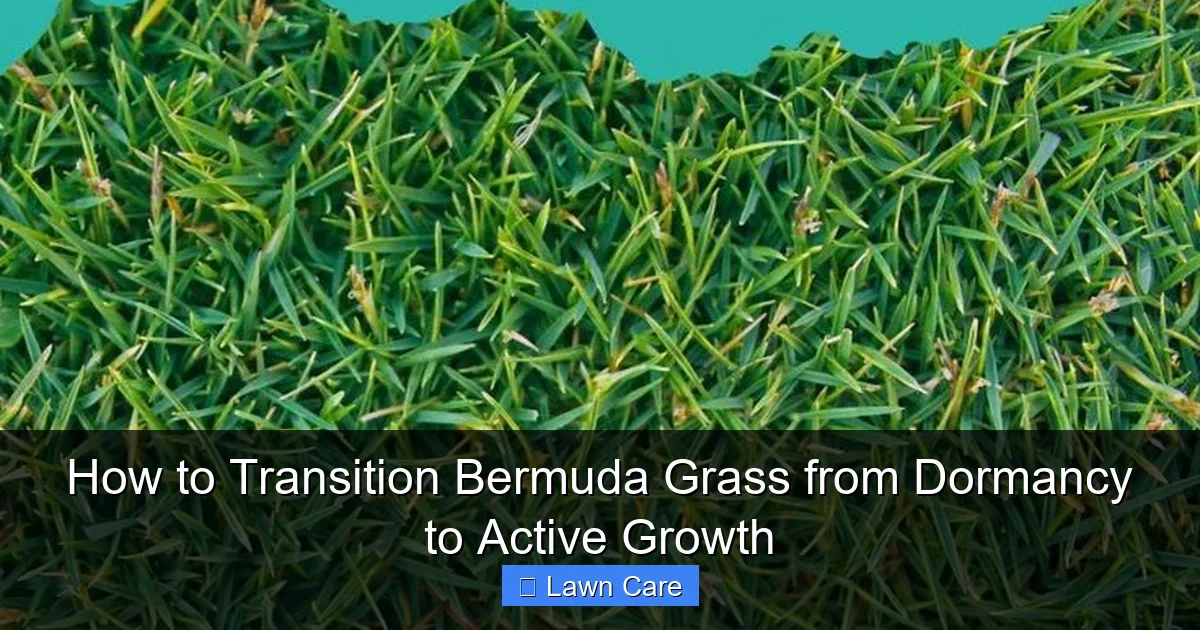
Bermuda grass needs a helping hand to wake up from dormancy and start growing vibrantly. By following a few key steps like proper timing, dethatching, feeding, and watering, you can ensure a lush, green lawn. This guide provides the essential knowledge to successfully transition your Bermuda grass into its active growing season.
Ah, Bermuda grass. It’s the king of warm-season lawns in many parts of the world, known for its resilience, drought tolerance, and beautiful deep green color during the summer months. But like all warm-season grasses, Bermuda takes a well-deserved nap during the cooler parts of the year, going into dormancy. When winter ends and spring begins to whisper its arrival, you’ll notice your lawn looks like a brown, lifeless carpet. This is where the magic of transitioning Bermuda grass from dormancy back to active growth comes into play. It’s not just about waiting; it’s about actively helping your lawn wake up and thrive.
Many homeowners feel a bit lost when their once-vibrant green lawn turns brown. They might wonder if it’s dead, or what they should be doing. The good news is, if you’ve done your homework and know you have Bermuda grass, that brown color is usually just dormancy, a natural survival mechanism. The real work, and the reward, comes in understanding how to nudge it back into its glorious green state. This process requires patience and a bit of know-how, but the results are well worth the effort.
Transitioning Bermuda grass from dormancy to active growth is a multi-step process that begins with understanding the subtle cues of nature and ends with a lush, healthy lawn ready to face the summer heat. It’s a cycle, and by mastering this spring transition, you set the stage for a beautiful lawn all season long. Let’s dive into how to make your Bermuda grass the envy of the neighborhood.
- Timing is Crucial: Wait until the soil temperature consistently stays above 60-65°F (15-18°C) and all danger of frost has passed before beginning transition efforts.
- Dethatch and Aerate: Removing accumulated thatch and aerating compacted soil are vital for allowing water, air, and nutrients to reach the grass roots.
- Fertilize Wisely: Apply a balanced fertilizer, leaning towards higher nitrogen content, once the grass shows signs of greening to fuel new growth.
- Proper Watering: Initially, water deeply and less frequently to encourage deep root development, adjusting as the grass becomes more established.
- Mowing Techniques: Gradually lower your mower to a shorter height as the grass greens up to encourage denser growth and a finer texture.
- Weed Control: Address any emerging weeds promptly to prevent them from competing with your struggling Bermuda grass.
Quick Answers to Common Questions
When is the ideal soil temperature to begin transitioning Bermuda grass out of dormancy?
The ideal soil temperature for transitioning Bermuda grass out of dormancy is consistently above 60-65°F (15-18°C). This usually occurs in late spring after the danger of frost has passed.
Should I fertilize my Bermuda grass as soon as I see a hint of green?
It’s best to wait for more substantial signs of greening before fertilizing. Applying fertilizer too early, before the grass’s root system is active, can be wasteful and may not be fully utilized.
How often should I water my Bermuda grass during the initial transition phase?
During the initial transition, water deeply and less frequently to encourage deep root growth. Aim for about 1 inch of water per session, allowing the soil to dry slightly between waterings.
Is it okay to mow my Bermuda grass if it still looks mostly brown but has some green?
Once the grass has greened up enough to reach about 1 inch in height, you can begin mowing. Start with a higher setting and gradually lower it over subsequent mows to avoid stressing the new growth.
What is thatch, and why is it important to remove it before transitioning Bermuda grass?
Thatch is a layer of dead and living organic material that accumulates between grass blades and soil. Excessive thatch blocks water, air, and nutrients from reaching the roots, hindering new growth. Removing it is crucial for a healthy transition.
📑 Table of Contents
- When to Start the Transition: Reading the Signs
- Step One: The Great Clean-Up – Dethatching and Aeration
- Step Two: Feeding the Beast – Fertilization Strategies
- Step Three: The Water Dance – Hydration for Growth
- Step Four: The Art of the Cut – Mowing Your Emerging Lawn
- Step Five: Vigilance Against Invaders – Weed Control
- Conclusion: Patience and Persistence Yield a Lush Lawn
When to Start the Transition: Reading the Signs
The most crucial part of transitioning Bermuda grass is getting the timing right. Push too early, and you risk damaging the grass or wasting resources. Wait too long, and you miss the optimal window for recovery and establishment. The key indicator is soil temperature, not just the calendar.
Soil Temperature is Your Best Friend
Bermuda grass is a warm-season grass. This means it thrives when the soil temperatures are warm, and it enters dormancy when they get cold. To encourage active growth, the soil needs to consistently stay in a specific temperature range. Aim for soil temperatures that are reliably above 60°F (15.5°C) and ideally creeping towards 65°F (18.3°C). This usually occurs in late spring, often April or May in many regions where Bermuda grass is popular, but can vary.
Frost is the Final Frontier
You must also be absolutely sure that the danger of a hard frost has passed. A late frost can set back your efforts significantly and even damage young, actively growing grass. Observe your local weather patterns. If there’s still a significant chance of frost, it’s best to hold off on aggressive transition steps.
Visual Cues Matter
While soil temperature is the most scientific indicator, visual cues are also helpful. You might start seeing small hints of green returning to your lawn, even if it’s just patchy. This is a sign that the grass’s root system is beginning to stir and prepare for new growth. Don’t rely solely on these, but they can be encouraging confirmation that your patience is about to pay off.
Step One: The Great Clean-Up – Dethatching and Aeration

Visual guide about How to Transition Bermuda Grass from Dormancy to Active Growth
Image source: gardendif.com
Once you’re confident that spring has truly sprung and your Bermuda grass is on the cusp of waking up, it’s time for some essential groundwork. Think of this as spring cleaning for your lawn. Dormancy often leaves behind a layer of dead grass (thatch) and can lead to soil compaction, both of which hinder new growth.
Understanding and Tackling Thatch
Thatch is a layer of dead and living organic material that accumulates between the green grass blades and the soil surface. A thin layer is normal and can even be beneficial, but when it gets too thick (more than half an inch), it creates a barrier. This barrier prevents water, air, and nutrients from reaching the grass roots. Dethatching involves physically removing this excess thatch.
* **Dethatching Methods:** You can rent a power dethatcher or use a manual dethatching rake. A power dethatcher has vertical blades that cut into the thatch layer and pull it to the surface. Rake vigorously to collect the loosened material. Be prepared for your lawn to look even browner and messier immediately after dethatching – this is normal! This is a crucial step in preparing your lawn for revival, and you can find more in-depth guidance on how to dethatch Bermuda grass for optimal results.
Aeration for Healthy Roots
Soil compaction is another common issue that can plague Bermuda grass lawns, especially those with heavy clay soil. Aeration is the process of creating small holes in the soil, allowing for better penetration of air, water, and nutrients. This is especially important for Bermuda grass, which develops a dense root system.
* **How to Aerate:** Core aeration is the most effective method. A core aerator pulls out small plugs of soil, leaving them on the lawn’s surface to break down naturally. This provides channels for essential elements to reach the roots. Aerating after dethatching can be highly beneficial, as it loosens the soil further and allows for even better access for new growth. Proper soil preparation is key to helping your Bermuda grass spread and fill in bare spots effectively.
Step Two: Feeding the Beast – Fertilization Strategies
Visual guide about How to Transition Bermuda Grass from Dormancy to Active Growth
Image source: i.pinimg.com
With the physical barriers removed, your Bermuda grass is ready to be nourished. Fertilization provides the essential nutrients needed for robust growth, helping it recover from dormancy and develop that sought-after lushness.
The Right Nutrients at the Right Time
When Bermuda grass is transitioning out of dormancy, it needs a boost to kickstart its growth. Nitrogen is the primary nutrient responsible for green leafy growth, so a fertilizer with a higher nitrogen content is typically recommended for this stage. Look for a balanced fertilizer with an N-P-K ratio where the first number (Nitrogen) is equal to or slightly higher than the other two. For example, a 10-8-6 or 16-4-8 would be suitable.
Application Techniques
Apply fertilizer evenly across your lawn. Using a broadcast spreader ensures uniform coverage, preventing splotchy growth or burned areas. Follow the application rates recommended on the fertilizer packaging. Over-fertilizing can be detrimental, leading to grass burn or excessive top growth that the root system can’t support.
Signs of Greening are Your Signal
It’s generally best to wait for visible signs of greening before applying fertilizer. Applying it too early, before the grass has started to metabolize nutrients, can be wasteful. Once you see that initial flush of green, it’s the perfect time to provide that nutrient boost. If you’re unsure, performing a soil test can give you precise insights into what your lawn actually needs, which helps in balancing soil pH for better grass growth.
Step Three: The Water Dance – Hydration for Growth

Visual guide about How to Transition Bermuda Grass from Dormancy to Active Growth
Image source: paintedposies.com
Water is life for any plant, and your Bermuda grass is no exception, especially as it emerges from dormancy. Proper watering during this transition period is critical for root development and overall lawn health.
Initial Watering: Deep and Infrequent
When you first start seeing signs of growth, begin watering deeply. This means applying enough water to moisten the soil several inches down. Deep watering encourages the grass roots to grow deeper into the soil, making the lawn more drought-tolerant and resilient in the long run. Aim for about 1 inch of water per watering session.
Adjusting as Growth Accelerates
As your Bermuda grass becomes more actively growing and you begin mowing, you may need to adjust your watering schedule. While deep and infrequent watering is ideal, you might need to water more often if you notice the grass showing signs of stress, like wilting or changing color. Monitor your lawn closely. The frequency will depend on your climate, soil type, and recent rainfall. Overwatering can be just as harmful as underwatering, leading to disease and shallow root systems.
Understanding Soil Moisture
A simple way to check if your lawn needs water is to stick a screwdriver or a soil probe into the ground. If it goes in easily, the soil is likely moist enough. If it’s difficult to push in, it’s time to water. This helps ensure you’re not over or under-watering.
Step Four: The Art of the Cut – Mowing Your Emerging Lawn
Mowing is a significant part of Bermuda grass maintenance, and how you approach it during the transition phase can greatly influence the density and health of your lawn.
Gradual Height Reduction
When your Bermuda grass starts to green up and has reached a height of about 1 inch, it’s time to start mowing. However, don’t immediately scalp it to its lowest setting. Begin by mowing at a slightly higher setting than your usual summer height. Then, with each subsequent mowing, gradually lower the blade. This allows the grass to adjust to the shorter height and encourages it to fill in, becoming thicker. You want to remove no more than one-third of the grass blade in a single mowing session.
Mowing Frequency
As the grass grows more actively, your mowing frequency will increase. Bermuda grass typically thrives when mowed at lower heights, which promotes denser growth. Be prepared to mow more often – sometimes every few days – during its peak growing season. A sharp mower blade is essential for a clean cut, which helps prevent tearing and disease. For more on this, check out tips on how often to cut Bermuda grass.
The Benefits of Lower Mowing
Lower mowing heights can encourage Bermuda grass to spread and fill in bare patches more effectively. It also helps create that desirable, finely textured appearance that many homeowners associate with a premium lawn. However, always ensure the grass has adequate water and nutrients to support these lower mowing heights.
Step Five: Vigilance Against Invaders – Weed Control
As your Bermuda grass works hard to recover, it’s vulnerable. This is also the time when many common lawn weeds begin to sprout and compete for resources. Proactive weed control is essential to ensure your Bermuda grass gets the best chance to establish itself.
Identify and Act Early
Familiarize yourself with common lawn weeds in your area. Early detection and removal are key. Small weeds are much easier to manage than established ones. Hand-pulling is effective for smaller infestations, especially when the soil is moist.
Pre-Emergent vs. Post-Emergent Herbicides
For preventative measures, consider pre-emergent herbicides applied before weeds typically germinate. These herbicides don’t kill existing weeds but prevent their seeds from sprouting. Once weeds have emerged, you’ll need post-emergent herbicides. Always choose a product that is safe for Bermuda grass. Read and follow label instructions carefully. Some herbicides can damage or even kill your desirable grass if misapplied. If you’re dealing with persistent weeds, learning how to kill nutsedge in Bermuda grass or how to kill Bermuda grass naturally might offer solutions.
Integrated Weed Management
The best approach to weed control is often an integrated one, combining cultural practices (like proper mowing, watering, and fertilization) with targeted chemical applications when necessary. A healthy, dense lawn is the best defense against weeds, as it crowds them out. If you’re struggling with Bermuda grass spreading into unwanted areas like flower beds, there are specific strategies to manage that, such as learning how to stop Bermuda grass from spreading in flower beds.
Conclusion: Patience and Persistence Yield a Lush Lawn
Transitioning Bermuda grass from dormancy back to active growth is a rewarding process that requires a keen eye for nature’s signals and a proactive approach to lawn care. By understanding the right time to start, performing essential clean-up tasks like dethatching and aerating, providing proper nourishment through fertilization, ensuring adequate hydration, and adopting smart mowing practices, you are setting your lawn up for success. Don’t forget the importance of vigilant weed control; a healthy Bermuda grass lawn is your best defense.
Remember, patience is key. Your lawn won’t transform overnight. It’s a gradual process, and each step you take contributes to its overall health and vitality. With consistent effort and the right techniques, you’ll soon be enjoying a thick, green, and resilient Bermuda grass lawn that can withstand the rigors of summer. Embracing this spring revival will lead to a beautiful landscape you can be proud of. For those looking to establish Bermuda from scratch or encourage more spread, resources on how to grow Bermuda grass from seed or how to help Bermuda grass spread can be incredibly valuable.
Frequently Asked Questions
How long does it typically take for Bermuda grass to fully green up after dormancy?
The full green-up time varies depending on your climate and weather conditions, but it can take anywhere from 4 to 8 weeks after you start seeing initial signs of life. Consistent warm temperatures are key.
Can I overseed my Bermuda grass lawn in the spring?
While overseeding Bermuda grass with other species like ryegrass is common in the fall, spring overseeding of Bermuda itself is usually done to fill in bare spots or thin areas. It’s often more effective to let the existing Bermuda grass recover first.
What should I do if I see weeds appearing before my Bermuda grass has fully greened up?
It’s important to manage weeds early. Hand-pulling is a good option for small infestations. If using herbicides, ensure they are specifically labeled as safe for dormant or emerging Bermuda grass to avoid further damage.
Is dethatching necessary every year for Bermuda grass?
Dethatching is typically recommended when the thatch layer exceeds half an inch. This might not be an annual necessity but should be done every 1-3 years depending on your lawn’s growth rate and maintenance practices.
What is the best type of fertilizer for Bermuda grass in the spring?
A balanced fertilizer with a higher nitrogen content (the first number in the N-P-K ratio) is generally recommended for spring to encourage leafy green growth. A soil test can help determine specific nutrient needs.
Should I worry about pests during the spring transition of my Bermuda grass?
While less common than during peak summer growth, pests can sometimes emerge. Monitor your lawn for any signs of damage or insect activity. Addressing issues early is always best.