To quickly identify Kentucky bluegrass, look for a lush, dense turf with fine, soft blades that form a rich, vibrant green. Its signature feature is the characteristic rhizomes that create a dense, spreading mat, making it stand out from other grasses. You can also check for its fine texture and the way it recovers quickly after being stepped on or damaged.
Kentucky bluegrass is a popular cool-season grass known for its beauty and durability. To identify it, examine its growth pattern, texture, and color, especially in the early morning when dew makes it glisten. Recognizing these key features helps distinguish Kentucky bluegrass from other turfgrasses easily.
If you’re trying to identify Kentucky bluegrass, start by observing its dense, soft, bluish-green blades and the way it spreads through underground rhizomes. Notice how it maintains a lush appearance and recovers swiftly from wear—a hallmark of this grass. Knowing what to look for will make distinguishing Kentucky bluegrass from other grasses simple and straightforward, whether you’re landscaping, maintaining a lawn, or simply curious about your yard’s greenery.

How to Identify Kentucky Bluegrass
Understanding the Basics of Kentucky Bluegrass
Kentucky Bluegrass, scientifically known as Poa pratensis, is a popular cool-season grass often used for lawns, sports fields, and parks. Its lush green color and fine texture make it a favorite among landscapers. To identify this grass, start by examining its general appearance and growth habits. It typically forms dense, soft sod that feels comfortable underfoot. The grass’s vibrant green color is most prominent during the cooler months of the year.
Visible Characteristics of Kentucky Bluegrass
Focusing on the visual features can help distinguish Kentucky Bluegrass from other grasses. Its leaves are generally narrow, with a width of about 1/8 to 1/4 inch. The leaf blades are smooth along the edges and have a boat-shaped tip, giving them a slightly pointed appearance. The grass’s overall growth habit is clumping, with individual shoots that spread by creeping rhizomes, helping it establish thick, uniform patches.
Blade Color and Texture
The blades usually display a deep green hue that remains consistent throughout the growing season. The blades are soft and fine-textured, which adds to the luxurious feel of Kentucky Bluegrass lawns. During the spring and fall, the grass retains this vibrant color, while in summer, it may turn a duller shade if stressed by heat.
Growth Pattern and Density
Kentucky Bluegrass grows in dense clusters, creating a carpet-like appearance. This dense growth helps crowd out weeds and makes the lawn look lush. Rhizomes, which are underground stems, allow the grass to spread horizontally and fill in bare spots quickly.
Blade and Leaf Features
Knowing specific blade features can be helpful when identifying Kentucky Bluegrass. The leaf blades are usually flat, with a prominent central vein that runs down the middle. They have smooth margins, and the blades curve slightly when viewed from the side. When you tear a blade, you may notice a silky or soft feel, adding to its gentle texture.
Ligule and Collar
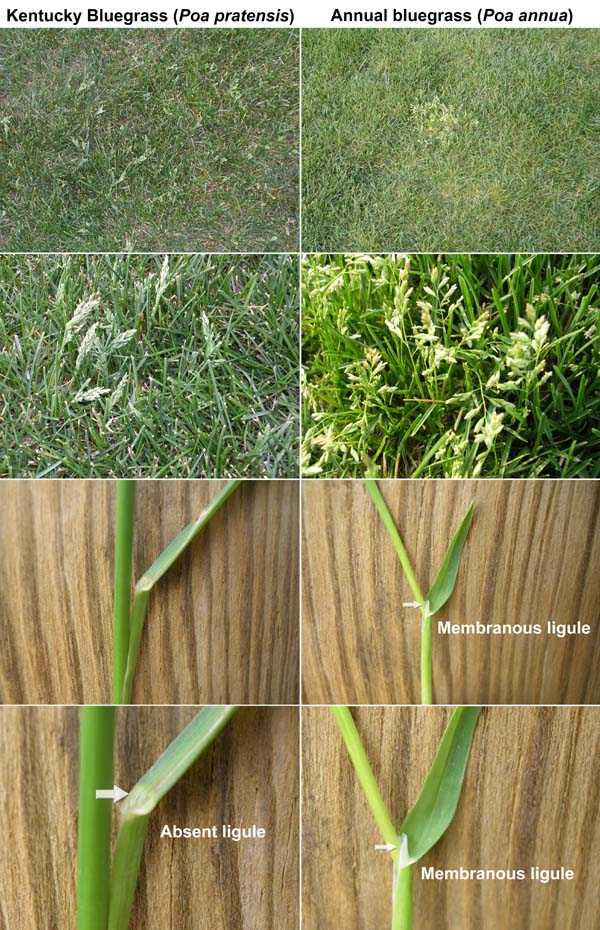
At the junction where the leaf blade meets the stem, you’ll find a ligule— a small membrane or fringe of hairs. In Kentucky Bluegrass, the ligule is a thin, membranous structure that appears fringed with fine hairs. The collar area, located at the base of the leaf blade, is narrow and blends smoothly into the stem.
Seed Head Identification
The seed heads of Kentucky Bluegrass develop in late spring or early summer. They are characterized by a panicle—a loose, branching cluster of flowers—that displays a delicate, airy appearance. The seed heads are typically grayish-green and may turn gray when mature. They are relatively short and blend seamlessly with the rest of the turf.
Flowering Characteristics
The flowering parts of Kentucky Bluegrass are slender and spike-like. Each seed head contains multiple spikelets attached to the main stem. The spikelets are small, with tiny florets that produce the seeds. Recognizing these features helps confirm the identification when the grass is in bloom.
Growth Environment and Adaptation
Kentucky Bluegrass prefers specific environmental conditions that can aid in its identification. It thrives in well-drained soils with moderate fertility. The grass performs best in cooler climates and becomes dormant during hot, dry summers. Understanding its preferred environment can help you determine if the grass you’re examining is Kentucky Bluegrass.
Climate Preferences
This grass adapts well to USDA hardiness zones 3 through 7. It requires full sun for at least six hours daily but can tolerate some light shade. In overly shady areas, Kentucky Bluegrass may not establish as densely, making identification more challenging.
Soil and Moisture Needs
Kentucky Bluegrass flourishes in moist, fertile soils that are rich in organic matter. It prefers slightly acidic to neutral pH levels, around 6.0 to 7.0. Consistent watering helps maintain its lush appearance, but the grass can go dormant to conserve water during dry spells.
Comparing Kentucky Bluegrass to Similar Grasses
To avoid confusion, compare Kentucky Bluegrass with similar species such as Rough Bluegrass, Fescue, and Ryegrass. Each has distinct features that stand out upon closer inspection.
Differences from Fescue
Fescue grasses have broader, rougher leaf blades and typically grow in clumps without rhizomes. Their seed heads are more compact and have a different branching pattern compared to Kentucky Bluegrass.
Distinguishing from Ryegrass
Ryegrass develops bright green, coarser blades with a shiny appearance. Its seed heads are upright and denser, unlike the airy, spread-out seed heads of Kentucky Bluegrass.
Key Features Summary Table
| Feature | Kentucky Bluegrass |
|---|---|
| Blade Width | 1/8 to 1/4 inch |
| Texture | Fine and soft |
| Color | Deep green, vibrant in spring and fall |
| Growth Habit | Dense, creeping with rhizomes |
| Seed Head | Loose panicle, grayish-green |
| Preferred Climate | Cool-season, zones 3-7 |
Additional Tips for Identification
Observe the grass during different seasons to see how its appearance changes. Use a hand lens to examine the ligule, collar, and seed head details closely. Feel the blades to distinguish Kentucky Bluegrass from coarser species.
Practical Tools for Identification
– **Magnifying glass** for detailed inspection
– **Sample collection** for comparison with reference images
– **Soil testing kits** to understand if the environment suits Kentucky Bluegrass
Summary of Key Identification Points
- Fine, narrow leaf blades with smooth edges and a boat-shaped tip
- Deep green color that stays vibrant in cooler months
- Dense, soft turf with creeping rhizomes
- Light, airy seed heads in late spring or early summer
- Prefers cool, moist environments with full sun
Identifying Kentucky Bluegrass involves paying attention to its visual features, growth habits, and environmental preferences. With practice and careful examination, you can confidently distinguish this popular grass from others and understand its unique characteristics for lawn and landscape management.
What Kind of Grass is on My Lawn? // Kentucky Bluegrass Identification and Use.
Frequently Asked Questions
What are the distinguishing features of Kentucky bluegrass blades?
Kentucky bluegrass blades are typically narrow, with a length of about 1.5 to 2.5 inches. They are soft to the touch and have a bright green color. The blades often exhibit a slightly folded or rolled appearance when young, and they tend to grow in dense, overlapping tufts that create a lush appearance.
How can I identify Kentucky bluegrass by its seed head?
The seed head of Kentucky bluegrass appears as a graceful, open panicle with fine, thread-like spikelets. These spikelets are usually aligned in pairs or small clusters and have a distinctive bluish or purplish tinge, especially during flowering. Observing the seed head during late spring to early summer helps in confirming the grass type.
What are the characteristic growing patterns of Kentucky bluegrass?
Kentucky bluegrass spreads primarily through rhizomes, which form a dense, low-growing mat. This growth habit allows it to recover quickly from damage and fill in bare spots. The grass maintains a uniform, dense appearance, especially in well-maintained lawns, which helps in distinguishing it from other grass types.
Final Thoughts
To identify Kentucky bluegrass, examine its dense, fine-textured leaves that form broad, lush mats. The color is vibrant green with a slightly bluish tint. Feel the blades; they are soft yet sturdy. Look for its characteristic seed heads, which are narrow and spike-like. Recognizing these features helps confirm you’ve identified Kentucky bluegrass accurately.