Stickers in your yard can be a real pain—literally. These prickly weeds like thistle, burdock, and cocklebur can ruin a walk barefoot and damage your lawn. This guide shows you how to get rid of stickers in yard using safe, effective methods that protect your grass and your family. From manual removal to natural treatments, you’ll learn step-by-step solutions to reclaim your outdoor space.
Stickers in your yard are more than just an annoyance—they can be painful, spread seeds, and damage your lawn over time. Whether you’re dealing with prickly thistle, spiky burdock, or tough cocklebur, knowing how to get rid of stickers in yard is essential for maintaining a healthy, enjoyable outdoor space. This guide walks you through safe, effective methods to remove these pesky plants and keep them from returning.
You’ll learn how to identify different types of sticker weeds, use both natural and chemical treatments, and take steps to prevent future infestations. With practical tips and step-by-step instructions, you’ll be able to reclaim your yard without harming your grass or the environment.
Key Takeaways
- Identify the type of sticker weed you’re dealing with—common types include thistle, burdock, and cocklebur—as each may require slightly different removal techniques.
- Manual removal is effective for small infestations; use gloves, a weed hook, or a dandelion digger to pull stickers out by the root.
- Natural solutions like vinegar or boiling water can kill stickers without harming nearby plants when applied carefully.
- Prevention is key—keep your lawn healthy with proper mowing, watering, and aeration to discourage sticker weed growth.
- Use targeted herbicides only when necessary and follow label instructions to avoid damaging desirable grass.
- Dispose of stickers properly—bag and trash them to prevent seeds from spreading to other areas.
- Replant or overseed bare spots after removal to fill in gaps and prevent new stickers from taking hold.
Understanding Sticker Weeds
Sticker weeds, also known as prickly or burr weeds, are common in many lawns and gardens. They have sharp spines or hooks that cling to clothing, pet fur, and skin, making them difficult to remove once they’ve taken root.
Common types include:
– Thistle: Tall with purple or pink flowers and deeply lobed leaves.
– Burdock: Large, broad leaves with stiff spines and burrs that stick to fabric.
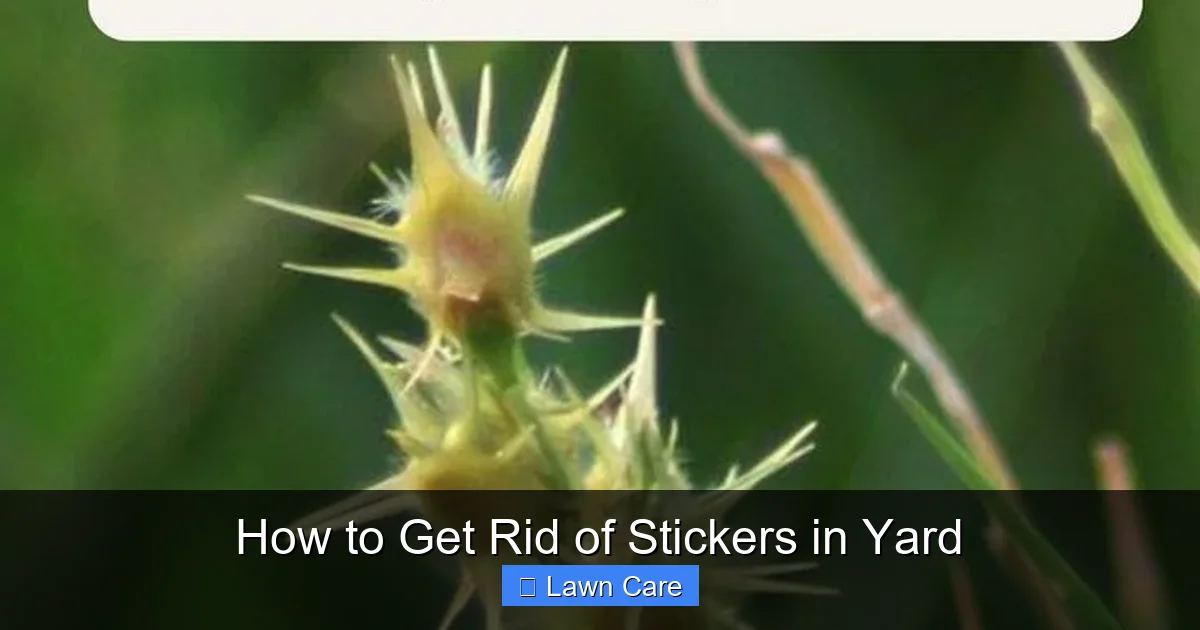
– Cocklebur: Features spiky seed pods that easily attach to surfaces.
– Burclover: Smaller than burdock but still produces burrs.
These weeds thrive in disturbed soil and poor lawn conditions. Once established, they spread quickly through seeds that hitch rides on animals, people, and lawn equipment. Understanding their life cycle helps you target them at the right time—usually in early spring or fall when they’re most vulnerable.
How to Get Rid of Stickers in Yard: Manual Removal
For small infestations or isolated patches, manual removal is one of the most effective ways to eliminate stickers without chemicals.
What You’ll Need
- Heavy-duty gardening gloves
- Weed hook or dandelion digger
- Small trowel or hand cultivator
- Trash bags for disposal
Step-by-Step Process
- Wear protective gloves to avoid getting stuck by spines or burrs.
- Use a weed hook to dig around the base of the plant, aiming to loosen the root system.
- Pull the plant straight up with steady pressure. Make sure to grab as much of the root as possible.
- Check for remaining roots or seed heads—if any are left behind, they can regrow.
- Place the entire plant in a trash bag immediately. Do not compost stickers, as their seeds can survive and spread.
- Dispose of the bagged weeds in the trash—never leave them on the curb or in compost.
This method works best when the soil is moist, making it easier to pull out the entire root system. Repeat weekly during the growing season to catch new seedlings before they mature.
Natural Solutions for Sticker Removal
Visual guide about How to Get Rid of Stickers in Yard
Image source: i.pinimg.com
If you prefer eco-friendly options, several natural methods can help kill sticker weeds without harming your lawn or surrounding plants.
Boiling Water Method
Boiling water is a simple, chemical-free way to kill sticker weeds. It’s especially effective on young plants or in cracks and crevices.
How to Use
- Boil a kettle of water.
- Carefully pour the boiling water directly onto the base of the sticker weed.
- Repeat every few days until the plant dies.
Tip: Avoid pouring boiling water on grass or desirable plants—only target the sticker weeds.
Vinegar Spray
White vinegar (20% or higher acetic acid) can act as a natural herbicide. It dries out the plant and prevents photosynthesis.
How to Apply
- Mix one part white vinegar with one part water in a spray bottle.
- Add a few drops of dish soap to help the solution stick to the leaves.
- Spray directly onto the sticker weed, avoiding nearby grass.
- Reapply after rain or every 3–5 days for best results.
- Apply on a calm day to prevent drift onto desirable plants.
- Use a sprayer with a nozzle that allows precision targeting.
- Water the area lightly before applying to help the herbicide penetrate the soil.
- Wait 7–10 days to see results—some weeds may take time to die.
Note: Vinegar can harm nearby plants, so use it sparingly and only on targeted areas.
Using Herbicides Safely
For larger infestations or persistent sticker weeds, a selective herbicide may be necessary. Choose a product labeled for broadleaf weeds and follow the instructions carefully.
Recommended Products
– Glyphosate-based herbicides (e.g., Roundup) – effective but non-selective; avoid contact with grass.
– 2,4-D or dicamba-based formulas – selective for broadleaf weeds like thistle and burdock.
Application Tips
Caution: Always wear protective clothing and follow label instructions. Never apply before or after heavy rain.
Preventing Future Sticker Growth
Once you’ve removed stickers, take steps to prevent them from returning.
Maintain a Healthy Lawn
A thick, well-maintained lawn crowds out weeds. Mow regularly at the recommended height for your grass type, water deeply but infrequently, and fertilize in spring and fall.
Aerate Your Soil
Compacted soil encourages weed growth. Aerate once a year to improve drainage and root penetration.
Overseed Bare Spots
After removing stickers, overseed thin or damaged areas with a high-quality grass seed mix. This fills in gaps where weeds could take root.
Monitor Regularly
Check your lawn weekly for new sticker seedlings. Early removal is far easier than dealing with mature plants.
Troubleshooting Common Issues
Stickers Keep Coming Back
If stickers return quickly, you may not have removed the entire root system. Try using a trowel to dig deeper or switch to a more aggressive treatment like vinegar or herbicide.
Damage to Grass After Treatment
Some treatments, especially vinegar or glyphosate, can harm grass if not applied carefully. Use a shield or mask the surrounding area with cardboard when spraying.
Seeds Spread by Animals or Wind
Even after removal, seeds can remain in the soil or blow in from neighboring yards. Continue monitoring for at least a full growing season.
When to Call a Professional
For large infestations or persistent problems, consider hiring a lawn care service. Professionals have access to stronger herbicides and equipment to treat hard-to-reach areas.
They can also help diagnose underlying issues like soil imbalance or drainage problems that may be contributing to weed growth.
Conclusion
Getting rid of stickers in your yard doesn’t have to be painful or overwhelming. By combining manual removal, natural solutions, and smart prevention, you can eliminate these prickly weeds and keep your lawn healthy and comfortable.
Remember, the key is consistency and early action. Whether you choose boiling water, vinegar, or targeted herbicides, always protect your grass and follow safety guidelines. With regular maintenance and vigilance, your yard can be sticker-free all season long.
Now that you know how to get rid of stickers in yard, it’s time to take action. Start small, stay persistent, and enjoy the peace of mind that comes with a clean, safe outdoor space.