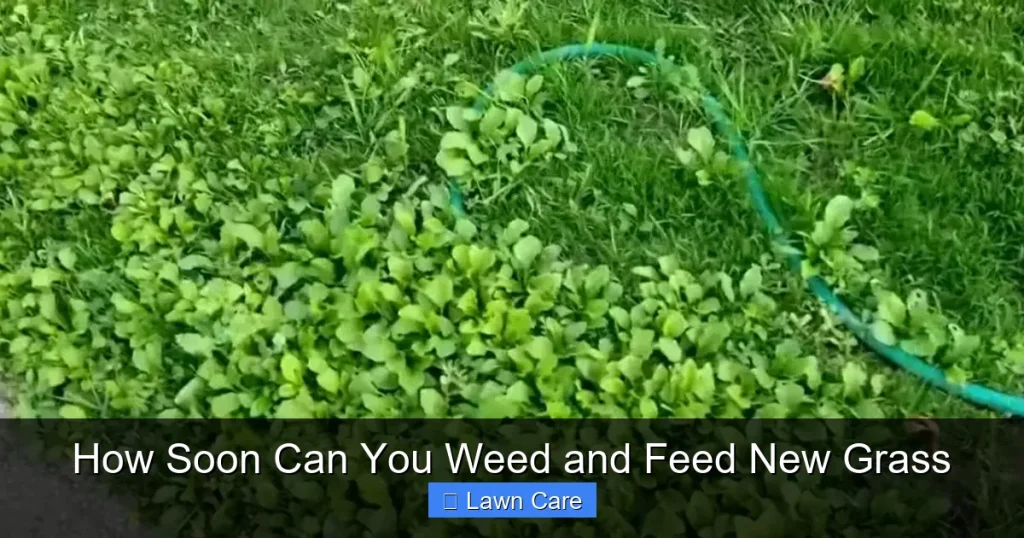
Wondering how soon you can apply weed and feed to new grass? Timing is crucial for success! Applying too early can harm delicate seedlings, while waiting too long lets weeds take over. This guide explains the optimal waiting period after seeding or sodding, offering clear steps to ensure your new lawn grows healthy and strong, free from invasive weeds.
# How Soon Can You Weed and Feed New Grass
Bringing a new lawn to life is an exciting process. Whether you’ve painstakingly sown seed or laid down fresh sod, you dream of a lush, green carpet. But soon after that initial green flush, unwelcome weeds often start to appear. The tempting solution? A combined weed and feed product. But here’s the million-dollar question: how soon can you weed and feed new grass?
Applying weed and feed too early can be detrimental to your young lawn, essentially setting back all your hard work. However, waiting too long allows weeds to gain a strong foothold, making them harder to control later. This guide will walk you through the critical waiting periods, explain why timing is so important, and provide you with the knowledge to make the right decisions for your new grass. We’ll cover everything from understanding the needs of young grass to selecting the right product and applying it effectively.
## Understanding the Needs of New Grass
New grass, whether from seed or sod, is like a newborn baby – it’s incredibly vulnerable. Its root system is shallow and underdeveloped. The blades of grass are thin and easily damaged. At this stage, the grass is focused on survival and growth. It needs gentle care, consistent moisture, and the right nutrients to establish a strong foundation.
Introducing a chemical treatment like weed and feed too early can shock this delicate system. The weed killer component, designed to eliminate unwanted plants, can also harm young grass. The fertilizer, while intended to boost growth, can burn the tender roots and blades if applied before the grass is ready to absorb it.
### Seed vs. Sod: Different Journeys to Establishment
It’s important to differentiate between grass grown from seed and grass grown from sod.
* New Grass from Seed: When you plant grass seed, you’re starting from scratch. Tiny roots emerge, then fragile shoots push through the soil. This process takes time. The grass needs to germinate, establish a primary root system, and then begin sending up multiple blades. This is the most vulnerable stage.
* New Grass from Sod: Sod is essentially a mature piece of turf that has been cut and transported. When laid, the goal is for the grass roots to grow down into the soil beneath. This usually happens faster than germination and establishment from seed. You can often see the sod rooting by gently tugging on it – if it resists and feels anchored, it’s likely starting to establish.
Because of these differences, the timeline for applying weed and feed will vary significantly.
## The Crucial Waiting Period: When is New Grass Ready?
This is the core of your question. There isn’t a single magic number that applies to every situation, but there are strong guidelines based on the type of lawn establishment and the product you’re using.
### How Soon Can You Weed and Feed Grass Seedlings?
This is where patience is most critical. Grass seedlings are incredibly delicate. Applying weed and feed too soon is one of the most common mistakes new lawn owners make, often leading to patches of dead grass or stunted growth.
General Guideline: Wait 4-6 Weeks After Germination
* Germination: This is when you first see tiny green shoots appearing from the soil. Don’t get excited and reach for the weed and feed just yet!
* Establishment: The grass needs time to grow several inches tall and develop a more robust root system. This typically takes at least 4 to 6 weeks. You should see a good density of grass blades.
* First Mow: Before even considering weed and feed, your new grass should have been mowed at least once or twice. This indicates it has reached a sustainable height.
Why the wait? During this period, the weed killer in the product could damage or kill your young grass. The fertilizer, even at a lower dose, might be too strong for its undeveloped root system, leading to burn.
### How Soon Can You Weed and Feed New Sod?
Sod offers a faster route to a mature-looking lawn, but it still requires time to establish. The key here is ensuring the sod has rooted into the soil beneath.
General Guideline: Wait Until the Sod is Well-Rooted
* Visual Check: Look for signs of the sod lifting. If it pulls up easily, it hasn’t rooted. If it resists and feels anchored, the roots are starting to grow into your soil.
* Gentle Tug Test: Carefully try to lift a corner of the sod. If it holds firm, it’s a good indicator of root establishment.
* Timeframe: This rooting process usually takes about 2-3 weeks, but it can vary depending on soil type, temperature, and watering frequency.
Why is rooting important? Once the sod is rooted, the grass has a stronger connection to the soil and is better equipped to handle the nutrients from the fertilizer and the chemicals in the weed killer. If you apply too early, the grass might not be able to absorb enough moisture and nutrients, and the chemicals could still cause damage.
## Reading the Product Label: Your Most Important Guide
While general guidelines are helpful, the most accurate and safest advice will always come from the product you intend to use. Weed and feed products are not one-size-fits-all. They vary in their active ingredients, concentrations, and recommended application times.
### Key Information to Look For on the Label:
* “New Lawn” or “Newly Seeded Lawn” Instructions: Many products will have specific instructions for application on new lawns. Pay close attention to these. Some might explicitly state “Do not apply to newly seeded areas until grass is established (e.g., 4-6 weeks after germination).”
* Grass Type Specifics: Different grass types have different sensitivities. For example, some weed killers are safe for established Bermuda grass but can damage young St. Augustine grass. Ensure the product is suitable for your specific grass type. If you’re unsure about your grass type, consider learning about common lawn grass varieties.
* Application Temperature Ranges: Most weed and feed products have ideal temperature ranges for application. Applying when it’s too hot or too cold can reduce effectiveness and increase the risk of damaging your grass.
* Watering Requirements: Labels will specify whether the product needs to be applied to dry or wet grass and how soon to water afterward. Following these instructions is crucial for the product to work correctly and minimize harm.
Example: A label might read, “Apply when grass is dormant, or at least 4 weeks after germination for new lawns.” Or, “Do not apply to newly seeded turf until it has been mowed 3 times.” These are non-negotiable instructions.
## Step-by-Step: Applying Weed and Feed to New Grass Safely
Once you’ve determined that your new grass is ready and you’ve chosen an appropriate product, follow these steps carefully:
### Step 1: Confirm Grass Readiness
* From Seed: Has your grass been growing for at least 4-6 weeks? Is it several inches tall? Has it been mowed at least once or twice?
* From Sod: Has the sod been down for at least 2-3 weeks? Have you performed the gentle tug test and confirmed it’s well-rooted?
### Step 2: Choose the Right Product
* Ensure the product is labeled for use on new lawns or has specific instructions for young grass.
* Verify it’s compatible with your grass type. For instance, if you have Bermuda grass, you’ll want to find [what is the best weed and feed for Bermuda grass] that suits its needs, especially when it’s young.
* Consider if your lawn truly needs both a weed killer and a fertilizer. If weeds are minimal and the grass looks reasonably healthy, you might opt for just a fertilizer designed for new lawns.
### Step 3: Check the Weather Forecast
* Avoid applying weed and feed during extreme heat (over 85-90°F or 29-32°C). The heat can exacerbate the stress on young grass.
* Do not apply if rain is expected within 24-48 hours, as this can wash away the product before it has a chance to work or leach nutrients too deeply.
* Ideally, apply on a calm, overcast day or in the early morning or late evening.
### Step 4: Prepare the Application Equipment
* Spreader Settings: Weed and feed products often come in granular form and require a spreader (broadcast or drop spreader) for even application. The product label will tell you the correct setting for your specific spreader model. Calibrate your spreader before use to ensure accuracy.
* Clean Equipment: Make sure your spreader is clean and free of any debris or leftover chemicals from previous applications.
### Step 5: Apply the Product
* Follow Label Instructions Precisely: This is paramount.
* Dry Grass vs. Wet Grass: Some products work best on dry grass, allowing the granules to adhere to the weed’s leaves. Others require slightly damp grass to help the granules stick. Read your label!
* Even Coverage: Walk at a consistent pace and overlap your passes slightly to ensure even distribution. Avoid concentrating the product in one area.
* Avoid Edges: Be careful when applying near flower beds, vegetable gardens, or paved surfaces, as the chemicals can damage desirable plants or wash into drains.
### Step 6: Post-Application Care
* Watering: Follow the product’s watering instructions. Some recommend watering lightly after application to activate the fertilizer and help the grass absorb it. Others suggest waiting a day or two.
* Avoid Mowing: Typically, you should avoid mowing for a few days before and after application to allow the weed killer maximum contact with the weeds. Check your product label for specific recommendations.
* Observe Your Lawn: Keep an eye on your new grass for any signs of stress or damage, such as yellowing or browning.
## Troubleshooting Common Issues
Even with careful application, you might encounter some problems.
### My new grass is turning yellow/brown after applying weed and feed. What happened?
This is often a sign of fertilizer burn, especially if applied too soon or if the product was over-applied. Young grass is sensitive to high concentrations of fertilizer. If it’s a widespread issue, you may need to water the lawn thoroughly to try and dilute the fertilizer in the soil. However, significant damage might require reseeding or resodding affected areas.
### The weeds are still there after a week.
This could be due to several factors:
* **Incorrect timing:** The weeds might be too mature, or the grass too young, to be effectively targeted.
* **Environmental conditions:** Heat, drought, or excessive rain can affect the product’s performance.
* **Product selection:** The weed killer might not be effective against the specific types of weeds you have. You might need a different product or a targeted weed killer.
* **Application error:** Uneven application or not following watering instructions can reduce effectiveness.
### Can I use weed and feed on St. Augustine grass or Bahia grass?
These are sensitive grass types. For example, many common weed killers can harm St. Augustine grass. You need to be extremely careful and select a product specifically formulated for these types of lawns. For St. Augustine grass, it’s often recommended to wait longer and use a gentle approach. You might find specific guides on [best weed and feed fertilizer for St. Augustine grass]. Similarly, if you have Bahia grass in Florida, there are specific considerations and recommended products, like those discussed in [weed and feed for Bahia grass in Florida]. Always prioritize products labeled as safe for your specific grass variety.
## Alternatives to Weed and Feed for New Lawns
If you’re hesitant about using a combined product on very young grass, consider these alternatives:
### 1. Separate Fertilization and Weed Control
* Fertilize First: Apply a fertilizer specifically formulated for new lawns or young grass. These typically have a lower N-P-K ratio and are gentler. Water it in well.
* Wait for Weed Control: Once the grass is more established (perhaps 8-10 weeks old, or after a couple of mows), you can then consider a targeted post-emergent weed killer if weeds are still a significant problem. Ensure the weed killer is safe for your grass type.
### 2. Manual Weeding
* For small areas or a few stubborn weeds, the simplest and safest method is to pull them by hand. Make sure to get the entire root to prevent regrowth. This is labor-intensive but ensures no chemical damage to your new lawn.
### 3. Spot Treatment
* If you only have a few scattered weeds, you can use a liquid weed killer applied directly to the weed with a sponge or a very careful spray, ensuring it doesn’t touch the surrounding grass.
## Conclusion: Patience is a Virtue in Lawn Care
Establishing a new lawn is a marathon, not a sprint. The desire for a perfect, weed-free landscape can lead to premature application of weed and feed products, ultimately causing more harm than good. Remember the core principles:
* Wait for establishment: Whether from seed (4-6 weeks minimum) or sod (2-3 weeks minimum, once rooted), give your grass time to grow a strong foundation.
* Read the label: Always defer to the specific instructions on your weed and feed product.
* Prioritize grass health: If in doubt, err on the side of caution. Separate applications or manual weeding are safer bets for very young turf.
By understanding the needs of your new grass and applying these guidelines, you’ll be well on your way to cultivating a healthy, vibrant, and resilient lawn that you can enjoy for years to come. Happy mowing!
Key Takeaways
- Wait for established growth: Never apply weed and feed to seeds that have just sprouted. Wait until the grass has established a root system and shows significant growth, typically 4-6 weeks after seeding or when sod has rooted.
- Check the product label: Different weed and feed products have varying recommendations. Always read and follow the specific instructions on your chosen product for the best and safest results.
- Seed vs. Sod timing differs: New grass from seed requires a longer waiting period than new grass from sod, as seedlings are more delicate and take longer to establish.
- Weed identification is key: Understand the types of weeds present. Some common lawn weeds are more resilient than others, and the timing of application can be critical for their control.
- Environmental factors matter: Weather conditions like extreme heat or drought can stress new grass, making it more susceptible to damage from weed and feed applications.
- Consider separate applications: For very new lawns or sensitive grass types, applying fertilizer and weed killer separately might be a safer option to avoid stressing the young grass.
- Proper watering is essential: Ensure the lawn is adequately watered before and after application, as per product instructions, to help the grass absorb nutrients and minimize damage.