Mow Bermuda grass once a week during the peak growing season for a lush, healthy lawn. Regular mowing encourages denser growth and keeps your yard looking pristine.
In short, Bermuda grass should typically be mowed once a week during its vigorous growing period, usually from late spring to early fall. The exact frequency can vary based on weather conditions and the specific variety of Bermuda grass. When mowing, aim to keep the grass height between 1 to 2 inches to promote healthy growth and prevent disease. Staying on top of your mowing schedule helps maintain a vibrant, even lawn that stands out in your neighborhood. Consistency is key, so monitor your grass’s growth rate and adjust your mowing routine accordingly for the best results.

How Often to Mow Bermuda Grass: A Complete Guide
Mowing Bermuda grass correctly is key to keeping your lawn healthy, lush, and green. The optimal mowing schedule depends on several factors such as the season, growth rate, and lawn usage. Knowing exactly how often to mow Bermuda grass helps prevent damage and promotes strong, dense turf.
Understanding Bermuda Grass Growth Patterns
Bermuda grass is a warm-season grass that thrives in hot climates. It tends to grow vigorously during the summer months and slows down as temperatures drop. During its peak growth phase, the grass can grow up to half an inch or more per week.
This rapid growth requires more frequent mowing to prevent the grass from becoming too tall or unkempt. In contrast, during cooler months or dormancy, the growth rate slows significantly, reducing the need for frequent mowing.
Ideal Mowing Frequency in Peak Growing Season
In the peak of summer, Bermuda grass typically needs mowing about once a week. This frequency ensures that the grass remains at its ideal height and promotes healthy, dense growth.
If you notice your Bermuda grass growing faster, especially during periods of high heat and rain, you may need to mow more often. Conversely, if growth slows, you can extend the interval between mowings.
Recommended Mowing Heights for Bermuda Grass
Maintaining the right height is crucial to healthy Bermuda grass. For most lawns, an optimal mowing height is between 1 and 2 inches.
Lower mowing heights, around 1 inch, create a more manicured look and help suppress weeds. However, mowing too short can stress the grass, especially in hot weather. Conversely, heights above 2 inches can cause thatch buildup and reduce drought tolerance.
Adjusting Mowing Frequency Based on Lawn Usage
If your Bermuda grass lawn receives heavy foot traffic or hosts outdoor activities, you may need to mow more often. This helps keep the grass at a consistent height and prevents overgrowth.
For lawns with lighter use, mowing once every 7 to 10 days may suffice, provided the grass is growing steadily. Always adjust your mowing schedule based on actual growth and lawn appearance.
Seasonal Changes and Mowing Schedule
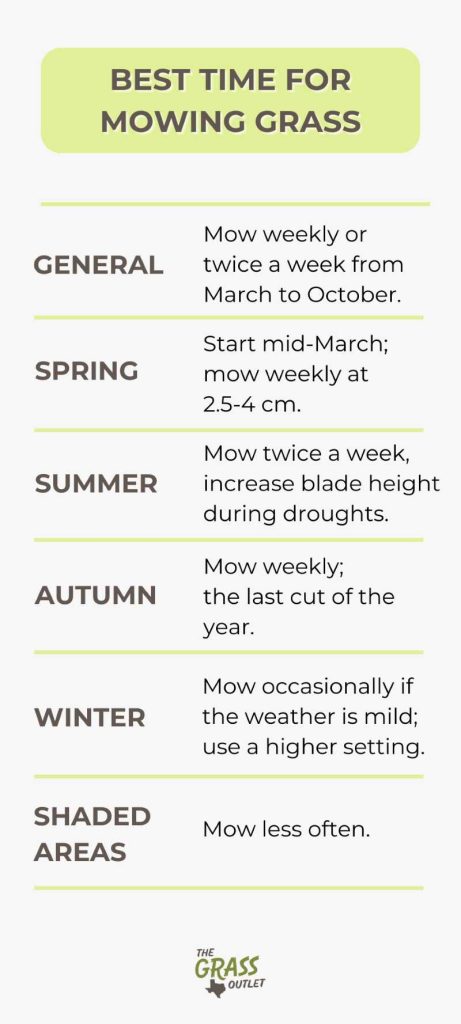
During the spring and early summer, Bermuda grass growth accelerates, requiring more frequent mowing. In late summer or early fall, growth slows, and mowing frequency can decrease.
In winter, Bermuda grass enters dormancy in cooler climates, making mowing unnecessary unless there’s an unusually warm spell. Always monitor your lawn’s growth and adapt your schedule accordingly.
Signs That Indicate It’s Time to Mow
- The grass exceeds 2 inches in height.
- The lawn looks uneven or overgrown.
- Grass blades are becoming compacted or crowded.
Regularly inspecting your lawn helps determine the right time to mow. Avoid waiting until the grass is too tall, as cutting it back in one session can stress the turf.
How to Mow Bermuda Grass Properly
Preparing Your Lawn
Before mowing, remove any debris like sticks, leaves, and stones. Sharpen your mower blades for clean cuts, which reduce stress on the grass.
Adjusting Mower Height
Set your mower to the recommended height of 1 to 2 inches. This height balances healthy turf growth with weed suppression and drought resistance.
Techniques for Effective Mowing
Use a sharp blade and mow in different directions each time. This promotes upright growth and prevents soil compaction. Avoid mowing when the grass is wet to prevent clumping and uneven cuts.
Additional Tips for Maintaining a Healthy Bermuda Lawn
- Follow a regular fertilization schedule to promote robust growth, which affects mowing frequency.
- Water deeply and infrequently to encourage deep root systems, reducing the need for frequent mowing.
- Consider aerating your lawn annually to improve soil health and grass density.
Impact of Over-Mowing and Under-Mowing
Cutting Bermuda grass too short or too often can weaken the grass, making it susceptible to pests and diseases. On the other hand, infrequent mowing leads to overgrowth, shade, and increased thatch buildup.
Maintaining a balanced mowing schedule ensures optimal turf health and appearance, preventing common problems associated with improper mowing.
Tools and Equipment for the Perfect Cut
Using a rotary mower with adjustable height settings is ideal for Bermuda grass. For smaller lawns, a push mower works well, while larger properties may benefit from riding mowers or lawn tractors.
Regular maintenance of lawn equipment ensures clean cuts and efficient mowing, ultimately supporting your lawn’s health.
Summary: How Often You Should Mow Bermuda Grass
In summary, during the peak growing season, mow Bermuda grass once a week, maintaining it at a height of 1 to 2 inches. Adjust your schedule based on your lawn’s growth rate, season, and usage. Proper mowing practices promote a lush, healthy lawn that can withstand weather variations and foot traffic.
Always monitor your grass for signs of overgrowth or stress, and be ready to adapt your mowing routine to ensure your Bermuda lawn remains its best. Consistent care combined with the right mowing frequency results in a vibrant, dense, and resilient Bermuda grass lawn.
Bermuda Lawn Care – 5 Basics – For A Nice Green Lawn – Beginners Start Here!
Frequently Asked Questions
How does the season affect the mowing frequency for Bermuda grass?
During the peak growing season, typically late spring through summer, Bermuda grass grows quickly and requires more frequent mowing, usually once a week. In cooler months or during dormancy, growth slows down significantly, and mowing can be reduced to every few weeks or as needed to remove only accumulated debris or dead growth. Adjusting your mowing schedule according to seasonal changes helps maintain healthy, attractive turf.
What signs indicate that Bermuda grass needs to be mowed more frequently?
When Bermuda grass starts to grow past your desired height, often exceeding 2 to 3 inches, it’s time to mow more often. Additionally, if the grass appears uneven or begins to shade lower blades, increasing mowing frequency ensures a uniform appearance. Regularly checking the turf’s height helps you determine if it needs a trim to maintain optimal health and aesthetics.
How does mower height influence how often I should cut Bermuda grass?
Setting your mower to a height of about 1 to 1.5 inches encourages healthy growth and minimizes stress. When the grass is kept at this height, it generally requires weekly mowing during active growth periods. Raising the mowing height slightly during hot, dry weather can reduce stress on the grass, possibly decreasing the frequency needed. Proper height settings help you balance mowing needs with the grass’s health.
Can mowing frequency vary based on foot traffic or pet activity?
Yes, increased foot or pet traffic can cause the grass to become uneven or damaged, prompting more frequent mowing to remove wear marks and maintain a tidy appearance. Regular mowing also encourages the grass to recover quickly from activity, helping to sustain a dense, healthy lawn despite frequent use.
How does regular fertilization impact the mowing schedule for Bermuda grass?
Fertilizing Bermuda grass promotes vigorous growth, which can lead to a need for more frequent mowing. Rich, healthy turf grows faster and requires trimming more often to keep it at the desired height. Following a proper fertilization schedule ensures the grass remains lush and actively growing, making consistent mowing necessary to maintain its appearance.
Final Thoughts
Pour maintenir un gazon Bermuda en bonne santé, il est important de savoir how often to mow bermuda grass. En général, il faut tondre une fois par semaine lors de la saison de croissance active. Cependant, durant les mois plus frais, l’entretien peut être moins fréquent.
Adaptez la fréquence de coupe à la vitesse de croissance de votre gazon et à la hauteur désirée. Ne coupez jamais plus d’un tiers de la hauteur de l’herbe en une seule fois pour éviter de l’endommager.
En résumé, how often to mow bermuda grass dépend de la croissance, mais une coupe hebdomadaire fonctionne généralement. Cela garantit un tapis herbacé uniforme et en bonne santé.