
Mow sloped lawns every one to two weeks during the growing season. This frequency helps maintain healthy grass and prevents overgrowth.
Maintaining sloped lawns requires special attention due to their unique challenges. The incline can lead to soil erosion and uneven growth patterns. Grass on slopes often grows faster, especially in spring and early summer. Regular mowing promotes healthy growth and prevents weeds.
It also ensures that clippings do not accumulate, which can lead to thatch buildup. Mowing too infrequently can result in long grass, making it harder to manage and potentially damaging your mower. Establishing a consistent mowing schedule tailored to your slope’s conditions helps keep your lawn lush and attractive while ensuring a safe, manageable yard.
Challenges Of Mowing Sloped Lawns
Mowing sloped lawns presents unique challenges. Uneven terrain can create safety hazards. Slips and falls are common risks. Always wear appropriate footwear to prevent accidents.
Using the right equipment is crucial. Choose a mower with good traction. Self-propelled mowers work well on slopes. Consider using a string trimmer for hard-to-reach areas. Regularly check your equipment for maintenance to ensure safety.
Grass Type And Growth Patterns
Identifying your grass species is essential for proper lawn care. Different species have unique growth patterns. Common types include Bermudagrass, Kentucky bluegrass, and fescue. Each grass type has its own ideal mowing height.
Understanding growth rates helps determine mowing frequency. For example, Bermudagrass grows quickly in warm weather. It often needs mowing every 5 to 7 days. In contrast, Kentucky bluegrass grows slower and may require mowing every 7 to 14 days.
Maintaining the right height promotes healthy growth. Grass should be kept at a height between 2 to 4 inches. Longer grass can better withstand heat and drought.
Mowing Frequency For Sloped Lawns
Mowing frequency for sloped lawns depends on various factors. Generally, mow every one to two weeks during the growing season. This keeps grass healthy and reduces weeds.
In hot summer months, consider mowing more often. Grass grows faster in warm weather. In cooler seasons, mowing can be less frequent. Adjust to local climate and grass type.
Also, check for weather conditions. Mowing after rain makes the lawn muddy and hard to mow. Aim to mow when the grass is dry for best results.

Credit: m.youtube.com
Best Practices For Mowing Slopes
Mowing slopes requires special techniques for safety and effectiveness. Mow uphill when going forward. This helps maintain control of the mower. Mow downhill while walking backward. This keeps the mower stable and reduces the risk of accidents.
Use a self-propelled mower or a walk-behind mower for better grip. Avoid using riding mowers on steep slopes. They can tip over easily. Always mow across the slope instead of up and down. This technique minimizes the risk of slipping.
Grass-cycling is an effective method for sloped lawns. Leave grass clippings on the lawn. They act as a natural fertilizer. This practice promotes healthier grass and reduces the need for additional watering.
Selecting The Right Mower
Choosing between manual and powered mowers is important for sloped lawns. Manual mowers are lightweight and easy to control. They work well on small slopes. Powered mowers offer more power and can handle larger areas. They are perfect for steeper inclines.
Look for features that enhance safety and performance. A self-propelled mower is great for slopes. It helps reduce fatigue while mowing. Wide wheels provide better traction and stability on uneven ground. An adjustable cutting height allows you to adapt to different grass types.
Consider weight as well. A heavier mower may slide down steep slopes. Lightweight models are easier to maneuver. Finally, check for ergonomic handles. They improve comfort during long mowing sessions.
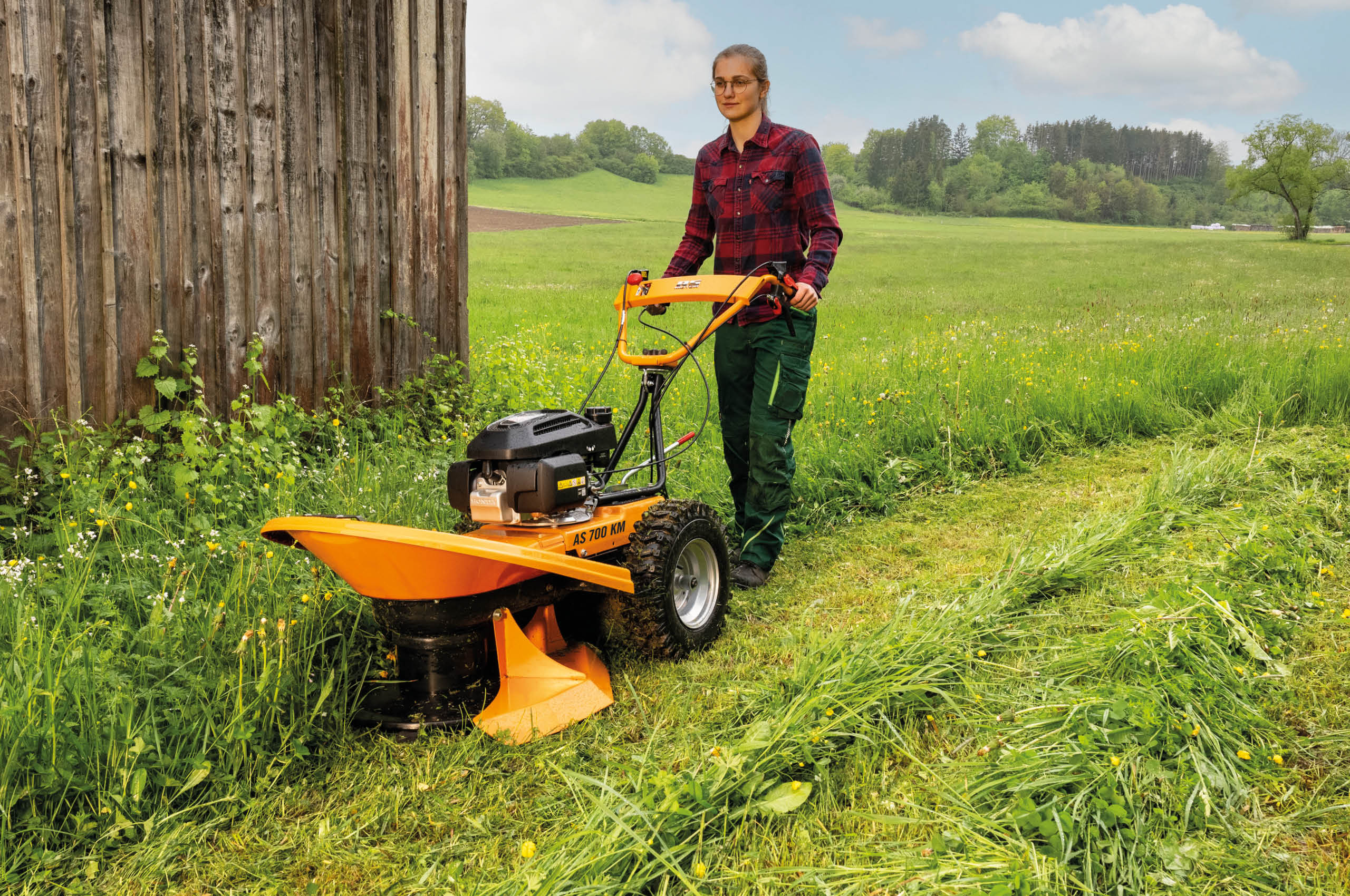
Credit: www.as-motor.com
Lawn Care Beyond Mowing
Proper fertilization and watering are essential for sloped lawns. Use a slow-release fertilizer. It helps maintain healthy grass. Watering should occur early in the morning. This prevents evaporation and encourages deep roots.
Erosion control is crucial for slopes. Use mulch or landscape fabric to hold soil in place. Planting ground cover can also help. It protects against erosion and provides beauty. Consider plants like clover or creeping thyme. These plants thrive on slopes and need less maintenance.
Timing Your Mows
Mowing sloped lawns requires careful timing. Aim to mow once a week during the growing season. This helps maintain a healthy lawn.
The 1/3 rule is important for grass health. Never cut more than one-third of the grass height in a single mow. This keeps the grass strong and encourages growth.
Weather conditions impact mowing frequency. Wet grass can clump and cause uneven cuts. Wait for the grass to dry for a better mowing experience.
Extreme heat can stress the grass. During hot spells, consider mowing less often. This helps protect your lawn from damage.
Advanced Turf Care Techniques
Aeration and dethatching are essential for maintaining healthy sloped lawns. Aeration helps improve soil compaction. This process allows air, water, and nutrients to reach the roots. Dethatching removes dead grass and debris. It prevents the buildup of thatch, which can harm grass growth.
Perform aeration during spring or fall. This timing ensures optimal grass recovery. Dethatching should also occur during these seasons. Both processes promote a stronger and healthier lawn.
For sloped areas, take care while working. Use specialized equipment to prevent accidents. Regular maintenance will enhance the beauty of sloped lawns.
Consider these innovative landscaping solutions:
- Plant ground covers to prevent erosion.
- Install terraces for better water management.
- Use mulch to retain moisture and suppress weeds.

Credit: m.youtube.com
Frequently Asked Questions
How Often Should I Mow Sloped Lawns?
Mowing sloped lawns should be done every 1-2 weeks during the growing season. This frequency helps maintain a healthy lawn while preventing overgrowth. However, adjust the schedule based on your grass type and weather conditions. Regular mowing also prevents soil erosion on slopes.
What Is The Best Time To Mow Sloped Lawns?
The best time to mow sloped lawns is early morning or late afternoon. These times typically provide cooler temperatures and less humidity. Mowing during these hours also reduces stress on the grass and prevents wilting. Aim for dry grass to achieve a cleaner cut.
Can I Mow Wet Grass On Slopes?
Mowing wet grass on slopes is not recommended. Wet conditions can lead to slippery surfaces and increase the risk of accidents. Additionally, wet grass clumps can clog your mower, leading to uneven cuts. Wait for the grass to dry before mowing to ensure safety and efficiency.
What Mower Is Best For Sloped Lawns?
A self-propelled mower is ideal for sloped lawns. These mowers provide better traction and control on inclines. They reduce physical strain while mowing, making the task easier. For very steep slopes, consider using a lightweight string trimmer for safety.
Conclusion
Maintaining a sloped lawn requires regular attention. Mowing frequency depends on growth rate, season, and lawn type. Aim for shorter grass during hot months and longer grass in cooler weather. By following these guidelines, you can keep your sloped lawn healthy and visually appealing throughout the year.
Enjoy your beautifully mowed landscape!