A lush, green lawn depends on just the right amount of water to thrive—too little and it wilts, too much and it invites problems. For most lawns, about 1 to 1.5 inches of water per week is ideal, whether from rainfall or supplemental irrigation. Keep in mind, factors like grass type, weather, and soil condition can influence exact needs. Proper watering encourages healthy roots, reduces drought stress, and keeps your yard beautiful all season long. In this article, we’ll explore how to determine your lawn’s specific water needs, how often to water, and tips for maintaining a healthy, vibrant yard. Whether you’re a new homeowner or just looking to improve your lawn care routine, understanding how much water your grass truly needs will help you achieve that perfect, green outdoor space you’ve always wanted.

How much water does a lawn need per week
Understanding Lawn Water Needs
Every lawn has an ideal amount of water it needs weekly to stay healthy and vibrant. Proper watering prevents the grass from becoming brown or patchy and keeps weeds and pests away. Knowing the right amount of water helps you avoid overwatering or underwatering your grass.
Factors Influencing Lawn Water Requirements
Several factors affect how much water your lawn needs each week. These include the type of grass, local climate, soil type, and the season of the year. Recognizing these components helps you tailor your watering schedule for best results.
Type of Grass
Different grass varieties have varying water needs. For example, cool-season grasses like Kentucky bluegrass or fescue generally require more water during hot months. Warm-season grasses such as Bermuda or zoysia tend to adapt better to drought conditions. Identifying your grass type informs how much watering is necessary.
Climate and Weather Patterns
Hot, dry climates demand more frequent watering, especially during summer months. Conversely, regions with regular rainfall may require less supplemental watering. Keep an eye on weather forecasts to adjust watering accordingly.
Soil Type and Drainage
Soil composition dramatically impacts water absorption and retention. Sandy soils drain quickly and may need frequent, shallow watering. Clay soils hold moisture longer and might need less frequent but deeper watering. Well-draining soils prevent waterlogging, which can damage roots.
Seasonal Changes
During spring and fall, lawns typically need less water because of cooler temperatures and increased rainfall. In contrast, summer months often require more watering to combat heat and evaporation. Adjust your schedule with the seasons for optimal lawn health.
How Much Water Should a Lawn Receive Weekly?
Most lawns thrive with about **1 to 1.5 inches of water per week**. This amount usually includes natural rainfall plus supplemental watering if needed. This guideline ensures deep root growth and a lush green appearance.
Measuring Watering Depth
Use a rain gauge or shallow container placed on the lawn during watering to measure how much water is applied. When the container fills to the 1-inch mark, you have provided adequate weekly watering.
Deep vs. Shallow Watering
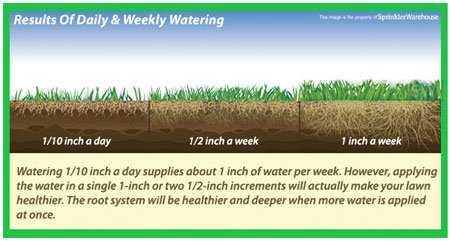
Deep watering encourages roots to grow deeper into the soil, which helps the lawn withstand drought. Shallow watering causes roots to stay near the surface, making grass more vulnerable. Aim for thorough, deep watering sessions.
How Often Should You Water Your Lawn?
The frequency of watering depends on your local climate, soil, and grass type. In hot, dry weather, lawns might need watering every **two to three days**. During cooler or wetter periods, reduce watering to once a week or less.
Creating a Weekly Watering Schedule
Start with watering every **two to three days** for about 20 to 30 minutes per session, depending on your soil’s absorption rate. Adjust based on rainfall and lawn condition, ensuring the water penetrates deep into the soil.
Signs That Your Lawn Needs Water
Look for signs such as dull green color, footprints remaining visible on the grass, or soil feeling dry just below the surface. These indicators remind you to water more frequently.
Best Practices for Watering Your Lawn
To keep your lawn healthy, adopt best watering practices. Use a sprinkler system or garden hose to deliver even coverage and avoid water wastage.
Water Early in the Morning
Watering in the early morning allows excess moisture to evaporate, reducing disease risk and conserving water. Avoid watering late in the evening, which can promote fungal growth.
Target Deep Soil Layers
Apply enough water so that it reaches at least six inches into the soil. Deep roots provide a more drought-resistant lawn, and this can be achieved with infrequent, longer watering sessions.
Use Efficient Watering Techniques
Consider installing sprinkler timers, zone systems, or drip irrigation to optimize watering schedules and minimize waste. Regularly check sprinklers for even coverage and repairs.
Common Watering Mistakes to Avoid
Avoid overwatering, which can drown roots and promote disease. Underwatering can cause to brown patches and weakened grass. Striking the right balance is key for lawn health.
Overwatering
Giving your lawn more than 1.5 inches of water weekly or watering too frequently leads to shallow roots and fungus problems. Ensure proper drainage and drainage systems are in place.
Underwatering
Neglecting to water enough, especially during hot months, causes grass to dry out. Pay attention to signs of stress and adjust your schedule accordingly.
Irregular Watering Schedule
Inconsistent watering can stress the grass, leading to uneven growth. Stick to a consistent schedule, adjusting based on weather and soil moisture levels.
Additional Tips for Maintaining a Healthy Lawn
Besides watering, proper lawn care boosts grass resilience. Regular mowing, fertilizing, and aeration contribute to overall lawn vigor and water efficiency.
Mowing Height and Frequency
Keep your grass at the recommended height for its type, usually around 2 to 3 inches. Mow regularly to prevent the grass from becoming too tall or too short, both of which can stress the grass.
Fertilization
Apply fertilizers during the growing season to promote strong roots and green color. Healthy grass requires less water to stay lush.
Aeration and Soil Improvement
Aerate compacted soils periodically to improve water penetration and root growth. Good soil health minimizes the need for excessive watering.
Related Topics to Consider
Understanding lawn watering also involves considering topics like drought-tolerant grass varieties, rainwater harvesting, and eco-friendly watering practices. These approaches can further reduce water usage and promote sustainability.
Drought-Resistant Grass
Planting native or drought-tolerant grasses decreases watering needs and enhances lawn resilience during dry spells.
Rainwater Harvesting
Collect rainwater in barrels to supplement watering, reducing reliance on municipal water sources and conserving resources.
Smart Irrigation Systems
Investing in weather-based controllers or soil moisture sensors helps automate watering, ensuring your lawn gets precisely what it needs.
By understanding all these factors and implementing best practices, you can maintain a healthy, green lawn while conserving water. Regular observation and adjustments will keep your grass thriving regardless of weather changes.
Frequently Asked Questions
What factors influence the amount of water a lawn needs weekly?
The water requirements of a lawn depend on several factors including the grass type, local climate, soil type, and recent weather conditions. For instance, warm-season grasses generally require more water during hot and dry periods, while cool-season grasses may need less. Additionally, sandy soils drain quickly and may need more frequent watering, whereas clay soils hold moisture longer and require less frequent watering. Monitoring weather forecasts and understanding your specific yard conditions helps determine the appropriate amount of water to keep your lawn healthy.
How can I know if my lawn needs watering?
You can check your lawn’s moisture levels by observing the grass and soil. If the grass appears dull, blue-green rather than vibrant green, and footprints remain visible on the turf for a while, it’s likely time to water. Digging a small hole about 4-6 inches deep can reveal if the soil is dry. If the soil is dry and hard, it indicates your lawn needs water. Regularly assessing these signs helps prevent overwatering or underwatering your yard.
What watering schedule is effective for maintaining a healthy lawn?
Typically, watering deeply once or twice a week encourages strong root growth. It’s best to water early in the morning to reduce evaporation and fungal issues. Aim to give your lawn about 1 to 1.5 inches of water per week, including rainfall. Adjust the frequency depending on weather conditions, soil type, and grass species. Deep, infrequent watering promotes healthier, more drought-resistant turf compared to frequent shallow watering.
How does soil type affect water needs for a lawn?
Sandy soils drain quickly and hold less moisture, requiring more frequent watering to maintain adequate hydration. Clay soils, on the other hand, retain water longer and may need less frequent watering, but they can also become waterlogged if overwatered. Loamy soils provide a good balance, holding moisture well while draining properly. Knowing your soil type helps tailor your watering schedule for the best lawn health.
What signs indicate overwatering or underwatering a lawn?
Overwatering often leads to shallow roots, fungal diseases, and a spongy feeling underfoot. Signs of overwatering include a grayish tint, moss growth, and pooling water. Underwatering results in dry, brown patches, grass that feels brittle, and footprints that do not quickly disappear. Regularly monitoring your lawn helps catch these issues early and adjust your watering routine accordingly for optimal turf health.
Final Thoughts
How much water does a lawn need per week depends on several factors such as grass type, weather conditions, and soil. Generally, most lawns require about 1 to 1.5 inches of water weekly. This amount promotes healthy growth without overwatering.
It’s best to water deeply and infrequently to encourage strong roots. Early morning is the ideal time for watering to reduce evaporation. Adjust according to your specific lawn’s needs and local climate.
In conclusion, understanding the amount of water your lawn needs per week helps maintain its health and appearance. Proper watering practices ensure your lawn remains vibrant and resilient.