How long do grubs live is one of those questions that sounds basic but doesn't stick to one answer. The truth depends entirely on what kind of grub you've got, what time of year you're looking, and what stage it's sitting in right now. A single grub species can twist its timeline across anything close to a multi-month feeding period once you add fall activity, winter dormancy, and spring reawakening.
That range matters for one practical reason that most people discover the hard way. If you misread either the species or the current life-cycle stage, you end up spraying or spreading product when the grubs are either too small to matter yet or deep enough underground to laugh at them. Match your timing to the stage, and the product actually works.
So before anyone reaches for a bag labeled "grub control," let's lay out what's doing what in the soil and when.
Quick Answer
White grubs can survive as larvae for nearly a year in the typical single-generation annual cycle seen in many scarab species. Some multi-year species stay in the larval stage for two to three full feeding seasons. The egg stage alone runs about 10 to 14 days before hatching.
The pupal stage, sitting between larva and adult, lasts roughly two to four weeks.
Image source: iNaturalist / Irene
The Real Answer Depends on Species, Season, and Stage
Some turf pests that people lump under "grubs" extend a single growing season across nearly a full year of biological activity right in the soil under the grass. Take the most familiar offenders in many temperate grassland areas: European chafers, Japanese beetles, and several Phyllophaga June beetle species. Their larvae start feeding in late summer, put on the bulk of their size gained in the fall, ride out winter in deeper soil, resurface to feed again briefly in spring, then pupate and emerge as adults.
Green June beetles and a few others stretch longer, staying in the larval phase well past the typical annual window for scarab species in turf. That means this species is feeding on roots across multiple growing seasons and accumulating a much larger body size before it finally pupates.
The season you're dealing with changes everything too. If you're reading this in August and find a one-inch curled C-shaped creature in your turf, that's almost certainly a juvenile from eggs laid by adults that emerged earlier in the summer. Find it in April, and it's something entirely different that has been dormant underground all winter.
That seasonal flip has real treatment consequences. Fall feeding grubs near the surface are easy to hit with most products. Spring grubs that have already fed for months grow tough and can be harder to control.
That spring window often demands stronger chemistry to bring them down.
White Grub Life Cycle Breakdown: Egg → Larva → Pupa → Adult
All scarab turf pests follow the same four-stage path. Understanding that path is what lets you predict where the grubs in your lawn will be at any given time.
Egg stage. Adult females that emerged earlier in the summer move back down into the turf canopy and deposit eggs in the top few inches of soil. Most species lay between 15 and 60 eggs over several weeks, which protects them from a single bad weather event. Those eggs hatch within roughly 10 to 14 days under warm midsummer conditions, sending tiny first-instar larvae straight into the root zone.
Larval stage. This is the only stage where grubs actually damage lawns and what most homeowners mean when they talk about grubs. The larva passes through three instars, getting progressively larger and hungrier each time. Garden-variety turf pests in many regions take the best part of a year to complete those three instars.
Larger species in warmer USDA zones can stretch that well beyond the typical timeline for an annual white grub.
Damage usually doesn't show until the third instar, which is the stage where the grub is large enough to consume a serious amount of root mass in one feeding day. That's the brown patch that seems to appear overnight.
Pupal stage. When the grub has fed enough and soil temperatures trigger the shift, it transforms into a non-feeding prepupa, then a pupa. This stage lasts roughly three to four weeks and happens in a small earthen cell a few inches down. The pupa doesn't eat anything and is mostly immobile, so it's not directly damaging turf at this point.
Adult stage. The beetle emerges, mates, and starts the whole cycle over again. Adult beetles live about two to six weeks depending on species. For management purposes, adults matter mostly for knowing when the next generation of eggs is being laid.
How Long Does Each Stage Last?

Image source: Bing (Web (fair-use with source credit))
Here's a breakdown of the typical lifespan across stages for the common species that show up most often in residential lawns and turf settings.
| Stage | Typical Duration (Days) | Key Notes |
|---|---|---|
| Egg | 10–14 | Most eggs laid from late June through August |
| 1st instar larva | 2–3 weeks | Vulnerable to most insecticides |
| 2nd instar larva | 3–4 weeks | Still susceptible to control |
| 3rd instar larva | 8–10 months | Longest stage for single-generation species |
| Prepupa | 1–2 weeks | Feeding stops, pupation begins |
| Pupa | 3–4 weeks | Non-feeding, immobile in soil cell |
| Adult beetle | 2–6 weeks | Mates and lays eggs, then dies |
| Total cycle for typical annual species | Roughly one year | Third instar makes up most of that time |
| Total cycle for some larger species | 2–3 years | Much higher cumulative damage potential |
Those single-generation scarabs are what most homeowners in temperate zones are dealing with, so the species keeps showing up year after year in inspection reports and pest surveys. The good news is that many of these species stay on a predictable schedule year after year, which makes timing preventative treatments doable with existing commercial products. The bad news is that a few common turf grubs like European chafers can lean toward overlapping generations that stretch the monitoring window well past a single season.
Image source: Bing (Web (fair-use with source credit))
One-Year vs. Multi-Year Grub Species: What's Living in Your Lawn Right Now
The classic one-season grub, like the adult European chafer in many residential areas, schedules its life around a clock tight enough that with close observation you can almost set a calendar. Adults emerge in early summer to lay eggs in midsummer soil and those hatch into larvae that race to put on size before winter. A long winter dormancy pauses the whole system.
It reopens that same following spring with a concentrated feeding period above the previous year's larval weight before pupation and emerging as a new adult by late spring. The entire biological investment is wrapped up between the same one-year window, give or take a few weeks.
Green June beetles play the long game. The grub from a midsummer egg that found good soil can feed straight through that initial growing season, take a winter break, and pick right back up the following spring as a more developed larva with another full summer's growth ahead before pupating and finally appearing as an adult in the fall. A few of the larger, slower-developing species in the typical scarab family have been documented staying in a larval stage well beyond two full seasons.
Why does this distinction matter for you? The single-season pests found in lawns across the temperate US and UK tend to follow a textbook pattern where a well-timed preventative around egg-laying time intercepts the hatch cleanly, so long as the soil chemistry holds up and the application window is respected. Support from manufacturer data backs up many programs based on this cycle right now.
The longer-cycle problem. Green June beetles and similar multi-year species are seriously frustrating. Because this larva keeps feeding across two full growing seasons, it can root-prune a lawn in its first fall without anyone making the connection, then finish the project on the restored turf the next growing season.
You might have treated successfully against a "new" hatch two years ago, but this one never got a single chemical and just keeps going.
For these long-cycle infestations, the solution is usually switching to a well-timed conventional chemistry like a diamide or specific carbamate formulation during what would be the brief window of peak larval movement, rather than relying on lower-concentration products that can't break through at heavier grub densities.
The multi-year turf-damage reality also explains why some homeowners cycle through frustrating repeats after a single treatment that seemed to work. If you sprinkled a low-intensity product at the wrong point in the cycle of a long larval stage, the survivors pick right back up feeding in the fall and return to break the young roots by the next spring, making it seem like a brand new kill when it's really the same larva finishing its work.
Stick around and we'll cover how to physically dig into your lawn, check what stage has already arrived, and treat accordingly before you even spend money on a single product.
Why the Timing of Your Grub Problem Changes Everything
When you find grubs matters almost as much as how many you find. The calendar date determines both what treatment option makes sense and how likely that treatment is to work at all.
Late June through mid July. Adult beetles are actively laying eggs. This is the window for preventative products like chlorantraniliprole. These products work by being present in the root zone when eggs hatch.
Apply after the peak flight period, and you've missed the window entirely.
Late July through August. Eggs have hatched and you've got tiny first-instar larvae in the top inch of soil. These babies are easy to kill. This is the absolute best time for preventative insecticides like imidacloprid, because they hit the larvae when they're most vulnerable.
Curative products work too, just don't need them yet at this stage.
September through October. Fall feeding frenzy. These mostly grown juveniles are now in their third instar, moving freely in the top few inches of soil and eating as much as possible before winter. Products like carbaryl and trichlorfon are labeled specifically for this timing.
Fall irrigation followed by a granular application of a contact insecticide can be very effective.
November through March. The grubs you've found are dormant, often below the top four inches of soil. Their metabolism has slowed dramatically. Watering in insecticide to reach active, dormant grubs at that depth is usually a waste of money.
Spring treatment labels exist specifically for these surviving grubs who resurface in April and May, but timing has to be before they pupate.
The costly skip. Many people hold off on routine prevention during the spring hatch by assume they'll "deal with it in fall." The problem is that by the time fall damage has already appeared, the bigger instars present at that point are significantly harder to knock back. The whole point of a preventative program is to larvicide the hatchlings in late summer, well before the population reaches a density that allows feeding damage in the fall.
If you're reacting to visible damage in the autumn, you're repairing a lawn, not managing a pest cleanly.
How to Tell What Stage Your Grubs Are In (And Why It Matters)
Learning to estimate what instar your grubs have reached is a skill that takes most of the guesswork out of choosing a treatment. Here's what to look for.
Body size. First-instar larvae are tiny, usually under a quarter of an inch and thin. Second instars run around half an inch and are noticeably thicker. Third instars from species commonly found across the US top out at roughly three-quarters of an inch to just over an inch.
If you find something over an inch, you're most likely dealing with a green June beetle grub, or something equally large and hungry.
Head capsule color and width. The head capsule darkens as the grub matures. First instars have tan heads. Third instars have dark brown to reddish-brown heads that are clearly wider than the body.
It's the fastest field ID method without a microscope.
Body curl and posture. All white grubs curl into a C-shape when disturbed, but healthier, well-fed grubs curl tighter and spring back when placed on a flat surface. Sluggish grubs that barely move might be parasitized, diseased, or approaching pupation.
Gut content visibility. Hold a grub up to light. If you can see dark material through the translucent rear body segment, it's actively feeding. Clear rear sections mean the grub has stopped feeding, which typically happens as it enters the prepupa stage.
The significance in action? A sample collected from the turf in August that consists entirely of first-instar larvae screams "preventative product application now." That same lawn dug up in October and found primarily to be large, dark-headed third-instars will usually respond better to a stronger chemistry like a carbamate insecticide because most standard preventative products lack the active concentration to take down a large, developed grub.
So inspect the size profile of your catch before purchasing anything. Many extension services offer grub identification help and population assessments tailored to your local area.
The Treatment Decision: Preventative vs. Curative Based on Life Cycle
Choosing your approach comes down to two simple questions. Are you trying to stop a population you haven't confirmed yet? Or are you actively fighting a verified problem?
Preventative treatment makes sense when:
- Had a problem in prior years that you want to catch early this season.
- You live in an area where beetle pressure is reliably high year after year.
- You're using chlorantraniliprole or imidacloprid-based products according to their labeled timing.
- You're okay with applying before you see damage.
- You value keeping turf intact over a reactive cycle of treat-and-repair.
Curative treatment makes sense when:
- You're currently finding more than the tolerance threshold in the top soil.
- You're looking at your lawn in late summer or fall and something is clearly wrong.
- You need something that works within days rather than weeks.
- You're using products active on larger third-instar early-stage root feeders but not labeled for long-residual prevention.
Treatment Timing Summary
| Application Window | Target | Product Type | Examples |
|---|---|---|---|
| Late June to mid-July | Egg hatch preventative | Long-residual systemic | Chlorantraniliprole |
| Early August | 1st and early 2nd instar | Preventative or early curative | Imidacloprid |
| September to early October | Late 2nd and 3rd instar | Fast-acting curative | Trichlorfon, Carbaryl |
| April to May | Spring-feeding overwintering survivors | Curative | Trichlorfon, Carbaryl |
The most common mistake is using that window incorrectly. People pick up an imidacloprid-based granular product from the big-box store and spread it as soon as they find grubs in the fall. That use pattern is off-label for many products on the market.
The label specifies a preventative window tied to adult flight, and applying outside that window isn't just wasteful, it's potentially a regulatory issue if the wrong environmental conditions spread active residue into the water table.
Read the label before spreading anything. If it specifies a preventative window, don't apply it as a curative treatment months later. Choose a product labeled for the current timing instead.
When Grub Killers Actually Work (And When They're a Waste of Money)
Not all grub problems are solvable with a Sunday trip to the garden center. Here's where products shine and where they fall flat.
Where they work well against typical scarab grubs:
- A targeted hatch-control product applied right after adult flight when first instars are feeding in the root zone.
- Products like trichlorfon applied as directed to turf with confirmed third instar pressure in the fall.
- Biological products like Heterorhabditis bacteriophora applied to warm, moist soil for young larvae.
- Milky spore for long-term buildup against one specific pest species. Takes a few years of soil establishment before reaching peak deterrent effect.
Where they fall short against more resistant pests:
- Any treatment applied during winter dormancy when most white grubs are deep below the zone of chemical uptake. You're treating soil, not larvae.
- Preventative products against late third-instar root-feeders in the fall. Many are simply too mild to break through the defenses of the fattest grubs.
- Biological products in hot soil and frozen products that lose viability quickly.
- Underdosed applications that don't deliver enough active ingredient to the feeding zone. The product might show great laboratory results, but light coverage on turf fails.
The costly underestimation. People routinely treat at half the labeled rate to cover twice the area. That's exactly the strategy that produces knock-down-and-recovery from a surviving larval population the following season.
Application standards are there because experiments have shown what fails. Measure your lawn properly. Divide the product evenly and thoroughly.
Excess active ingredient isn't free, but underdosing costs you a whole year's control and a respray.
Common Mistakes That Make Last Year's Grubs Come Back This Year
Even after the right choice at the right time, certain practices keep populations coming back.
Stopping at one application. If you treated in July and considered the job done, you may have only knocked back the first wave in a season that can see overlapping hatches or a follow-up pest flight. Monitor through October when turf-feeding pressure usually peaks.
Ignoring the organic matter layer. Overfed, compacted turf with thick thatch gives eggs and young larvae a moist, protected feeding zone. Biologically and structurally, thatch stacks the deck in favor of scarab grubs. Core aerate and remove thatch buildup to make your lawn harder for pests to colonize.
Confusing turf stress with grub damage. Drought stress, fungal take-all root rot, dog urine spots, and early-stage sod webworm damage all look similar at first glance. Cut a square foot of turf and inspect what's actually in the soil before treating. You might not have a grub problem at all.
Relying solely on chemical controls. Biological measures like nematode applications and habitat management provide another angle without the same environmental buildup. Rotating between approaches can help avoid the slow resistance that sometimes evolves in continuous-treatment populations.
Spring Grub Activity: Are They New Survivors or Old Residents?
Finding grubs in the turf during active root growth in spring, which comes as a surprise after a seemingly quiet winter, is a sign that overwintered larvae were already in the turf below a foot of frost. In most species, that's the third instar, which moved down deep as the soil chilled, then moved back up toward the warming surface as the season changed. They're not a surprise party from fresh eggs.
They're the generation who made it through the cold months.
Those survivors feed for a few weeks as the temperature increases, then usually pupate and emerge as adults.
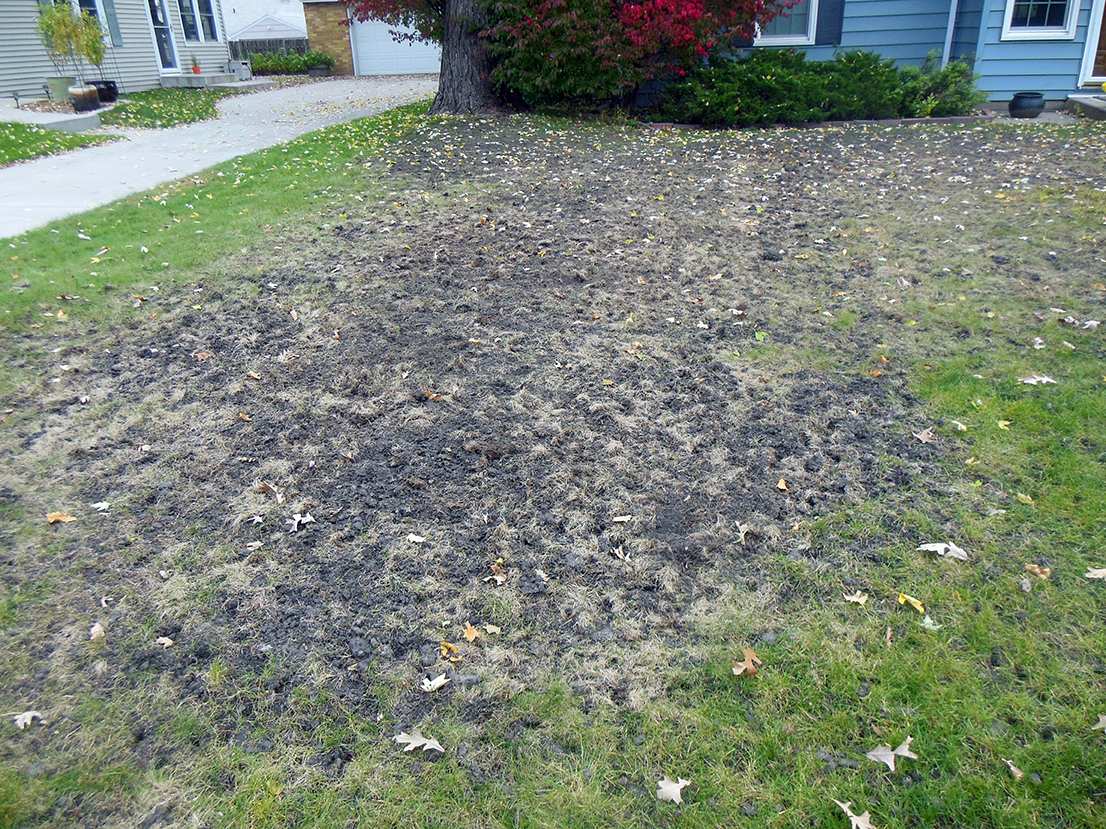
Image source: Bing (Web (fair-use with source credit))
The difference this makes for treatment timing is critical. Spring grubs are mostly getting ready to pupate and stop feeding. They're big, woody, and metabolizing more slowly than their smaller fall counterparts.
A dormant-season treatment of an adult-labeled applied broad-spectrum insecticide is unlikely to penetrate effectively. Some turf managers follow a simple rule: threshold test in early spring, treat only if counts are high and move your preventative game to early summer. If counts drop naturally, the cycle is already broken.
Spring feeding rarely causes turf-killing damage in well-managed deep-rooted turf types. Cool-season perennial ryegrass has enough root reserves to survive moderate early-season feeding. If you see damage showing alongside them, that's a signal you've got a serious infestation that was simply undetected, perhaps from the previous late summer's heavy flight and uncontrolled hatch.
Step up the monitoring plan for this upcoming season, and most extension guidance suggests digging multiple confirmation plugs per zone to establish a current profile before taking action.
Keep a historical log from this year moving forward. Recording where threshold counts happen, when breakouts peak, and when they naturally go quiet builds a program that relies much less on reactive decisions. By the third consecutive season, your focus can shift to a summer-timed routine built on that data.
How to Check Your Lawn for Grubs: A Step-by-Step Soil Sampling Guide
Getting an accurate count before you spend money on any treatment involves a simple dig test. Here's how to do it practically.
- Choose the sampling zones carefully. Focus on areas where turf looks stressed, where beetle activity was highest last early summer, or two to three non-adjacent spots spread across the lawn.
- Cut a square foot plug at the edge of the damage using a spade or flat shovel, and remove no more than two inches deep.
- Lift that square, break apart the soil, and carefully sort through all of it with your hands. Count all curled, white- to cream-colored grubs you find.
- Dig down another two inches in the same spot. Repeat and add those to your count. Root-feeding larvae often move vertically through the soil profile.
- Multiply that average by a proportional factor if the product label uses that reference, or just directly compare to the published threshold. Many university extension services provide zone-typical threshold numbers that account for the regional species' feeding patterns.
If you find more than half a dozen grubs firmly rooted in the top soil and the turf is still struggling, it's time to reach for a higher-level product than whatever mild option you grabbed off the shelf. The grubs are that large and resilient because a lower-intensity trial didn't move the needle early or stop the peak hatch.
Species Guide: Who You're Dealing With in Your Region
Each scarab grub species found in US and UK habitats has its own regional spread, typical rotation, and damage potential. Match what you're fighting to the species first, because your control window shifts depending on it.
| Species | Region | Life Cycle | Key Identifier | |———|——–|——| | Japanese beetle | Most of the eastern US, spreading west from its early-season launch period after establishment, present in isolated European zones | Single-year typical, feeding in late summer through the following early summer, adjusted slightly by local frost timing | Small, three-quarters inch max body, two distinct parallel row spines along the raster pattern | | European chafers | Northeast and upper Midwest US, throughout Britain in a well-seasoned population introduced from Europe | Single-season roster, hatch timing just behind your local Japanese beetles | Mid-sized, dorsal raster pattern in the anal slit appears as a simple continuous bar | | Northern masked chafers | Northeast, Midwest US, and across southern England | One-year rotation | Very early adult flight in the late spring and early summer in temperate regions, smaller adult size around a half-inch max | | Green June beetles | Southern US, mid-Atlantic | Often requires two summer feeding seasons to complete growth, body length crosses one inch at peak biomass | Unrolls and crawls on its back when moving, a genuinely bizarre sight when you first see one | | Asiatic garden beetle | Widespread in the eastern US, isolated regional spot reports | One-season plan in most years over much of its range | Smaller than chafers, feeds deeper and later than nearly any other lawn grub, often missed in standard inspections |
A few specialist species show up as regional exceptions with longer life cycles tied to soil moisture and plant diversity, particularly in managed turf near permanent water sources. The map and rotation summary here covers the overwhelming majority of turf-damaging appearances, but pay heed to any known county-level species reported to be escalating.
Key lookup features. Every white grub body ends with a raster pattern on the underside of the abdomen. That pattern of hairs and spines in that region is the single most reliable field identification method.
Professionals photograph that area under a hand lens and compare it to a regional identification key supplied by university extensions. If casual rows of spines show parallel lines, the grub is almost certainly a Japanese beetle. A single wide bar and you've got a European chafer.
Smooth raster with gaps and you may be staring at an Asiatic garden beetle.
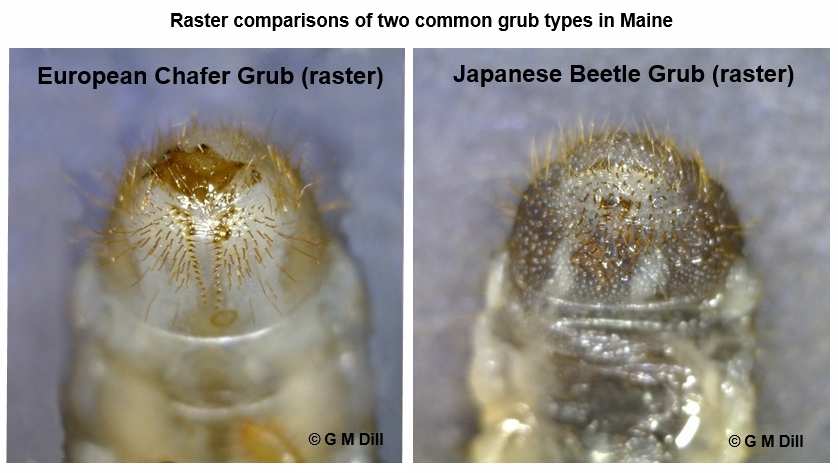
Image source: Bing (Web (fair-use with source credit))
Organic and Biological Options: Timing Them to the Life Cycle
Several biological controls offer a valid path for grubs from all the major scarab species, but they demand even stricter timing windows than chemical options. Biology moves slowly, so untimed biocontrol is the most frequent organic failure and a leading source of abandoned interventions. Nematode products alone are often misapplied out of season, and that mistake can wipe out years of patient soil improvement.
The only real safety comes from understanding that the biological's window of peak viability is when young fresh larvae are feeding and warm soil holds good moisture, no breaks, and no extremes.
Milky spore
Popillia japonica is typically the sole species that takes up the milky spore bacterium as a significant natural control factor. It requests a multi-year installation schedule in warm soil before peak deterrent effect is established. Not a quick fix.
Some user reports note reliable reduction after sustained application with that consistent layering.
Beneficial nematodes
Three commercial nematode species currently sold as biocontrols all need soil conditions to be in an active window: moist but not waterlogged, sunlight-protected, and properly watered in after application. They seek out and enter the grub body. Reproduction and subsequent spread into adjacent turf can provide residual knock-down across an ongoing season if the hatches bracket the application.
Multiple staged treatments across spring and fall splits, spaced about a month apart, can be timed to mirror the natural break points when many species transition between feeding dormancy and active spread.
Fungal agents
Metarhizium and Beauveria formulations act very slowly under all but the peak soil temperature conditions required to maintain full spore viability. Heavy rain immediately after a drench application can wash the spores too deep for larvae to encounter. These are sold as niche options for historically persistent populations, not a standard broadcast category, but they keep showing up in the professional advisor's toolkit.
When to Call in Professional Lawn Care for Grub Problems
There's a point when the density of a turf infestation exceeds what any homeowner broadcasting a granular treatment can cover successfully. The cue is not found in text descriptions. It's found by digging the plugs and counting what's there.
Professional monitoring services across hot zones will generally suggest a tailored integrated management plan that combines early and late season applications. For heavy ongoing pressures, this two-bucket approach may be as simple as a low-rate summer entrant plus a conventional fall curative, but real programs skip the guesswork and lock in an annual rotation. University extension services across the country publish good guidance on what works when.
Penn State Extension provides timings for turf systems in the Northeast. Oregon State University Extension covers the same ground for Pacific Northwest ground. Any service provider without the local zone in their proposal should not be trusted with applications tied to area-specific biology.
Grub FAQs: Lifespan, Overwintering, Damage Recovery, and What to Do Next
The fastest practical question is usually whether a sample found in the spring is a new outbreak, an exhausted survivor from last year, or something in the middle. A fresh outbreak sample looks like a mix of fresh eggs, post-hatch instars, and early-stage root feeding marks in intact crown tissue. Spring survivors from last year's brood will be exclusively in the pre-pupal or dispersal stage, and any weight gain is nearly locked.
Our most frequently received questions about white grub lifespan and lawn care timing usually resolves to a common pattern: old survivors versus new larvae in one big question. The simplest solution remains digging the plugs. The answer is almost always determined by body size and body color.
That cheap test changes everything.
The second most common asks about treatment timing from fall back into the initial season. Windows shift and vary by species zone and product rotation, but the practical separation works out to roughly four to five months for insecticide product performance season. Every published fall timing guide and seasonal recommendations breaks a second season as largely a redevelopment phase and keep the structural routine going for long-term control.
A few we hear as a close third revolve around biological versus chemical. Almost all the long-term grass enhancement plans make room for both. Biological options complement a turf care calendar, they don't immediately replace the instant kill response chemical chemistry provides during destructive feeding phases in a spike season.
Frequently Asked Questions
Do grubs die in winter?
No, the overwintering survival stage of root-feeding larvae ride out the cold by moving as deep as needed below the frost line. Control because grubs shift below the insecticide-treated band of soil is wasted. Wait until spring ascent or fast forward the plan entirely to the following preventative window.
Can grass recover from grub damage?
Absolutely, when the feeding takes place in spring, or strictly in a single fall. Established turf in properly maintained soil pushes new growth and fills in within a single growing season. When multi-season feeding continues unchecked and the root mass has badly declined, overseeding and targeted renovation may be the faster path.
How deep do grubs go in winter?
Surviving larvae move below the local frost line, which can be four to eight inches deep across most of the northern US and Britain. Escape depth is the key reason winter insecticide applications provide poor results.
Do I need to treat for grubs every year?
Not universally. If monitoring data shows the thresholds have been under-breached for two consecutive seasons, the preventative application calendar provides a gentle break in funding and insecticide load. But skimping on the monitoring can break that treatment holiday quickly.
Annual thresholds and routine dig checks still go on.
Frequently Asked Questions
Do grubs die in winter?
No. White grubs overwinter as larvae by moving below the frost line, sometimes as deep as six to eight inches. They're dormant but very much alive.
This is exactly why winter insecticide applications rarely work. The grubs are simply too deep for the product to reach them.
Can grass recover from grub damage?
Yes, in most cases. If the damage happened in a single season and the crowns are still intact, established turf will fill back in with proper watering and fertilization. You'll want to reseed bare patches where the roots were completely severed.
Grass that's been chewed down for two or three consecutive seasons may need more aggressive renovation.
How deep do grubs go in winter?
Typically four to eight inches, depending on species and how cold your winters get. They follow the frost line down. That's why spring treatments need to wait until they move back up into the root zone, usually when soil temperatures at four inches hit around 50°F.
Do I need to treat for grubs every year?
Not necessarily. If your monitoring shows low counts for two straight years, you can often skip a preventative application. Keep sampling though.
Populations can rebound quickly if adult beetle pressure increases. Many homeowners fall into a pattern of treating every other year, then adjusting based on what the soil samples show.
What's the difference between grub damage and drought stress?
Grub damage peels back like carpet because the roots are severed. Drought-stressed turf stays anchored but feels dry and springy underfoot. The tug test is the quickest way to tell.
Grab a handful of brown grass and pull. If it lifts easily with no resistance, you've got grubs. If it holds firm, look at your watering schedule first.
Are all white grubs bad for lawns?
No. Some species like the black turfgrass ataenius can actually be beneficial in low numbers. Even Japanese beetle grubs at low densities won't cause visible damage.
The action threshold for most cool-season turf is around six to ten grubs per square foot. Below that, your grass can usually outgrow the feeding.