Don’t let crabgrass ruin your Bermuda lawn! This guide offers safe and effective methods to eliminate this invasive weed while preserving your desirable turf. We cover identification, prevention, and targeted treatments.
It’s that time of year again. The sun is shining, the air is warm, and your beautiful Bermuda grass is starting to look its best. But wait, what’s that patchy, clumpy weed popping up everywhere? It’s crabgrass, and if left unchecked, it can quickly take over your lawn, turning your lush green carpet into a speckled mess. Dealing with crabgrass in a Bermuda lawn can feel like a tricky balancing act. You want to get rid of that unsightly weed, but you absolutely do not want to damage your precious Bermuda grass in the process. Fortunately, it’s entirely possible to achieve a crabgrass-free Bermuda lawn with the right knowledge and approach.
Bermuda grass is a warm-season grass that thrives in the heat. Crabgrass, also a warm-season annual, loves the same conditions. This makes them natural competitors. Crabgrass seeds can lie dormant in your soil for years, waiting for the perfect opportunity to sprout. That opportunity usually comes in the spring when soil temperatures consistently reach the right range, often around 50-55°F. Once it germinates, crabgrass grows rapidly, outcompeting your desirable turf for sunlight, water, and nutrients. Its shallow, spreading root system and unsightly appearance make it a persistent nuisance. But don’t despair! With a little effort and the right strategies, you can successfully tackle crabgrass and keep your Bermuda lawn looking its best.
## Understanding Crabgrass and Your Bermuda Grass
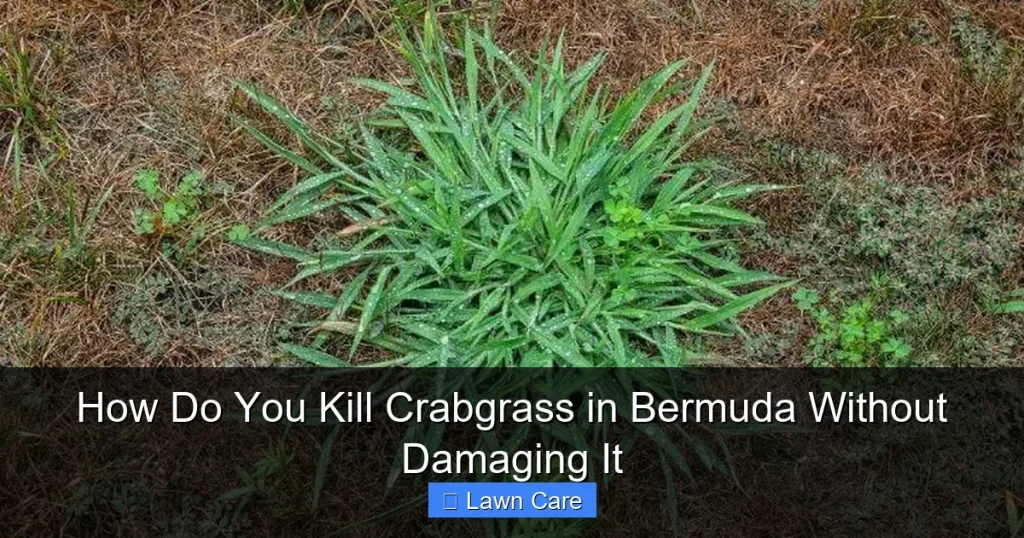
Before we dive into the solutions, it’s essential to understand what we’re up against. Crabgrass is an annual grassy weed. This means it completes its life cycle in one growing season and then dies off with the first frost. However, it produces thousands of seeds before it dies, ensuring its return next year. Its growth pattern is distinctly different from Bermuda grass. Crabgrass tends to grow in low, spreading clumps, often originating from a central base. The blades are typically a lighter green than healthy Bermuda grass and have a somewhat coarser texture. If you want to get a head start on combating this weed, knowing how to identify it is crucial. You can learn more about this by reading up on [how do you identify crabgrass in your lawn](https://lawnhelpful.com/how-do-you-identify-crabgrass-in-your-lawn/).
Bermuda grass, on the other hand, is a dense, sod-forming grass. It spreads aggressively via stolons and rhizomes, creating a thick, resilient turf. When healthy, Bermuda grass is very competitive and can choke out many weeds. The challenge with crabgrass is that it germinates and thrives during the same time Bermuda grass is actively growing, making them direct competitors. When crabgrass gets established, it can shade out and suffocate the Bermuda grass, leading to thinning and bare patches. This is why a proactive and selective approach is so important when tackling crabgrass in your Bermuda lawn.
### Recognizing the Enemy: Crabgrass Characteristics
Crabgrass has several tell-tale signs. It typically germinates in disturbed areas of the lawn, along sidewalks, driveways, or where the soil has been compacted. The leaves are light green and have a somewhat flat, open growth habit. The stems, called tillers, often grow horizontally along the ground and can root at the nodes, creating new plants. You’ll often see these tillers branching out from the main plant, forming a sprawling mat. The seed heads, when they appear, are distinctive spike-like structures, usually appearing in late summer or early fall. Unlike Bermuda grass, which forms a dense, upright growth, crabgrass sprawls. Recognizing these characteristics early is your first line of defense.
### Why Bermuda Grass is Vulnerable
Bermuda grass, while tough, has specific vulnerabilities when it comes to crabgrass. Its primary vulnerability is timing. Crabgrass germinates in the spring, right when Bermuda grass is emerging from dormancy and starting its vigorous growth phase. If crabgrass seeds sprout before Bermuda grass becomes dense enough to compete, the crabgrass can get a significant head start. Furthermore, Bermuda grass can be stressed by improper mowing height, over- or under-watering, and excessive shade. Stressed Bermuda grass is less competitive, creating more opportunities for crabgrass to establish itself.
## The Power of Prevention: Pre-Emergent Herbicides
The most effective way to deal with crabgrass is to prevent it from germinating in the first place. This is where pre-emergent herbicides come in. These herbicides don’t kill existing plants; instead, they create a chemical barrier in the soil that prevents weed seeds from sprouting. Applying a pre-emergent at the right time is absolutely critical for its success. For Bermuda grass, which is a warm-season grass, this means applying it in early spring, before soil temperatures consistently reach the 50-55°F mark for several days.
### When to Apply Pre-Emergents
Timing is everything with pre-emergent herbicides. You want to apply them before the crabgrass seeds have a chance to germinate. A good rule of thumb is to apply when the dogwoods are starting to bloom, or when redbud trees are flowering. Another indicator is when your soil temperature consistently stays above 50°F for a few days. If you live in a region with early springs, you might need to apply as early as February or March. If you’re unsure, a soil thermometer can be a handy tool. Applying too early won’t hurt, but it might mean the barrier breaks down before the full germination period. Applying too late means you’ve missed the window, and the crabgrass will sprout anyway. Understanding [how often do you apply crabgrass preventer](https://lawnhelpful.com/how-often-do-you-apply-crabgrass-preventer/) is also important for long-term control.
### Choosing the Right Pre-Emergent
There are many pre-emergent herbicides available on the market. For Bermuda grass, look for products that are labeled as safe for use on warm-season turfgrasses. Common active ingredients in pre-emergent herbicides include prodiamine, dithiopyr. Always read the product label carefully. It will specify the types of weeds it controls and the types of turfgrass it is safe for. Some products are specifically designed for crabgrass prevention, while others offer broader pre-emergent control. Always ensure the product is explicitly stated as safe for Bermuda grass.
### Proper Application Techniques
Applying a pre-emergent herbicide correctly ensures it works effectively and safely. First, make sure your lawn is mowed and free of debris. Then, carefully follow the mixing and application instructions on the product label. Use a properly calibrated spreader or sprayer to ensure an even application. Overlapping your passes slightly can help prevent gaps where weeds might emerge. After application, it’s often recommended to lightly water the area. This helps to move the herbicide into the top layer of soil where it can form its protective barrier. However, always check the label, as some products require a rain or irrigation event, while others may instruct you to avoid watering for a certain period.
## Post-Emergent Control: Tackling Existing Crabgrass
Even with the best prevention strategies, some crabgrass may still sprout. This is where post-emergent herbicides come into play. These are designed to kill actively growing weeds. The challenge with post-emergent crabgrass control in Bermuda grass is finding herbicides that are selective, meaning they kill crabgrass but leave your Bermuda grass unharmed. This is often trickier than pre-emergent application because Bermuda grass is more sensitive to herbicides when it’s actively growing.
### Selective Post-Emergent Herbicides
When treating existing crabgrass, you need to choose herbicides that specifically target crabgrass without harming your Bermuda grass. Look for products containing active ingredients like quinclorac, fenoxaprop-ethyl, or MSMA (though MSMA use is becoming more restricted in some areas). Quinclorac is often a good choice for Bermuda grass as it’s known for its effectiveness against crabgrass and relative safety on this turf type. Fenoxaprop-ethyl is another option that can be effective. Always, always, always read the label to confirm it’s safe for Bermuda grass and to understand the correct application rates and timings. Applying these herbicides when the crabgrass is young and actively growing will yield the best results.
### The Importance of Correct Timing and Conditions
Treating crabgrass with post-emergent herbicides is most effective when the weed is young and actively growing. Applying herbicides when the grass is stressed from heat, drought, or recent mowing can increase the risk of damaging your Bermuda grass. Ideally, apply post-emergent herbicides on a calm, overcast day when temperatures are moderate (typically between 60-85°F). Avoid applying when rain is expected within 24 hours, as it can wash the herbicide away. Applying when your Bermuda grass is healthy and well-watered will help it recover more quickly from any temporary stress caused by the herbicide. If you’re struggling with identifying weeds or knowing when to treat, learning [how do you know if you have crabgrass](https://lawnhelpful.com/how-do-you-know-if-you-have-crabgrass/) is a good first step.
### Spot Treatment vs. Broadcast Application
For small infestations of crabgrass, spot treatment is often the best approach. This involves applying the herbicide directly to the individual crabgrass plants. This saves you money on herbicide and minimizes the amount of chemical applied to your lawn. Use a pump sprayer with a targeted nozzle for precision. For larger, more widespread infestations, a broadcast application over the entire lawn may be necessary. If you opt for broadcast application, ensure you use the correct rate for your lawn size and the specific product you are using. Over-application can lead to severe damage to your Bermuda grass.
## Cultural Practices for a Crabgrass-Resistant Lawn
Herbicides are powerful tools, but they are most effective when used in conjunction with good cultural practices. A healthy, dense Bermuda grass lawn is your best defense against crabgrass. By providing the right conditions for your Bermuda grass, you make it more competitive and less susceptible to weed invasion. This means focusing on proper mowing, watering, and fertilization.
### Mowing Height Matters
The ideal mowing height for Bermuda grass is relatively low, typically between 0.5 to 1.5 inches. However, mowing too low can stress the grass and create open areas where crabgrass can thrive. Conversely, mowing too high can encourage thatch buildup, which can also harbor weed seeds. Find the right balance for your specific Bermuda grass variety and mowing equipment. Always use a sharp mower blade; a dull blade tears the grass, creating ragged edges that are more susceptible to disease and stress.
### Smart Watering and Fertilization
Proper watering is essential. Bermuda grass is drought-tolerant once established, but it still needs consistent moisture, especially during hot, dry periods. Water deeply and infrequently to encourage deep root growth. Avoid frequent, shallow watering, which can lead to shallow roots and a weaker plant. Fertilization should be based on soil test results. Bermuda grass is a heavy feeder, but over-fertilizing can lead to excessive thatch and an imbalance that favors weeds. A balanced fertilizer applied at the right time – typically in late spring and mid-summer – will help your Bermuda grass stay lush and competitive.
### Aeration and Dethatching
Over time, your Bermuda grass lawn can develop compacted soil and a thick layer of thatch. Aeration involves poking small holes in the soil, which improves air, water, and nutrient penetration to the root zone. Dethatching removes the layer of dead grass stems and roots that accumulates on the soil surface. Both of these practices help to strengthen your Bermuda grass and make it more resistant to weeds like crabgrass. Aeration is typically done in late spring or early summer, after the grass has fully greened up. Dethatching is also best performed when the grass is actively growing.
## Manual Removal: The Natural Approach
For smaller patches of crabgrass or for those who prefer a more natural approach, manual removal is a viable option. Pulling weeds by hand can be very effective, especially when the soil is moist. This is a great way to deal with crabgrass before it has a chance to set seed.
### When and How to Hand-Pull
The best time to hand-pull crabgrass is after a good rain or after watering your lawn. Moist soil allows you to pull the entire plant, including its root system, which is crucial for preventing regrowth. Grasp the base of the crabgrass plant firmly and pull upwards. If you only pull off the top, the roots can remain in the soil and the plant can regrow. Try to remove as much of the root system as possible. Dispose of the pulled weeds away from your lawn to prevent seeds from spreading.
### Benefits of Manual Removal
Hand-pulling is an eco-friendly way to control crabgrass. It eliminates the need for chemicals and is completely safe for your Bermuda grass. It also gives you the opportunity to inspect your lawn closely, identifying any other potential problems. While it can be labor-intensive, it’s a very rewarding method, especially for smaller infestations. For those looking for more natural solutions, exploring [how do you kill crabgrass naturally](https://lawnhelpful.com/how-do-you-kill-crabgrass-naturally/) might offer additional helpful tips.
## Dealing with Mature Crabgrass and Seed Heads
Crabgrass is an annual, so it will eventually die off with the first frost. However, a mature crabgrass plant can produce thousands of seeds, ensuring its return next year. If you have mature crabgrass, the goal is to remove it before it goes to seed.
### Removing Before Seeding
If you have crabgrass that has already developed seed heads, the most important thing you can do is remove it before those seeds mature and drop. You can either hand-pull these plants or use a post-emergent herbicide that targets mature crabgrass. Once the seed heads have formed, it’s much harder to kill the plant without risking damage to your Bermuda grass. If you cut the grass low enough with a mower, you might be able to catch some of the seed heads, but this is not a guaranteed solution.
### What Happens After Crabgrass Dies
Once the first frost arrives, mature crabgrass plants will die. This will leave behind bare or thin patches in your Bermuda lawn. These patches are prime real estate for new weeds to sprout next year. This is where proper lawn care comes in. You’ll want to address these bare spots promptly. Overseeding your Bermuda lawn in the spring or summer, or addressing them with [how do you fix bare patches in bermuda grass](https://lawnhelpful.com/how-do-you-fix-bare-patches-in-bermuda-grass/), can help to thicken your lawn and prevent future weed invasions.
## Summary: A Multi-Pronged Approach
Successfully controlling crabgrass in your Bermuda lawn requires a combination of strategies. Prevention is always the best medicine. Start with a pre-emergent application in early spring to stop the seeds from germinating. Maintain a healthy, dense Bermuda grass lawn through proper mowing, watering, and fertilization. This makes your turf more competitive against any weeds that do manage to sprout. When crabgrass does appear, use selective post-emergent herbicides designed for Bermuda grass, applied at the correct time and conditions. For small infestations, don’t hesitate to hand-pull. By combining these methods, you can effectively manage crabgrass and enjoy a beautiful, weed-free Bermuda lawn all season long. Remember, consistent effort and understanding your lawn’s needs are key to achieving long-term success. While tackling crabgrass is a common concern, you might also encounter other lawn challenges. For instance, if you’re dealing with tough perennial weeds, understanding [how do you kill dallisgrass without killing grass](https://lawnhelpful.com/how-do-you-kill-dallisgrass-without-killing-grass/) could be beneficial.
- Identify crabgrass early: Recognize its distinct growth pattern and appearance to act before it spreads.
- Timing is crucial: Understand that early spring is the best time for prevention and that treating mature crabgrass requires careful selection of herbicides.
- Selective herbicides are key: Use products specifically designed to target crabgrass without harming Bermuda grass.
- Proper application matters: Follow label instructions precisely for herbicides, ensuring correct dosage and timing for maximum effectiveness and safety.
- Cultural practices aid control: A healthy, dense Bermuda lawn is your best defense against crabgrass invasion.
- Manual removal is an option: For small infestations, hand-pulling can be effective, especially when the soil is moist.
- Prevention is better than cure: Implement pre-emergent strategies in early spring to stop crabgrass seeds from germinating.
Quick Answers to Common Questions
When is the best time to apply pre-emergent herbicide for crabgrass in Bermuda grass?
The ideal time is early spring, before soil temperatures consistently reach 50-55°F for several days, typically when dogwoods or redbud trees begin to bloom.
Can I use a general-purpose weed killer on crabgrass in my Bermuda lawn?
No, general weed killers can often harm or kill Bermuda grass. You must use selective herbicides specifically labeled as safe for Bermuda grass and effective against crabgrass.
Is it okay to mow my Bermuda grass right before or after applying a herbicide?
It’s generally best to avoid mowing for a few days before and after applying herbicides. This allows the herbicide to be absorbed effectively and reduces stress on the grass.
How can I tell if my Bermuda grass is being damaged by a herbicide?
Look for signs of yellowing, browning, wilting, or stunted growth in your Bermuda grass. If you see these symptoms, stop herbicide application and consult product instructions or a lawn care professional.
What should I do if I miss the pre-emergent window and see crabgrass already growing?
You’ll need to use a selective post-emergent herbicide that is safe for Bermuda grass. Act quickly to treat the crabgrass while it’s young and actively growing.
Frequently Asked Questions
Will crabgrass die on its own in the winter?
Yes, crabgrass is an annual weed. It will naturally die off with the first frost of winter. However, it will have already produced thousands of seeds to ensure its return the following year.
How can I prevent crabgrass from coming back next year?
The best way to prevent crabgrass is through a consistent pre-emergent application in early spring. Maintaining a healthy, dense Bermuda grass lawn through proper cultural practices will also make it harder for crabgrass to establish.
Is it possible to kill crabgrass without any chemicals?
Yes, you can control crabgrass with manual removal (hand-pulling) and by promoting a healthy, dense lawn that outcompetes weeds. Exploring natural methods can also be effective for smaller infestations.
What are the signs of crabgrass infestation in my Bermuda lawn?
Crabgrass typically appears as patchy, clumpy weeds with lighter green, coarser blades that spread along the ground. It often germinates in disturbed or thin areas of the lawn.
How does crabgrass compete with Bermuda grass?
Crabgrass germinates and grows rapidly in warm conditions, the same as Bermuda grass. It can outcompete Bermuda grass for essential resources like sunlight, water, and nutrients, leading to thinning and bare spots.
Can I treat crabgrass in my Bermuda lawn during the summer?
Yes, you can treat existing crabgrass with selective post-emergent herbicides during the summer, but it requires careful selection of products safe for Bermuda grass and application during cooler parts of the day to avoid stressing the turf.