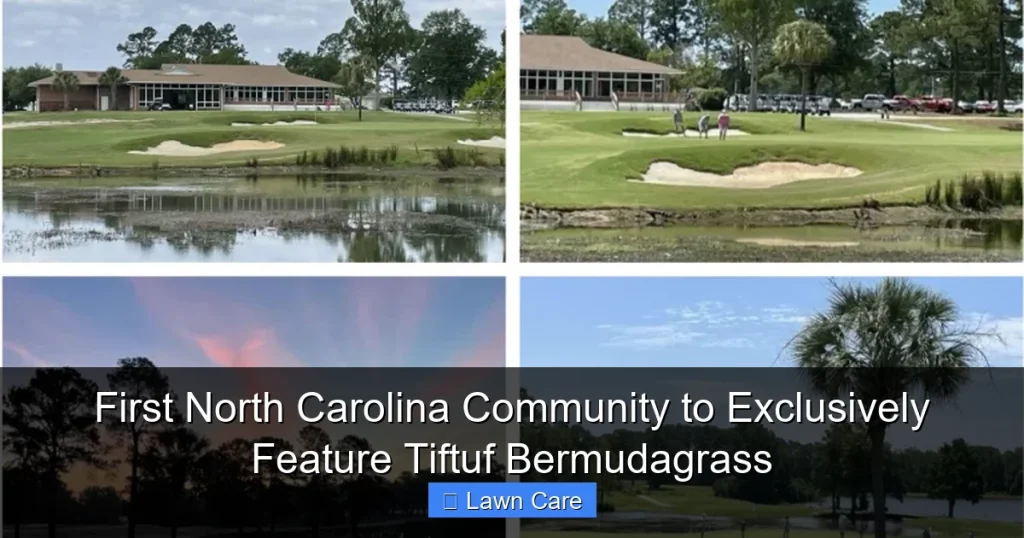
A groundbreaking community in North Carolina is setting a new standard for lawns by exclusively featuring Tiftuf Bermudagrass. This decision highlights Tiftuf’s superior qualities, promising residents low-maintenance, drought-tolerant, and visually stunning landscapes. It’s a win-win for homeowners and the environment.
It’s not every day you hear about an entire community deciding to go all-in on a single type of grass. But that’s exactly what’s happening in a new development in North Carolina, and it’s pretty exciting news for lawn enthusiasts. This community has made the unique choice to exclusively feature Tiftuf Bermudagrass across all its properties. This is a first for North Carolina, and it really speaks volumes about the qualities of Tiftuf and the vision of this forward-thinking community.
For homeowners, the dream is often a lush, green, and easy-to-maintain lawn. We all want that perfect carpet of grass that looks great without demanding constant, back-breaking work. Tiftuf Bermudagrass is engineered to deliver just that. Its development involved advanced breeding techniques, focusing on traits that make it stand out from the crowd. When an entire community commits to one grass type, it signals a significant belief in its performance and long-term benefits. Let’s dive into why this choice is making waves and what it means for the residents.
## The Rise of Tiftuf Bermudagrass
Tiftuf Bermudagrass is a relatively new player in the turfgrass world, but it’s quickly making a name for itself. Developed by the University of Georgia, it’s a sibling to the popular Tifton 419, but with some significant upgrades. What sets Tiftuf apart is its exceptional resilience. It’s bred for high wear tolerance, meaning it can bounce back quickly from heavy traffic – think kids playing, pets running, or even occasional events held on the lawn. This makes it a fantastic choice for busy households.
### Unpacking Tiftuf’s Key Advantages
* Drought Tolerance: One of Tiftuf’s most impressive features is its incredible drought tolerance. It has a deeper root system than many other Bermuda varieties, allowing it to seek out water even during dry spells. This is a huge advantage, especially in regions like North Carolina that can experience periods of low rainfall. Less watering means lower water bills and a more sustainable lawn.
* Wear Tolerance: As mentioned, Tiftuf is a champion when it comes to recovering from damage. Whether it’s the scuff marks from soccer practice or the enthusiastic digging of a family dog, Tiftuf Bermudagrass can handle it. This resilience ensures your lawn stays looking its best, no matter how active your lifestyle.
* Disease Resistance: Turfgrass diseases can be a homeowner’s nightmare. Fortunately, Tiftuf has been bred to resist many common lawn diseases, reducing the need for chemical fungicides and giving you peace of mind.
* Cold Hardiness: While Bermuda grass is generally a warm-season grass, Tiftuf boasts improved cold tolerance compared to some older varieties. This is crucial for North Carolina, where winter temperatures can dip significantly. It means Tiftuf can maintain its structure and begin greening up earlier in the spring.
* Fine Texture and Dark Green Color: Beyond its functional benefits, Tiftuf also offers excellent aesthetic appeal. It has a fine leaf texture that creates a smooth, luxurious feel underfoot and a vibrant, deep green color that is truly eye-catching.
## Why This Community Chose Tiftuf Exclusively
The decision by this North Carolina community to go exclusively with Tiftuf Bermudagrass is a strategic one, aiming to create a cohesive and high-quality aesthetic across all properties. It’s about more than just aesthetics, though. It’s about establishing a benchmark for low-maintenance, sustainable, and beautiful landscapes that residents will enjoy for years to come.
### Creating a Unified Landscape Vision
When a community opts for a single turfgrass type, it fosters a sense of uniformity and planned beauty. Every lawn will have a similar texture and color, contributing to a polished and cohesive neighborhood appearance. This uniformity can also positively impact property values. Buyers are often attracted to well-maintained communities with consistent landscaping.
### Long-Term Cost Savings for Homeowners
One of the most compelling reasons for adopting Tiftuf Bermudagrass is its low-maintenance profile. For homeowners, this translates directly into significant time and cost savings. With its superior drought tolerance, the need for frequent and extensive watering is drastically reduced. This not only conserves water but also lowers water bills. Furthermore, Tiftuf’s inherent disease resistance and wear tolerance mean fewer applications of fertilizers and pesticides are needed. This saves money on lawn care products and reduces the environmental impact.
### Environmental Benefits of Tiftuf
Choosing Tiftuf Bermudagrass is also an environmentally conscious decision. Its ability to thrive with less water makes it a water-wise grass, which is increasingly important in many regions. Reduced reliance on fertilizers and pesticides contributes to healthier soil and waterways, benefiting the local ecosystem. A community that prioritizes sustainability in its landscaping choices is a community that’s thinking about the future.
## Practical Lawn Care for Tiftuf in North Carolina
Even with a superior grass like Tiftuf, proper care is still essential to ensure it looks its best. Understanding the specific needs of Tiftuf Bermudagrass in the North Carolina climate will help residents maximize its potential.
### Watering Wisely
While Tiftuf is drought-tolerant, it still needs water, especially when it’s establishing or during extended dry periods. The key is to water deeply and infrequently. This encourages the roots to grow deeper, making the grass even more resilient. In North Carolina, timing is crucial. It’s generally best to water early in the morning to allow the grass blades to dry before nightfall, which helps prevent fungal diseases. Overwatering is a common mistake that can lead to shallow root systems and other problems, so err on the side of less rather than more.
### Mowing for Optimal Health
Proper mowing is vital for Tiftuf Bermudagrass. Bermuda grasses, including Tiftuf, prefer to be mowed at a lower height than many other grass types. A mowing height of 1 to 2 inches is typically recommended. Mowing too high can lead to a weaker, less dense turf. It’s also important to mow regularly during the growing season to maintain this ideal height. As a rule of thumb, never remove more than one-third of the grass blade in a single mowing. This helps the grass recover quickly. For best results, ensure your lawn mower blades are sharp. Dull blades can tear the grass, leading to a ragged appearance and increased susceptibility to disease. Learn how to mow a lawn for the first time if you’re new to lawn care.
### Fertilization Needs
Tiftuf Bermudagrass is a relatively heavy feeder during its active growing season, which in North Carolina typically runs from late spring through early fall. You’ll want to fertilize to promote healthy growth and that rich green color. Look for a balanced fertilizer or one specifically formulated for Bermuda grass. Applying fertilizer when the grass is actively growing is key. For North Carolina, this often means applying in late spring and again in mid-summer. Avoid fertilizing when the grass is dormant or stressed. Understanding the best fertilizer for Bermuda grass in North Carolina can make a big difference.
### Weed and Pest Management
Thanks to its density and disease resistance, Tiftuf is less prone to weed and pest infestations. However, some challenges can still arise. Pre-emergent herbicides can be very effective at preventing weeds like crabgrass from taking hold. Knowing when to apply crabgrass preventer in North Carolina is crucial for proactive weed control. For existing weeds, spot treatment with a post-emergent herbicide may be necessary. Regularly inspecting your lawn for signs of pests or diseases will allow for early intervention, often requiring simpler and less intensive treatments.
## Planting and Establishment
For new lawns in this community, the establishment of Tiftuf Bermudagrass will be a critical phase. While many homeowners might be receiving sod, understanding the process is still beneficial.
### The Best Time to Plant
The ideal time to plant Tiftuf Bermudagrass in North Carolina is during the warmer months when the grass is actively growing. This typically means late spring through summer. This timing allows the grass to establish a strong root system before cooler weather arrives. If you’re dealing with new sod, it can be laid anytime during the active growing season as long as you can provide consistent moisture. For seeding (though sod is more common for Tiftuf), understanding when to seed Bermuda grass in North Carolina is important, but seeding Tiftuf is less common than sodding due to its propagation characteristics.
### Sod vs. Seed
Tiftuf Bermudagrass is most commonly established from sod. Sod provides a mature lawn much more quickly than seed and offers a higher chance of successful establishment, especially for a grass with Tiftuf’s specific traits. The sod is laid on prepared soil, watered thoroughly, and then needs consistent moisture for the first few weeks as the roots knit into the ground. This approach ensures a dense, uniform turf right from the start.
## The Future of Lawn Care in North Carolina
This community’s exclusive use of Tiftuf Bermudagrass is a trend that could shape the future of residential landscaping in North Carolina and beyond. It represents a move towards more resilient, water-wise, and aesthetically pleasing turfgrass solutions. For residents, it means less worry about their lawns and more time to enjoy their homes and neighborhoods.
### A Model for Sustainable Landscaping
By choosing a drought-tolerant and low-maintenance grass like Tiftuf, this community is setting a positive example for sustainable landscaping practices. It demonstrates that beautiful, high-performance lawns don’t have to come at the expense of water conservation or excessive chemical use. This model can inspire future developments and encourage individual homeowners to make similar informed choices about their turfgrass.
### Long-Term Value and Enjoyment
The commitment to Tiftuf Bermudagrass offers homeowners long-term value. A healthy, robust lawn enhances the curb appeal of a home, contributes to a pleasant living environment, and requires less ongoing investment in terms of time and money for upkeep. This allows residents to focus on other aspects of their lives and enjoy their outdoor spaces without the constant stress of lawn maintenance. It’s a win-win for everyone involved, creating a beautiful, thriving community for years to come. The widespread adoption of such high-quality turfgrass varieties points to a growing understanding of the benefits of investing in the right grass from the start.
Key Takeaways
- Tiftuf Bermudagrass Chosen Exclusively: An entire community in North Carolina has committed to using Tiftuf Bermudagrass for all its lawns, a first for the state.
- Exceptional Durability and Resilience: Tiftuf is renowned for its ability to withstand heavy foot traffic, drought, and disease, making it ideal for active families and challenging climates.
- Low Maintenance Benefits: Homeowners in this community can expect significantly reduced watering needs and less frequent fertilization, saving time and resources.
- Superior Cold Tolerance: Tiftuf offers better cold hardiness compared to many other Bermuda varieties, performing well even through North Carolina’s cooler spells.
- Aesthetically Pleasing: This grass variety boasts a fine texture and a vibrant green color, contributing to beautiful, uniform landscapes.
- Environmentally Friendly Choice: Its drought tolerance means less water consumption, and its resilience can reduce the need for chemical treatments, promoting a healthier ecosystem.
- Setting a New Standard: This community’s adoption of Tiftuf Bermudagrass could inspire other developments and homeowners to consider this high-performance turfgrass.
Quick Answers to Common Questions
What is Tiftuf Bermudagrass?
Tiftuf Bermudagrass is a highly resilient turfgrass variety known for its exceptional drought tolerance, wear resistance, and disease resistance, making it an excellent choice for lawns.
Why is this community the first in North Carolina to exclusively feature Tiftuf Bermudagrass?
This community is the first because it has made a conscious decision to use Tiftuf for all its properties, aiming for a uniform, low-maintenance, and aesthetically pleasing landscape across the entire development.
What are the main benefits of Tiftuf Bermudagrass for homeowners?
Homeowners benefit from reduced watering needs, less fertilization, a lawn that withstands heavy traffic, and a beautiful, deep green appearance, leading to lower costs and less maintenance effort.
Is Tiftuf Bermudagrass suitable for North Carolina’s climate?
Yes, Tiftuf Bermudagrass is well-suited for North Carolina’s climate. It’s a warm-season grass that also possesses improved cold hardiness compared to many other Bermuda varieties, allowing it to perform well through the state’s varying temperatures.
How does Tiftuf Bermudagrass contribute to environmental sustainability?
Its significant drought tolerance means reduced water consumption. Additionally, its resilience can decrease the need for chemical treatments like pesticides and fungicides, promoting a healthier environment.
Frequently Asked Questions
What makes Tiftuf Bermudagrass different from other Bermuda grasses?
Tiftuf Bermudagrass stands out due to its superior drought tolerance, exceptional wear and tear recovery, and enhanced cold hardiness. These traits are the result of advanced breeding that focused on making the grass tougher and more adaptable to various conditions.
How often should I water a Tiftuf Bermudagrass lawn in North Carolina?
Water deeply and infrequently. Water only when the lawn shows signs of drought stress, such as a bluish-gray tint or footprints that remain after walking on it. During hot, dry periods, this might be once a week, but during cooler, wetter periods, it might be much less.
What is the best mowing height for Tiftuf Bermudagrass?
Tiftuf Bermudagrass thrives when mowed relatively low, typically between 1 and 2 inches. Regular mowing is essential to maintain this height and promote a dense, healthy turf.
Can Tiftuf Bermudagrass handle pets and children playing on it?
Absolutely. Tiftuf Bermudagrass is known for its high wear tolerance, meaning it recovers quickly from the stresses of heavy foot traffic, pets, and active play. This makes it ideal for family yards.
Will Tiftuf Bermudagrass stay green year-round in North Carolina?
No, Tiftuf Bermudagrass is a warm-season grass, so it will go dormant and turn brown during the winter months in North Carolina. It will typically start to green up again in the spring as temperatures rise.
What are the advantages of a community exclusively using one type of grass?
An exclusive grass choice creates a uniform and aesthetically pleasing landscape throughout the community. It can also streamline maintenance efforts and promote a cohesive neighborhood identity, potentially enhancing property values.