Image source: iNaturalist / Irene
If you've spent any time in gardening forums or chatted with a neighbor who swears by their deer-proofing tricks, you've probably heard someone suggest hanging bags of human hair around your garden. It sounds almost too simple. Save hair from your next haircut, stuff it in an old sock, and deer will supposedly turn around and walk the other way.
But does human hair keep deer away, or is this one of those folk remedies that sounds good but falls apart under scrutiny?
The honest answer is more nuanced than a simple yes or no. Human hair can act as a mild scent deterrent in some situations, but it's far from a reliable standalone solution. Deer are adaptable, and what works in one backyard may do nothing in another.
In our research, we found that the effectiveness of human hair depends heavily on deer population density, regional habituation, weather, and how the hair is deployed. Let's break down what's actually going on, what the evidence says, and what you should realistically expect if you try it.
Quick Answer: Does It Work or Is It Myth?
Human hair may temporarily deter deer in low-pressure areas. There is no peer-reviewed evidence that it works as a consistent, standalone repellent. Most university extension services classify it as a folk remedy with unreliable results.
If you're dealing with serious deer pressure, you'll need stronger methods.
Why People Think Human Hair Repels Deer
The idea behind using human hair is straightforward. Deer rely heavily on their sense of smell to detect predators and unfamiliar threats. Human scent, the logic goes, signals danger.
A deer catching a whiff of something distinctly human might associate it with people nearby and decide the area isn't safe for feeding.
This reasoning isn't entirely baseless. Deer in rural or heavily hunted areas do tend to be more wary of human scent. The problem is that deer in suburban and urban environments often have very little fear of people.
They've grown accustomed to human activity, foot traffic, and the smells that come with residential neighborhoods. In those settings, a bag of hair isn't going to register as a threat.
The folk remedy has been passed around for decades, often by well-meaning gardeners who happened to hang hair bags during a season when deer pressure was low anyway. Correlation got mistaken for causation. That doesn't mean the idea is worthless, but it does mean you should understand its limits before relying on it.
Image source: Pixabay / Nennieinszweidrei (Pixabay Content License)
What the Research and Extension Services Actually Say
When you look at what agricultural extension programs and wildlife researchers have to say, the picture is pretty consistent. Human hair is not listed among proven deer deterrents by any major university extension service as of 2026.
Penn State Extension, Cornell Cooperative Extension, and the University of Minnesota Extension all acknowledge that scent-based deterrents can play a role in deer management. However, they emphasize that commercial repellents with active ingredients like putrescent egg solids, capsaicin, or predator urine have far more documented effectiveness. Human hair, by contrast, lacks controlled studies demonstrating reliable results.
A review of literature published in the Journal of Wildlife Management found that olfactory deterrents work best when they're novel, rotated frequently, and combined with other strategies. The scent of human hair fades quickly, especially after rain, and deer can habituate to any single scent within days to weeks. Without rotation and reinforcement, even commercial repellents lose their edge.
The USDA Wildlife Services program, which deals with wildlife damage management at a national level, recommends integrated approaches. Physical barriers, habitat modification, and regulated hunting are the backbone of their recommendations. Scent deterrents are considered supplementary at best.
How Deer Behavior Affects Whether Hair Works
Understanding deer behavior is key to figuring out whether human hair has any chance of working in your specific situation. Deer aren't a monolith. Their response to human scent varies dramatically based on several factors.
Habituation level is the biggest variable. Deer in suburban developments where people walk dogs, mow lawns, and fill bird feeders every day have largely lost their fear of human scent. A bag of hair in that environment is background noise.
In contrast, deer in remote rural areas or regions with active hunting seasons may be far more skittish around anything that smells like people.
Deer population pressure matters too. When deer density is high and food sources are limited, deer become bolder. They'll tolerate a lot more risk to reach a food source they want.
A hungry deer in a hard winter is not going to be deterred by a sock full of hair.
Seasonal behavior also plays a role. During spring and early summer, does with fawns are focused on high-nutrition browse. In fall, bucks during the rut are distracted and less cautious.
In winter, when natural food is scarce, deer are desperate enough to eat things they'd normally avoid. Hair is least likely to work during these high-pressure periods.
Species differences are worth noting as well. White-tailed deer, the most common species across the eastern US, tend to be more adaptable and bolder than mule deer in the western states. If you're dealing with whitetails in a suburban setting, hair is even less likely to make a difference.
How to Use Human Hair as a Deterrent (If You Want to Try It)
If you want to test human hair in your garden, there's no harm in trying. It's free, non-toxic, and easy to set up. Just go in with realistic expectations and treat it as one layer in a broader strategy rather than your only line of defense.
Sourcing and Preparing the Hair
The easiest way to get a meaningful quantity of hair is to ask at local barbershops and hair salons. Many will happily give you clippings or sweepings if you ask. A single barbershop can generate a surprising amount of hair in a week.
Avoid hair that's been treated with heavy gels, sprays, or chemical treatments if possible. The goal is natural human scent, not a cocktail of synthetic fragrances that might attract curiosity rather than repel.
Deployment Methods
There are three common ways to put hair to work around your garden.
Mesh bags or nylon stockings. Stuff hair loosely into old pantyhose, cheesecloth, or any breathable mesh material. Tie them closed and hang them from branches, fence posts, or stakes around the perimeter of your garden. Space them every 6 to 10 feet.
Scatter method. Spread loose hair directly around the base of plants you want to protect. This works best for smaller garden beds. The downside is that rain and wind will scatter or wash it away quickly.
Hair-filled sachets on stakes. Combine hair with other strong scents like soap shavings or dried herbs, place the mixture in small cloth bags, and attach them to stakes driven into the ground at deer-nose height, roughly 2 to 3 feet off the ground.
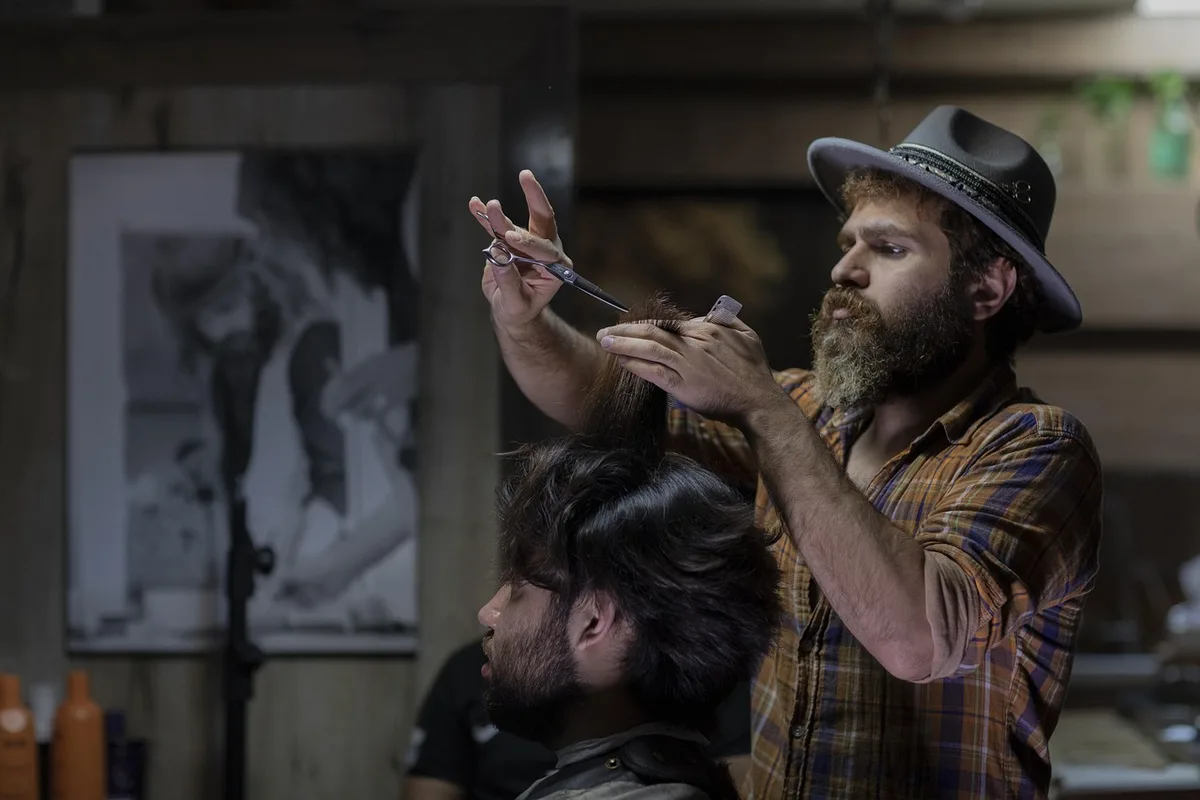
Image source: Pixabay / mostafa_meraji (Pixabay Content License)
Maintenance and Rotation
Replace hair bags every 2 to 4 weeks, or sooner after heavy rain. The scent dissipates, and wet hair loses its effectiveness fast. If you're serious about this approach, set a calendar reminder so you don't forget.
Rotate hair with other deterrent types. Hang soap bars one week, switch to hair bags the next, then try a commercial spray the week after. The constant change in scent profile is what keeps deer uncertain.
A single, unchanging deterrent is the fastest path to habituation.
What to Watch For
Monitor your plants for fresh browse damage. Deer leave distinctive torn or ragged edges on stems, unlike the clean cuts made by rabbits or groundhogs. If you're still seeing damage after two weeks of hair deployment, it's time to escalate to stronger methods.
Don't keep doing the same thing and expecting different results.
What Works Better: Proven Deer Deterrent Methods Compared
If hair alone isn't cutting it, and for most people it won't be, you need to know what actually works. Here's an honest breakdown of the most common deer deterrent methods, ranked roughly by reliability.
| Method | Effectiveness | Cost | Effort | Best For |
|---|---|---|---|---|
| 8-foot woven wire fencing | Very High | $1,000 to $5,000+ | High (installation) | Permanent gardens, orchards, nurseries |
| Double-fence system (two 4-foot fences, 4 feet apart) | High | $800 to $3,000 | High | Areas where tall fencing isn't practical |
| Electric fencing | High | $200 to $800 | Medium | Farms, large crop areas |
| Commercial scent repellents (egg, predator urine, capsaicin) | Moderate | $15 to $50 per season | Low to Medium | Home gardens, supplemental protection |
| Motion-activated sprinklers | Moderate | $30 to $100 per unit | Low | Small to medium gardens |
| Soap bars hung on trees | Low to Moderate | $5 to $15 | Low | Low deer pressure areas |
| Human hair bags | Low | Free | Low | Supplemental layer only |
| Noise and light deterrents | Low | $20 to $60 | Low | Short-term, deer habituate quickly |
Image source: Pixabay / kershnek (Pixabay Content License)
Physical barriers are the gold standard. An 8-foot woven wire fence is the only method that consistently excludes deer across all conditions. Deer can jump, but they generally won't clear 8 feet unless they're being chased or are extremely motivated.
For a less expensive option, a double-fence setup uses two shorter fences spaced about 4 feet apart. Deer don't like being confined in a narrow space and will usually avoid jumping into the gap.
Commercial repellents are the next best option for most homeowners. Products containing putrescent egg solids, capsaicin, or predator urine have actual field data behind them. They need reapplication every 2 to 4 weeks and after rain, but they're far more reliable than hair.
Rotate between at least two different active ingredients to slow habituation.
Motion-activated sprinklers like the Orbit Yard Enforcer can be surprisingly effective. They startle deer with a burst of water and a sudden noise. They work best when you move them every few days so deer can't predict the location.
When Human Hair Might Help, and When It Won't
There are specific scenarios where hair has a reasonable chance of contributing to your deer management plan. And there are situations where it's essentially a waste of time.
Hair might help if:
- You're in a rural area with low deer density
- The local deer population has recent exposure to hunting pressure
- You're using hair as one layer among several rotating deterrents
- Your garden is small and you can maintain fresh hair bags consistently
- Deer pressure is mild, meaning you're protecting a few prized plants rather than an entire food plot
Hair won't help if:
- You're in a suburban area with habituated deer
- Deer population density is high in your region
- You're trying to protect a large area like an orchard or row crops
- It's winter and natural food sources are scarce
- You're relying on hair as your only deterrent method
The key takeaway is context. Hair isn't universally useless, but it's universally insufficient on its own. Think of it as a minor supporting player, not the star of your deer defense strategy.
Common Mistakes People Make with DIY Deer Repellents
Even well-intentioned gardeners make errors that undermine their own efforts. Here are the most frequent mistakes we've seen in our research.
Relying on a single method. This is the number one mistake. Deer are smart and adaptable. Any single deterrent, no matter how strong, will lose effectiveness over time.
Layering multiple methods is the only approach that holds up.
Not reapplying after rain. Scent-based deterrents wash away. If you put out hair bags or spray repellent and then get three days of rain, you're essentially starting over. Check the weather and reapply proactively.
Placing deterrents at the wrong height. Deer feed at nose level, roughly 2 to 3 feet off the ground for most browsing. Hanging a hair bag at 6 feet means the scent is dissipating above the deer's head where it does nothing.
Assuming all garden damage is from deer. Rabbits, groundhogs, voles, and even squirrels cause damage that gets blamed on deer. Deer leave ragged, torn edges on stems because they lack upper incisors and have to pull and rip. Rabbits make clean, angled cuts.
Identify the actual culprit before investing in the wrong solution.
Giving up too quickly, or not giving up quickly enough. Some people try a method for two days and declare it useless. Others keep using the same failed approach for an entire season. Give a method about two weeks.
If you're still seeing significant damage, it's time to switch tactics.
Seasonal and Regional Factors That Change Everything
Deer behavior shifts dramatically throughout the year, and your deterrent strategy should shift with it.
Spring is when deer are most vulnerable to deterrents. Natural browse is abundant, so they're picky. A mild repellent might be enough to push them toward easier food sources.
This is the best time to establish your deterrent routine before deer get comfortable in your garden.
Summer brings new growth and fawning season. Does are nursing and need high-calorie food. They're motivated and less easily deterred.
Consistent reapplication of repellents is critical during this period.
Fall rut changes everything. Bucks are focused on mating, not feeding efficiency. They're moving constantly and are less cautious.
Does are building fat reserves for winter. Deer pressure on gardens often peaks in October and November.
Winter is the hardest season for deterrence. Natural food is scarce, and deer are hungry enough to eat almost anything. This is when physical barriers earn their keep.
Scent deterrents alone rarely hold up against winter browse pressure.
Regionally, the Northeast and Midwest face the highest deer densities in the country. Suburban sprawl in these areas has created ideal deer habitat with abundant edge cover, ornamental plantings, and a lack of predators. If you're in a state like Pennsylvania, New York, or Michigan, expect higher deer pressure than someone in the arid Southwest or the open Plains states.
In the UK and Europe, roe deer and fallow deer present similar challenges but with different behavioral patterns. Roe deer are more solitary and cautious, which means novel scents might have a slightly longer window of effectiveness. Fallow deer, often found in parkland settings, can be just as habituated as suburban whitetails in the US.
Expert Tips for Protecting Your Garden from Deer
After reviewing extension service recommendations and wildlife management research, these are the strategies that consistently come out on top.
Start with a perimeter approach. Don't wait until deer are already eating your tomatoes. Set up deterrents before they establish your garden as a food source. Once deer learn a location has good food, they'll keep coming back.
Rotate deterrents on a schedule. Switch between scent types every 2 to 3 weeks. Combine scent deterrents with physical ones. The goal is to keep deer uncertain and uncomfortable.
Use plants deer dislike as a border. Surround your garden with strongly scented herbs like lavender, rosemary, sage, or ornamental alliums. These won't stop a determined deer, but they add another sensory layer that makes your garden less appealing.
Install temporary electric fencing for seasonal protection. A simple two-strand electric fence with polytape is affordable and effective. Run one strand at 18 inches and another at 36 inches. Bait the tape with peanut butter so deer investigate and get a memorable shock.
This conditions them to avoid the area.
Keep your garden tidy. Deer prefer cover. Overgrown edges, brush piles, and tall grass near your garden give deer a sense of security. Maintain a clean, open border around growing areas.
Talk to your neighbors. Deer don't respect property lines. If your neighbor is feeding deer or has an unprotected garden that serves as a buffet, your efforts will be undermined. A coordinated neighborhood approach is far more effective than going it alone.
When to Call in Professional Wildlife Help
Most homeowners can handle deer issues with the methods we've covered. But there are situations where bringing in a professional makes sense.
If you're managing a large property, a commercial nursery, or a farm with significant crop losses, the economics shift. A wildlife damage management professional can assess your specific situation and design a targeted plan. Your state Department of Natural Resources can usually point you toward licensed operators.
You should also seek professional advice if deer are causing damage that threatens your livelihood. A few nibbled hostas are an annoyance. Losing an entire season's crop to deer is a financial emergency.
Frequently Asked Questions
How long does human hair keep deer away?
Human hair may deter deer for a few days to a couple of weeks at best. Rain, humidity, and scent habituation reduce effectiveness quickly. Without rotation and reapplication, expect minimal lasting impact.
Is human hair safe to use around pets and children?
Yes. Human hair is non-toxic and poses no chemical risk. The main concern is hygiene.
Hair collected from salons may carry trace amounts of hair products. Keep bags out of reach of small children and pets who might chew on them.
Can I use dog or cat hair instead of human hair?
Pet hair has been tried as a deterrent, but the logic is weaker. Deer in many areas are already accustomed to the scent of domestic animals. Human scent is more novel in most environments, which is why it's the more commonly recommended option.
What is the single most effective way to keep deer out of a garden?
An 8-foot woven wire fence. It's the only method that provides consistent, year-round exclusion regardless of deer pressure, season, or habituation level. No scent deterrent matches the reliability of a physical barrier.
Do commercial deer repellents actually work?
Yes, with caveats. Products containing putrescent egg solids, capsaicin, or predator urine have documented effectiveness when applied correctly and rotated regularly. They're not foolproof, but they're significantly more reliable than folk remedies like hair.
Will deer eventually get used to any deterrent?
Yes. Habituation is the biggest challenge in deer management. Deer learn that a scent or sound doesn't pose a real threat.
This is why rotating methods and combining physical barriers with scent deterrents is essential for long-term success.
Bottom Line: Should You Bother Using Human Hair?
Human hair is free, easy to deploy, and harmless. If you've got a barbershop willing to save clippings for you, there's no reason not to try it as one small piece of a larger strategy. Just don't expect it to carry the load on its own.
The evidence is clear that hair works, at best, as a mild and temporary deterrent in low-pressure situations. For anyone dealing with serious deer damage, physical barriers and commercial repellents are where your time and money are better spent. Layer your methods, stay consistent, and adjust based on what you're actually seeing in your garden.
That's the approach that holds up over the long haul.