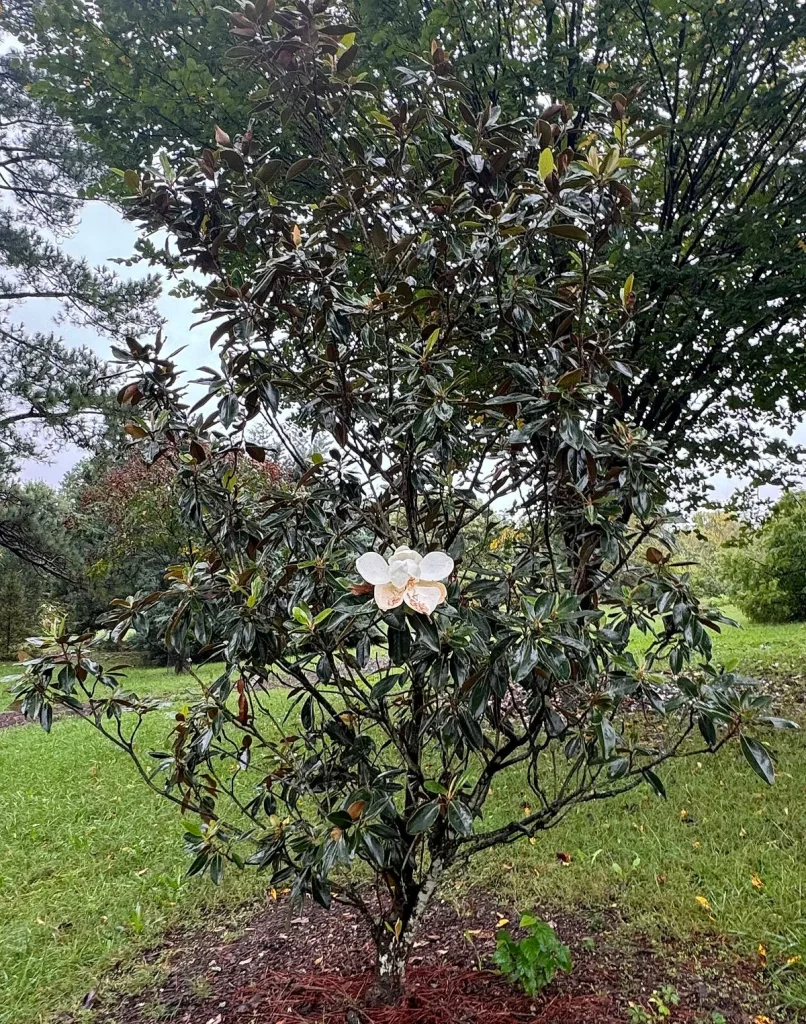
Choosing between a D.D. Blanchard magnolia and a Little Gem magnolia comes down to one thing: how much room you've got. Both are Southern Magnolia cultivars with that classic creamy white bloom and incredible fragrance, but they end up at very different sizes.
Pick the wrong one for your space, and you'll be dealing with a tree that fights your house, your driveway, or your patience.
The D.D. Blanchard is a big, bold tree that can hit 50 to 60 feet tall with a 40-foot spread. The Little Gem stays in the 15 to 25-foot range and keeps a narrow, tidy profile.
As of 2026, both are widely available at nurseries across the Southeast, and the price difference between them is usually modest. Let's break down exactly what you're getting with each one.
Quick Answer: Which Magnolia Should You Pick?
D.D. Blanchard magnolia grows 50 to 60 feet tall and 30 to 40 feet wide. Little Gem magnolia stays 15 to 25 feet tall and 8 to 12 feet wide.
D.D. Blanchard has larger blooms but a shorter bloom window. Little Gem blooms for months, not weeks.
Choose D.D. Blanchard for large landscapes. Choose Little Gem for small yards.
D.D. Blanchard Magnolia: What You're Getting
The D.D. Blanchard is a cultivar of Southern Magnolia (Magnolia grandiflora) selected for its particularly large, glossy dark green foliage and impressive flower size. The leaves have that signature bronze-brown underside you see on classic Southern Magnolias, and they're thick, leathery, and substantial.
The blooms are the real showstopper. We're talking 8 to 12 inches across, cup-shaped, creamy white, and intensely fragrant with that sweet lemony scent Southern Magnolias are famous for. The downside is the bloom window is relatively short, typically late spring into early summer.
You get a spectacular but brief display.
This tree grows at a moderate to fast rate, putting on 1 to 2 feet per year in good conditions. It develops a broad, dense, pyramidal to rounded crown that creates serious shade. At maturity, you're looking at a canopy spread of 30 to 40 feet.
That's a lot of tree.
The root system is shallow and spreading, typical of Magnolia grandiflora. That means grass won't grow well underneath it, and you'll want to plan for a mulch bed or groundcover beneath the canopy. The year-round leaf drop is constant, and because the leaves are large and tough, they're not the kind of debris that disappears on its own.
Little Gem Magnolia: What You're Getting
The Little Gem is also a Magnolia grandiflora cultivar, but it was selected specifically for its compact size and extended blooming habit. It's one of the most popular dwarf Southern Magnolia varieties for residential landscapes, and for good reason.
The flowers are smaller than D.D. Blanchard's, typically 4 to 6 inches across, but they're the same creamy white and just as fragrant. What sets Little Gem apart is the bloom period.
Instead of a few weeks in late spring, it flowers from late spring all the way into early fall. You get repeat blooming over several months, which is a huge advantage if you want that magnolia experience lasting longer.
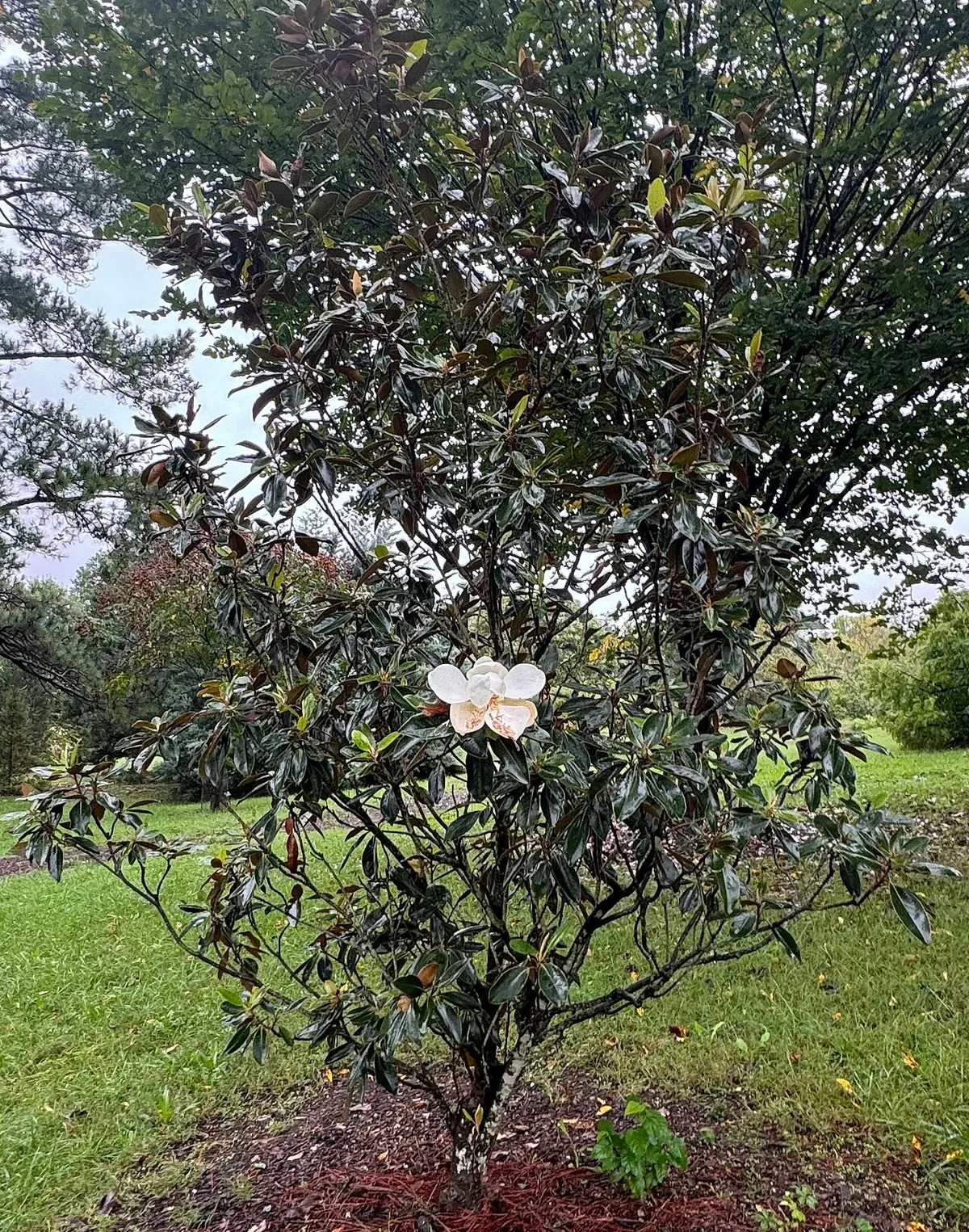
Growth is slow to moderate, around 6 to 12 inches per year. The form is narrow and upright to pyramidal, which makes it work in tight spaces where a full-size Southern Magnolia simply wouldn't fit. At maturity, you're looking at 15 to 25 feet tall and 8 to 12 feet wide.
That's a fraction of the D.D. Blanchard's footprint.
The leaves are similar in appearance to D.D. Blanchard's but slightly smaller. Same glossy dark green on top, same brown underside.
The leaf litter is still there, year-round, but the volume is much more manageable because the tree is so much smaller.
Side-by-Side Comparison at a Glance
Here's where the differences really become clear. This table covers the key specs that matter when you're deciding between these two.
| Attribute | D.D. Blanchard | Little Gem |
|---|---|---|
| Mature Height | 50–60 ft | 15–25 ft |
| Mature Spread | 30–40 ft | 8–12 ft |
| Bloom Diameter | 8–12 inches | 4–6 inches |
| Bloom Period | Late spring to early summer | Late spring to early fall |
| Growth Rate | Moderate to fast (1–2 ft/yr) | Slow to moderate (6–12 in/yr) |
| USDA Hardiness Zones | 7–9 | 6b–9 |
| Ideal Soil pH | 5.0–6.5 | 5.0–6.5 |
| Sun Requirement | Full sun to partial shade | Full sun to partial shade |
| Canopy Shape | Broad, pyramidal to rounded | Narrow, upright to pyramidal |
| Leaf Litter Volume | Heavy | Moderate |
| Best For | Large yards, estates, shade | Small yards, screens, containers |
Both trees share the same soil and sun preferences. They want well-drained, slightly acidic soil with a pH between 5.0 and 6.5. They do best in full sun to partial shade.
Both are hardy in USDA Zones 7 through 9, though Little Gem can handle Zone 6b in sheltered microclimates.
The growth rate difference is significant. If you want a tree that makes an impact quickly, D.D. Blanchard gets there faster.
Little Gem takes its time, which also means it stays manageable longer without aggressive pruning.
Best for Each Use Case
D.D. Blanchard is the right choice when:
- You have a large property with plenty of open space
- You want a shade tree that cools a significant area
- You're planting a specimen tree meant to be a landscape centerpiece
- You want the largest possible magnolia blooms
- You don't mind regular leaf cleanup and maintenance at scale
- You're planting well away from structures, driveways, and power lines
Little Gem is the right choice when:
- You have a small or medium-sized urban or suburban yard
- You need a tree that fits near the house or along a side yard
- You want a privacy screen or narrow hedge (it plants well in rows)
- You want blooms over months, not just a few weeks
- You prefer lower maintenance and less leaf litter
- You're in Zone 6b or 7 and need a bit more cold tolerance
If you're working with a small yard, Little Gem is almost always the smarter pick. A D.D. Blanchard planted in a tight space will eventually conflict with your house foundation, roofline, or underground utilities.
The shallow, spreading roots of a full-size Southern Magnolia can lift sidewalks and driveways over time. Give it the room it needs, or go with the compact option.
For homeowners dealing with lawn challenges under either tree, it's worth noting that grass struggles beneath magnolia canopies. The dense shade and shallow roots make it tough. You might consider alternatives like groundcover or mulch beds instead of fighting a losing battle with turf.
If you're already dealing with issues like weeds that grow in Bermuda grass or fungus in Bermuda grass, switching to a mulch bed under your magnolia is a practical solution.
Common Mistakes When Choosing Between Them
The biggest mistake is planting a D.D. Blanchard in a yard that can't handle it. That tree will eventually reach 50 to 60 feet tall with a 40-foot spread.
It will overgrow a small lot. It will crowd your house. Its roots will compete with everything nearby.
Another common error is underestimating the leaf litter. Both trees drop leaves year-round. D.D.
Blanchard drops a lot of them. If you're not ready for constant cleanup, or if you're not willing to put down a proper mulch bed, you'll be frustrated.
Some gardeners also assume Little Gem will stay tiny forever. It won't. It reaches 15 to 25 feet tall.
That's compact compared to a full Southern Magnolia, but it's still a real tree. Plan for its mature size, not the size it is at the nursery.
Planting and Early Care for Either Cultivar
Both trees need the same basic setup to get off to a good start. Pick a spot with full sun to partial shade. The soil should be well-drained and slightly acidic, ideally between pH 5.0 and 6.5.
If your soil is alkaline, you'll need to amend it.
Dig the hole twice as wide as the root ball but no deeper. The top of the root ball should sit slightly above grade. Backfill with native soil mixed with organic compost.
Water deeply right after planting.
Mulch 2 to 4 inches deep over the root zone. Keep the mulch a few inches away from the trunk. Water weekly for the first two to three growing seasons.
Once established, both cultivars are moderately drought-tolerant.
Fertilize in early spring with a balanced slow-release formula. Avoid feeding after midsummer. That can push tender new growth that won't harden off before winter.
Long-Term Maintenance Differences
D.D. Blanchard requires more hands-on maintenance at maturity. The size alone makes pruning a job for a professional arborist.
You'll need to keep an eye on clearance around structures and power lines. The heavy leaf drop means regular cleanup, especially in spring when older leaves shed all at once.
Little Gem is much more manageable. Its smaller size means you can handle pruning yourself with basic tools. The leaf litter is still there, but the volume is lower.
The slower growth rate also means less frequent pruning is needed.
Both trees are susceptible to magnolia scale, a common pest that appears as white or brown bumps on the branches. If you see sticky honeydew or black sooty mold on the leaves, scale is likely the culprit. Treat with horticultural oil during the crawler stage in late summer or early fall.
Leaf yellowing can happen in alkaline soils. If you notice chlorosis, test your soil pH and amend accordingly. Iron supplements can help in the short term.
What About Other Compact Magnolia Alternatives?
If Little Gem doesn't feel quite right, there are other compact Southern Magnolia cultivars worth considering.
Teddy Bear stays similar in height to Little Gem but has a more upright, columnar form. It's a good pick if you want height without width.
Bracken's Brown Beauty is a medium-sized option at 30 to 40 feet. It's known for exceptionally dense foliage with heavy brown undersides. It works when you want something bigger than Little Gem but smaller than D.D.
Blanchard.
Edith Bogue is the go-to if you're pushing into colder territory. It's hardy down to Zone 5b, which makes it one of the few Southern Magnolias that can handle real winters.
If you're open to deciduous magnolias, the Sweetbay Magnolia (Magnolia virginiana) offers similar white fragrant blooms with a smaller footprint and faster growth. It's semi-evergreen in warmer zones and fully deciduous up north.
Costs and Availability
Both D.D. Blanchard and Little Gem are widely available at nurseries throughout the Southeast. As of 2026, you can find them at most garden centers and online retailers that ship to USDA Zones 7 through 9.
For a 5-gallon container, expect to pay $35 to $60 depending on the size of the specimen. A 15-gallon tree runs $80 to $200. D.D.
Blanchard tends to be slightly more expensive at larger sizes because it takes up more nursery space and is heavier to ship.
Little Gem is broadly available nationwide, including in regions where Southern Magnolias are less common. Its compact size makes it easier to grow in containers and ship, which keeps prices competitive.
The real cost difference shows up long-term. D.D. Blanchard may need professional pruning, root barrier installation, or hardscape repairs as it matures.
Little Gem rarely needs that level of intervention. Factor in 20 to 30 years of maintenance when you're comparing the two.
Final Verdict: Making Your Decision
If you've got the space, D.D. Blanchard delivers the full Southern Magnolia experience. Massive blooms, dense shade, and a commanding presence.
It's a legacy tree that can anchor a large property for generations.
If space is tight, Little Gem is the clear winner. You still get the fragrance, the evergreen foliage, and those classic white flowers. You just get them in a package that fits a real-world yard.
For most residential situations, Little Gem is the more practical choice. It's easier to maintain, easier to live with, and it blooms for months instead of weeks.
Frequently Asked Questions
Which magnolia is better for a small yard?
Little Gem is the better choice for small yards. It reaches 15 to 25 feet tall and only 8 to 12 feet wide. D.D.
Blanchard needs 50 to 60 feet of vertical space and 30 to 40 feet of spread. That's too much tree for a typical residential lot.
Do both trees have the same fragrance?
Yes. Both D.D. Blanchard and Little Gem produce the classic Southern Magnolia fragrance.
It's sweet, lemony, and strong enough to fill a yard when the trees are in full bloom.
Which one blooms longer?
Little Gem has a significantly longer bloom period. It flowers from late spring into early fall. D.D.
Blanchard blooms for a shorter window, typically late spring through early summer.
Can I grow either of these in Zone 6?
Little Gem can handle Zone 6b in sheltered locations. D.D. Blanchard is reliably hardy in Zone 7 and warmer.
If you're in Zone 6, consider Edith Bogue instead. It's hardy down to Zone 5b.
How far should I plant these from my house?
Plant D.D. Blanchard at least 15 to 20 feet from your foundation. Little Gem needs at least 8 to 10 feet.
Both have shallow, spreading roots that can interfere with hardscape and foundations if planted too close.
Do these trees attract pests?
Both are susceptible to magnolia scale, which appears as bumps on branches and produces sticky honeydew. Sooty mold often follows. Treat scale with horticultural oil during the crawler stage in late summer or early fall.