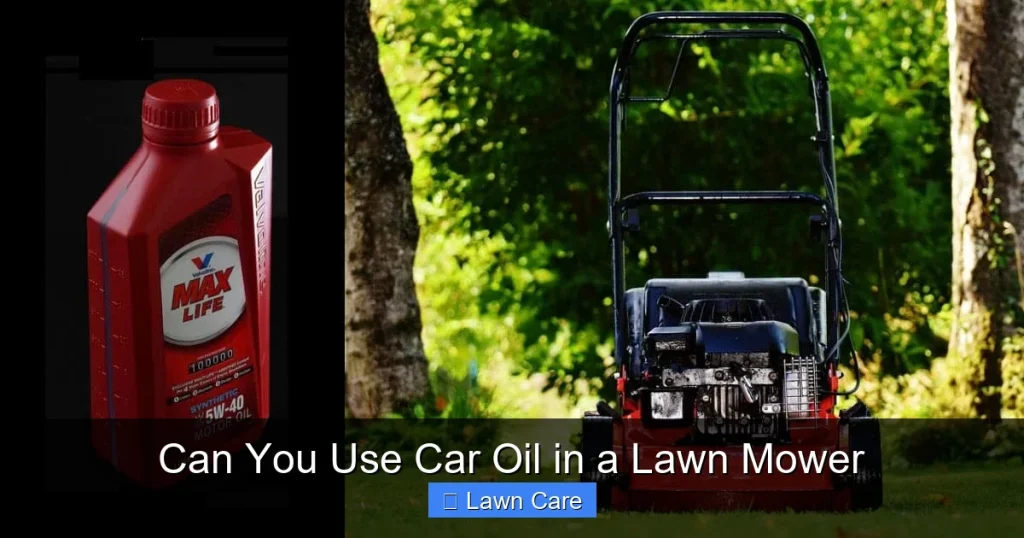
Using car oil in a lawn mower is possible in emergencies, but it’s not ideal. Lawn mower engines have different needs than car engines, and using the wrong oil can cause damage over time. Always check your owner’s manual and use the recommended oil type for best performance.
Key Takeaways
- Car oil can be used temporarily: In a pinch, standard car motor oil (like 10W-30) may work, but it’s not recommended for long-term use.
- Lawn mower engines need specific oil: Small engines run hotter and require oils with additives designed for air-cooled, high-temperature operation.
- Check your owner’s manual: Always refer to the manufacturer’s guidelines for the correct oil type and viscosity.
- Avoid synthetic car oils unless specified: Some synthetic oils contain friction modifiers that can harm small engines.
- Use SAE 30 or 10W-30 for most mowers: These are common, reliable choices for standard lawn mower engines in moderate climates.
- Change oil regularly: Dirty oil reduces engine life—follow the recommended oil change schedule.
- Never use diesel or two-stroke oil: These are not suitable for four-stroke lawn mower engines.
Can You Use Car Oil in a Lawn Mower?
If you’ve ever found yourself staring at a lawn mower with a low oil light and a bottle of car oil in hand, you’re not alone. Many homeowners wonder: Can you use car oil in a lawn mower? The short answer is yes—but with caution. While car oil isn’t the ideal choice, it can work in emergencies. However, understanding the differences between car and lawn mower engines will help you make smarter decisions and protect your equipment.
In this guide, you’ll learn when it’s safe to use car oil, what types are acceptable, and why lawn mower-specific oil is usually the better option. We’ll also walk you through how to check your oil, change it properly, and avoid common mistakes that can shorten your mower’s lifespan.
Understanding Lawn Mower Engines vs. Car Engines

Visual guide about Can You Use Car Oil in a Lawn Mower
Image source: lawngrowth.com
Before deciding whether to pour car oil into your lawn mower, it helps to know how these engines differ.
How Lawn Mower Engines Work
Most lawn mowers use small, four-stroke, air-cooled engines. These engines operate at higher RPMs and generate more heat than car engines. Because they’re air-cooled (not liquid-cooled like cars), they rely heavily on oil to manage heat and reduce friction.
How Car Engines Differ
Car engines are larger, liquid-cooled, and designed to run at lower temperatures over long periods. The oil used in cars contains additives to handle cold starts, long drives, and emissions systems—none of which apply to lawn mowers.
Why the Oil Matters
Using the wrong oil can lead to:
- Increased engine wear
- Overheating
- Reduced lubrication
- Clogged oil passages
That’s why manufacturers recommend specific oils for small engines.
When Is It Safe to Use Car Oil?
Visual guide about Can You Use Car Oil in a Lawn Mower
Image source: crabgrasslawn.com
In a true emergency—like being stranded without lawn mower oil—you can use car oil temporarily. But there are rules to follow.
Acceptable Car Oils in a Pinch
If you must use car oil, stick to these types:
- Conventional 10W-30: This is the closest match to lawn mower oil and works well in most temperatures.
- SAE 30: A single-grade oil that’s safe for warmer weather use.
Avoid high-mileage oils, synthetic blends, or oils with friction modifiers (common in modern cars). These can cause problems in small engines.
When to Avoid Car Oil Altogether
Never use car oil if:
- Your mower uses a two-stroke engine (these require mixed fuel, not oil changes)
- The oil contains detergents or additives not meant for small engines
- You’re using a high-performance or synthetic oil without manufacturer approval
Recommended Oil Types for Lawn Mowers
Visual guide about Can You Use Car Oil in a Lawn Mower
Image source: m.media-amazon.com
For best results, use oil specifically formulated for small engines.
Best Oil Choices
- SAE 30: Ideal for warm climates and standard mowing conditions.
- 10W-30: A multi-viscosity option that works in colder starts and warmer operation.
- Synthetic Small Engine Oil: Offers better protection and longer life—check if your mower allows it.
Many brands like Briggs & Stratton, Honda, and Toro offer their own small engine oils. These are engineered to handle high heat and reduce carbon buildup.
Check the Owner’s Manual
Always refer to your mower’s manual. For example:
- Briggs & Stratton mowers typically recommend SAE 30 or 10W-30.
- Honda mowers often allow synthetic oil in newer models.
- Toro mowers may specify 10W-30 for all-season use.
Following the manual ensures warranty compliance and optimal performance.
How to Check and Change Lawn Mower Oil
Using the right oil is only half the battle—you also need to maintain it properly.
Step 1: Check the Oil Level
- Place the mower on level ground.
- Turn off the engine and let it cool for 10–15 minutes.
- Remove the dipstick, wipe it clean, reinsert it, and pull it out again.
- Check the oil level—it should be between the “Full” and “Add” marks.
- Look at the oil’s color: dark or gritty oil means it’s time for a change.
Step 2: Drain the Old Oil
- Warm up the engine for 2–3 minutes to help the oil flow.
- Disconnect the spark plug wire for safety.
- Place a drain pan under the mower.
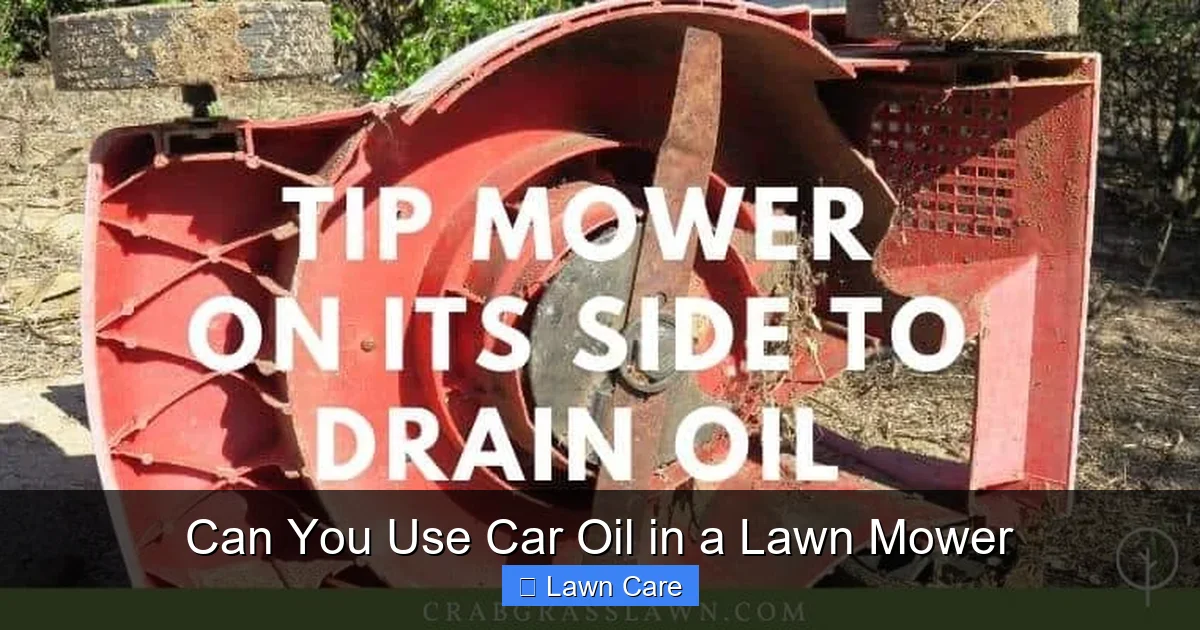
- Remove the oil drain plug (if your mower has one) or tilt the mower to pour out the oil (check your manual first).
- Let the oil drain completely.
Step 3: Add Fresh Oil
- Replace the drain plug or return the mower to upright.
- Use a funnel to pour in the recommended amount of oil (usually 15–18 oz for push mowers).
- Check the level with the dipstick—don’t overfill.
- Reattach the spark plug wire.
For a detailed walkthrough, see our guide on how to change oil in a lawn mower.
Troubleshooting Common Oil Issues
Even with the right oil, problems can happen. Here’s how to spot and fix them.
Smoke Coming from the Mower
Blue or white smoke often means oil is burning. Causes include:
- Overfilled oil reservoir
- Wrong oil viscosity
- Worn piston rings
Solution: Check the oil level and drain excess. If the problem continues, consult a technician.
Engine Overheating
Low or dirty oil can cause overheating. Also check for:
- Clogged air filter
- Blocked cooling fins
- Excessive load (e.g., thick grass)
Solution: Change the oil, clean the mower, and avoid mowing in extreme heat.
Oil Leaks
Leaks may come from:
- Damaged gaskets
- Loose drain plug
- Cracked oil pan
Solution: Tighten connections or replace damaged parts. Avoid overfilling.
Best Practices for Lawn Mower Oil Maintenance
To keep your mower running smoothly:
- Change oil annually: Most mowers need an oil change every 50 hours of use or once per season. See how often to change lawn mower oil for more details.
- Store oil properly: Keep it in a cool, dry place away from sunlight.
- Use a fuel stabilizer: If you’re storing the mower for winter, add stabilizer to the gas and run the engine to circulate it.
- Never mix oil types: Stick to one brand and viscosity unless the manual says otherwise.
Conclusion
So, can you use car oil in a lawn mower? Yes—but only as a temporary fix. While conventional car oils like 10W-30 or SAE 30 can work in a pinch, they’re not designed for the high-heat, high-RPM environment of a small engine. For long-term reliability, always use oil recommended by your mower’s manufacturer.
By checking your oil regularly, changing it on schedule, and using the right type, you’ll extend your mower’s life and avoid costly repairs. And remember: when in doubt, consult your owner’s manual or a small engine specialist.
Taking a few extra minutes to care for your mower now can save you hours of frustration—and keep your lawn looking great all season long.