The quickest way to grow lush Bermuda grass is by preparing your soil, planting at the right time, and maintaining consistent watering and fertilization. Keep your grass healthy by following a balanced care routine and addressing problem areas early. This will help you achieve a dense, vibrant lawn that’s perfect for outdoor activities.
To grow Bermuda grass successfully, start with well-drained, fertile soil and plant seeds during the warm months when conditions favor germination. Regular watering, mowing at the right height, and applying appropriate fertilizers will encourage strong growth. With patience and proper care, your Bermuda grass will thrive and transform your yard into a beautiful, resilient green space.
Growing Bermuda grass quickly and effectively begins with understanding its preferences and needs. This warm-season grass thrives in direct sunlight and requires minimal water once established, making it ideal for many lawns. Proper soil preparation, timely planting, and diligent maintenance are key to cultivating a thick, healthy Bermuda turf. By following these simple steps and paying close attention to your grass’s growth, you’ll be able to enjoy a stunning, low-maintenance lawn that stands up to the heat and foot traffic.

The Best Way to Grow Bermuda Grass
Understanding Bermuda Grass and Why It’s Popular
Bermuda grass is a warm-season grass that thrives in hot climates. It is popular for lawns, sports fields, and golf courses because of its durability and dense coverage. Knowing the basics helps you grow a lush and healthy Bermuda lawn.
Choosing the Right Time to Plant Bermuda Grass
The best time to grow Bermuda grass is in late spring or early summer when soil temperatures reach at least 65°F. Planting during this warm period gives the grass the time needed to establish before cooler weather arrives. Avoid planting in fall or winter to prevent poor germination and growth.
Preparing Your Soil for Bermuda Grass
Proper soil preparation lays the foundation for a healthy Bermuda lawn. Test your soil to check pH levels aiming for a range of 5.8 to 7.0. If necessary, amend your soil by adding lime to raise pH or sulfur to lower it.
To prepare your soil:
- Clear the area of weeds, rocks, and debris
- Loosen the soil with a tiller or garden fork
- Level the surface with a rake for even spreading of seeds or sod
Adding organic matter such as compost improves soil fertility and drainage. This encourages strong root development and healthy growth.
Choosing the Right Bermuda Grass Variety
There are different Bermuda grass varieties optimized for specific needs. For high-traffic areas, consider varieties like Tifway or Tifgreen for their durability. If drought tolerance is a priority, Bermuda types such as Sahara or Celebration are good options.
Compare these varieties based on:
| Variety | Strengths | Best Use |
|---|---|---|
| Tifway | High durability, dense coverage | Sports fields, lawns |
| Sahara | Drought tolerant, low maintenance | Resilient lawns in dry areas |
| Celebration | Fine texture, drought resistance | Homes with limited watering |
Choosing the right variety depends on your climate, usage, and maintenance preferences.
Planting Bermuda Grass: Seeds, Sod, or Sprigs
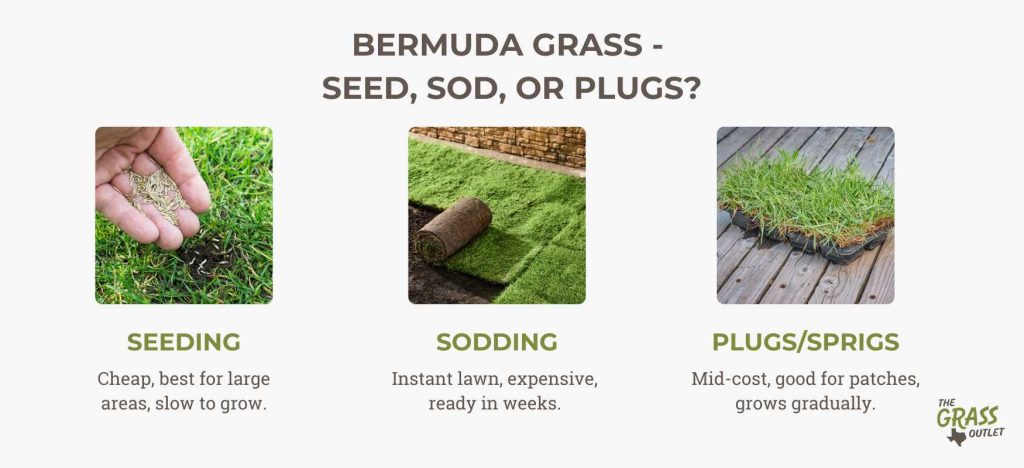
You can grow Bermuda grass by planting seeds, laying sod, or using sprigs. Each method has its advantages and suitability based on your timeline and budget.
- Seeding: Cost-effective but slower to establish. Best for large lawns.
- Sod: Instant lawn with quick results. More expensive but saves time.
- Sprigs or plugs: Moderate cost and moderate establishment time. Ideal for repairing or filling gaps.
Ensure you plant at the correct depth—usually 1/4 to 1/2 inch deep for seeds.
Seeding Bermuda Grass Correctly
For successful seeding:
- Distribute seeds evenly using a broadcast spreader or hand broadcast
- Rake lightly to cover seeds with a thin layer of soil
- Water thoroughly immediately after planting
- Maintain consistent moisture to aid germination
Germination typically occurs within 7 to 14 days if conditions are right.
Installing Bermuda Sod
Lay sod in the same direction with tight joints to prevent gaps. Avoid overlapping edges. Water the sod immediately after installation to help it settle.
Ensure:
- The soil is moist before laying sod
- You roll the sod with a lawn roller for good contact
- Water regularly to keep the sod moist during the initial weeks
Sod establishes faster, often within 2 to 3 weeks.
Planting Bermuda Grass with Sprigs or Plugs
Plant sprigs or plugs in prepared soil with about 6 inches apart. Firm the soil around the sprigs to ensure good contact.
Water daily for the first two weeks to promote rooting. This method takes longer than sod but is more affordable.
Watering Tips for Bermuda Grass
Proper watering is key to healthy Bermuda grass. Water deeply and infrequently to encourage deep roots. Early morning watering helps reduce disease risk.
Aim for:
- About 1 to 1.5 inches of water per week
- Frequency of watering depends on weather, soil, and grass age
- Adjust watering schedule during drought or heavy rain
Avoid overwatering, which can lead to shallow roots and disease problems.
Fertilizing Bermuda Grass
Regular fertilization promotes vibrant green color and dense growth. Use a balanced fertilizer with nitrogen, phosphorus, and potassium.
Typical schedule:
- Apply nitrogen every 6 to 8 weeks during the growing season
- Use slow-release fertilizers for sustained feeding
- Follow manufacturer instructions to prevent over-application
A soil test every year helps you adjust fertilizer needs precisely.
Mowing Bermuda Grass for Best Results
Mow Bermuda grass regularly to a height of 1 to 2 inches. Mowing encourages a thicker, healthier turf.
Tips for mowing:
- Never cut more than one-third of the grass height at once
- Keep mower blades sharp for clean cuts
- Vary mowing patterns to prevent soil compaction
Proper mowing reduces weeds and enhances the lawn’s overall appearance.
Controlling Weeds and Pests
Weed control begins with maintaining a healthy turf. Dense Bermuda grass naturally outcompetes weeds. For persistent weeds, targeted herbicides can be used cautiously.
Monitor pests like grubs or armyworms regularly. Use appropriate insecticides or natural remedies when necessary. Effective pest management keeps your lawn healthy and free of damage.
Managing Wear and Tear
Bermuda grass recovers quickly from foot traffic and damage. Aerate your lawn annually to reduce soil compaction and improve air circulation. Overseed bare patches to maintain a lush appearance.
Proper maintenance ensures your Bermuda grass remains resilient and attractive.
Additional Tips for a Healthy Bermuda Lawn
To keep your lawn in top shape:
- Maintain proper drainage to prevent waterlogging
- Avoid cutting grass during extreme heat or drought
- Keep pet waste off the lawn to prevent damage
- Control thatch buildup by aerating annually
Regular attention and care ensure your Bermuda grass stays vibrant throughout the season.
Related Topics
Explore topics like watering schedules for different climates, organic lawn care methods, and eco-friendly pest control options. These insights help you adapt Bermuda grass care according to your environment and preferences.
Knowing the best way to grow Bermuda grass involves choosing the right planting method, preparing your soil properly, and maintaining consistent care. With patience and attention to detail, you can achieve a lush, green lawn that enhances your outdoor space for years to come.
Bermuda Lawn Care – 5 Basics – For A Nice Green Lawn – Beginners Start Here!
Frequently Asked Questions
What soil conditions are ideal for growing Bermuda grass?
Bermuda grass thrives in well-drained soils with a pH level between 5.8 and 7.0. Sandy loam or loamy soils are ideal because they provide good drainage and aeration. Before planting, test your soil to determine its pH and nutrient levels. Amend the soil with organic matter or topsoil if necessary to improve fertility and drainage. Proper preparation ensures healthy root development and a lush, resilient lawn.
How often should I water Bermuda grass to promote healthy growth?
Water Bermuda grass deeply and infrequently to encourage a strong root system. Typically, it needs about 1 to 1.25 inches of water per week, including rainfall. During hot, dry periods, increase watering frequency to prevent drought stress, ensuring the soil remains moist but not waterlogged. Water early in the morning to reduce evaporation and allow the grass to dry before evening, which helps prevent disease.
What is the best time of year to overseed Bermuda grass for better coverage?
The optimal time to overseed Bermuda grass is during late spring or early summer when the soil temperature reaches around 65°F to 70°F. This period provides ideal conditions for seed germination and establishment. Avoid overseeding during peak heat or cold months, as extreme temperatures can hinder seed growth. Proper timing ensures a quick, healthy cover and a more uniform lawn throughout the season.
Which fertilization practices support the best growth of Bermuda grass?
Apply a balanced fertilizer rich in nitrogen during the active growing season to promote vibrant green color and dense growth. Begin fertilizing in late spring and continue every 6 to 8 weeks throughout the summer. Use soil tests to determine specific nutrient needs and avoid over-fertilizing, which can lead to thatch buildup or excessive growth. Consistent fertilization ensures the grass remains healthy and resilient.
How can I control pests and weeds effectively in Bermuda grass?
Maintain a healthy Bermuda grass lawn through proper mowing, watering, and fertilization to reduce pest and weed susceptibility. Use pre-emergent herbicides in early spring to prevent weed seeds from germinating, and apply targeted post-emergent herbicides to control existing weeds. Regularly inspect your lawn for pests like chinch bugs or grubs, and take prompt action using appropriate treatments. Keeping the grass healthy helps it naturally resist pests and weeds.
Final Thoughts
The best way to grow Bermuda grass involves proper soil preparation and regular watering. Aerate the soil to improve nutrient absorption and ensure even growth. Use a high-quality seed and plant during warm weather for optimal results.
Maintain consistent watering, especially during dry periods, to keep the grass healthy. Mow regularly to promote dense, lush turf and prevent weeds from taking over. Fertilize appropriately to support strong root development.
In conclusion, focusing on soil health, watering, mowing, and fertilizing provides the best way to grow Bermuda grass. Applying these practices consistently helps create a vibrant, durable lawn that thrives season after season.