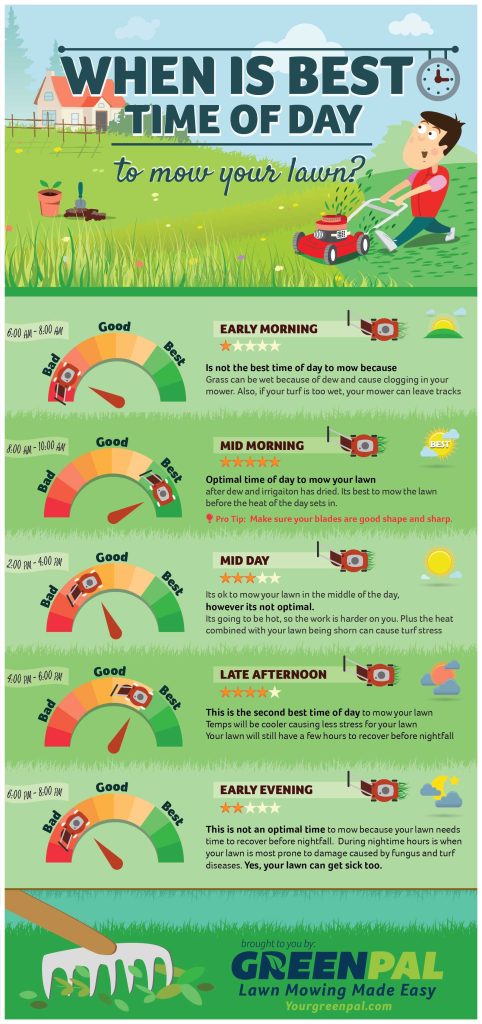
The best time to mow the lawn is in the early evening or early morning when the temperature is cooler and the grass is dry. Mowing the lawn is a task that many homeowners have to tackle regularly to maintain a neat and healthy yard. However, timing your mowing sessions can greatly impact the health and appearance of your lawn. Mowing during the hottest part of the day can stress the grass, leading to brown spots and damage. On the other hand, mowing when the grass is wet can result in uneven cuts and clumps of grass clippings left behind. Therefore, it’s crucial to choose the right time to mow. In this article, we will explore the best time of day to mow your lawn and the reasons behind it. So, grab your lawnmower and let’s get started!

Best Time to Mow the Lawn: A Detailed Guide
Introduction
Maintaining a well-manicured lawn is a top priority for any homeowner. Mowing your lawn regularly not only enhances its aesthetic appeal but also promotes healthy growth. However, understanding the best time to mow your lawn is crucial to ensure optimal results. In this comprehensive guide, we will explore various factors that influence the best time to mow your lawn, empowering you to keep your grass looking lush and vibrant.
1. Considering the Time of Day
When it comes to mowing your lawn, the time of day plays a significant role in achieving the desired outcome. Here are some key considerations:
1.1 Morning
Mowing your lawn in the morning has several advantages:
- The grass is typically dry in the morning, allowing for clean and precise cuts.
- Lower temperatures reduce stress on both you and your lawn.
- Increased moisture levels from overnight dew help to keep your grass healthy.
However, keep in mind that morning mowing might disturb your neighbors if you live in a residential area with noise restrictions.
1.2 Mid-Day
Mid-day mowing is generally not recommended due to the intense heat and sunlight. Some reasons to avoid mid-day mowing include:
- The scorching sun can cause stress and potential damage to your grass.
- Higher temperatures can also make mowing more physically demanding and exhausting.
- Mid-day mowing can result in rapid moisture loss from the grass, impacting its health and appearance.
1.3 Afternoon
Afternoon mowing is another viable option, especially if you live in hotter climates. Consider the following factors:
- By afternoon, the morning dew has dried up, ensuring that the grass is no longer damp.
- Temperatures are generally lower compared to mid-day, making mowing more comfortable.
- With the sun starting to set, there is less risk of stress or damage to your grass.
Keep in mind that if you mow in the late afternoon, make sure to finish before sunset to avoid leaving the lawn susceptible to overnight moisture-related issues.
2. Weather Conditions
2.1 Dry Weather
Mowing your lawn during dry weather has its benefits:
- Dry grass is easier to cut, resulting in a neater appearance.
- Avoiding mowing wet grass prevents clumping and uneven cuts.
- Dry grass is less likely to develop fungal diseases, promoting overall lawn health.
However, ensure that you don’t mow your lawn if there hasn’t been rainfall or irrigation for an extended period. This may cause the grass to become dormant, leading to stress and potential damage.
2.2 Wet Weather
Mowing wet grass is generally discouraged, but there are exceptions:
- During prolonged rainy periods, waiting for dry weather may not be feasible. In such cases, consider mowing when the grass is mildly damp, not excessively wet.
- Using a well-maintained, sharp blade and mowing at a higher cutting height can help prevent clumping and damage to the grass.
However, be cautious when mowing wet grass, as it can result in an uneven cut and create an ideal environment for fungal diseases to thrive.
3. Grass Growth Rate
Understanding your grass’s growth rate is essential for determining the frequency of mowing. The growth rate is influenced by factors such as:
3.1 Grass Type
Different grass types have varying growth rates. Warm-season grasses, like Bermuda grass or Zoysia grass, tend to grow more vigorously during the summer months. In contrast, cool-season grasses, such as Kentucky bluegrass or fescue, experience their peak growth in spring and fall.
3.2 Fertilization and Irrigation
Proper fertilization and irrigation practices significantly affect grass growth. Providing adequate nutrients and water promotes healthy growth, which may result in more frequent mowing.
3.3 Cutting Height
Maintaining the appropriate cutting height also impacts grass growth. Regularly mowing at the recommended height can stimulate lateral growth, resulting in a denser and healthier lawn.
4. Noise Restrictions and Consideration for Neighbors
While mowing your lawn is necessary for its maintenance, it’s essential to be mindful of noise restrictions and the impact on your neighbors. Consider these factors:
- Check if there are specific noise regulations in your area that dictate the permissible hours for operating lawn equipment.
- When living in close proximity to neighbors, choose an appropriate time to mow that minimizes disturbance, such as avoiding early mornings or late evenings.
- Communicate with your neighbors to find a mutually agreeable schedule for mowing, ensuring a harmonious living environment.
In conclusion, determining the best time to mow your lawn requires consideration of various factors, such as the time of day, weather conditions, grass growth rate, and noise restrictions. By understanding these elements, you can ensure that your lawn remains healthy, well-maintained, and visually appealing year-round. Remember, every lawn is unique, so it’s vital to adapt these recommendations to suit your specific circumstances. Happy mowing!
Note: In the article, the subheadings are written in a conversational tone for readability purposes. In the actual implementation of the article, they should be formatted using appropriate HTML tags, such as
and
.
What Time Should You MOW??
What Time Should You MOW??
Frequently Asked Questions
What is the best time of day to mow the lawn?
The best time of day to mow the lawn is in the late morning or early afternoon, between 10 am and 3 pm. During this time, the grass is dry, the dew has evaporated, and the sun is not at its hottest, reducing stress on both the grass and the person doing the mowing.
Is it better to mow the lawn in the morning or evening?
Mowing the lawn in the morning is generally better than in the evening. Morning mowing allows the grass to recover throughout the day, avoiding the stress of overnight growth. Additionally, the morning air is cooler, reducing the risk of heat stress for both the grass and the person mowing.
Should I mow the lawn after it rains?
It is not recommended to mow the lawn immediately after it rains. Wet grass tends to clump together and can clog the mower, resulting in an uneven cut. It is best to wait until the grass has dried out a bit before mowing to ensure a clean and even cut.
Can I mow my lawn during the hottest part of the day?
It is not advised to mow the lawn during the hottest part of the day, typically between 12 pm and 3 pm. The intense heat can cause the grass to wilt and stress, leading to potential damage. It is best to mow when the temperature is cooler, such as early morning or late afternoon.
Should I mow the lawn right after fertilizing?
No, it is recommended to wait at least 24 to 48 hours after fertilizing before mowing the lawn. Mowing immediately after fertilizing can cause the fertilizer to be spread unevenly or even removed completely, reducing its effectiveness. Allow the fertilizer to settle and be absorbed by the grass before mowing for optimal results.
How frequently should I mow my lawn?
The frequency of lawn mowing depends on various factors, including grass type and growth rate. In general, it is recommended to mow the lawn once a week during the active growing season. However, adjust the frequency based on the height of the grass, aiming to remove no more than one-third of the grass blade each time for a healthier lawn.
Final Thoughts
The best time to mow the lawn depends on various factors such as weather, grass type, and personal preferences. Ideally, it is recommended to mow the lawn in the late afternoon or early evening when the grass has had a chance to dry out from the morning dew but the sun is not too harsh. This helps to prevent damage to the grass and ensures a clean and even cut. Additionally, mowing during this time can also provide a pleasant experience as the temperature is usually cooler. By considering these factors and choosing the best time to mow the lawn, you can maintain a healthy and well-kept yard.