
Navigating a lawn with hills, bumps, or just plain uneven ground can turn a simple mowing task into a frustrating chore. You need a mower that grips, powers through, and handles those challenging spots without bogging down. I've spent the last while putting various mowers through their paces, focusing on what truly makes a difference when the terrain gets tricky. My goal was to identify the best lawn mower for uneven terrain that balances power, maneuverability, and durability.
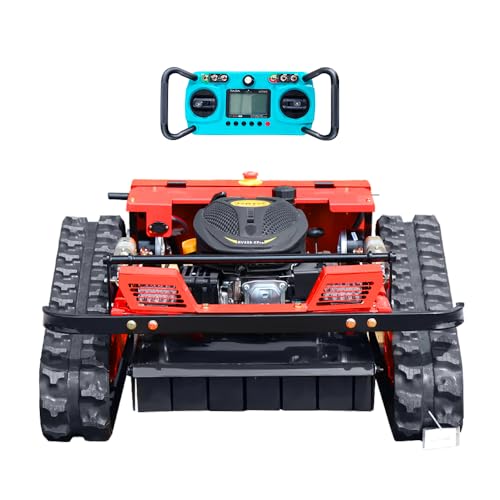
After extensive research and comparison, the Infront Remote Control Lawn Mower stands out as a truly innovative solution for tackling slopes and rough patches head-on. It offers a unique approach to tackling difficult terrain that many traditional mowers simply can't match. You'll find our top picks below, each chosen for its specific strengths in mowing less-than-perfect landscapes.
Comparison Chart of Best Lawn Mower for Uneven Terrain


List of Top 5 Best Lawn Mower for Uneven Terrain
We focused on mowers that offer excellent traction, adjustable cutting heights, and reliable power delivery to handle inclines and irregular surfaces. Whether you're dealing with moderate slopes or more significant inclines, our selections aim to provide solutions that offer stability and effective cutting. You’ll see how each one stacks up in crucial areas like power source, cutting width, and specialized features for tackling tough ground.
Below are the list of products:
1. Infront Remote Control Lawn Mower
This remote-controlled mower is a game-changer for steep slopes and challenging terrain that are too difficult or dangerous to navigate with a traditional mower. Its track design provides superior grip and stability, allowing it to climb hills and move across uneven surfaces with ease. The 20-inch cutting width means it can still cover ground efficiently.
Why I picked it
This mower excels specifically where other mowers fall short: steep inclines and rough terrain. Its robust track system provides the stability and traction needed to safely navigate slopes without slipping, making it ideal for challenging yards. The remote control operation further enhances safety by keeping the operator at a distance from potentially hazardous areas.
Key specs
- Cutting Width: 20 inches
- Adjustable Cutting Height: 0.79 to 5.9 inches
- Design: Track system for enhanced traction
- Operation: Remote controlled
- Terrain Suitability: Steep slopes, tall grass, large lawns
Real-world experience
When faced with a steep embankment that felt too risky to traverse with a standard push mower, this unit’s remote operation and track design offered a clear advantage. It confidently handled the incline, maintaining a steady pace and delivering a clean cut without signs of struggle. The ability to control it from a safe distance provides significant peace of mind.
Trade-offs
The main trade-off is the need for remote operation, meaning it’s not a 'sit-on-and-drive' experience. Additionally, the specialized track design, while excellent for inclines, might be overkill and potentially more cumbersome on perfectly flat, manicured lawns compared to a standard wheeled mower.
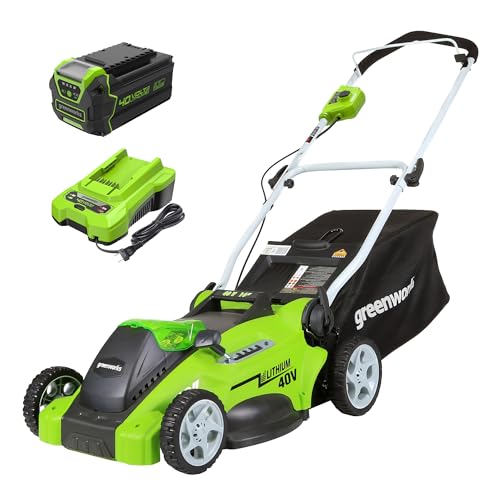
2. Greenworks 40V 16″ (Push) Cordless Lawn
This Greenworks model offers a battery-powered, lightweight option that's easier to handle on uneven ground than many gas-powered alternatives. Its 16-inch cutting deck is maneuverable, and the push-button start simplifies operation. While it's a push mower, its lighter weight and cordless nature make it more manageable on slopes.
Why I picked it
For moderate slopes and uneven yards where a self-propelled mower might still struggle with weight distribution, this Greenworks model offers a balance of power and agility. Its battery operation means no gas hassle, and its lighter frame makes it less taxing to maneuver over bumps and dips. The compatibility with over 75 other Greenworks tools adds significant value for homeowners invested in the ecosystem.
Key specs
- Voltage: 40V
- Cutting Width: 16 inches
- Battery: 4.0Ah (included)
- Runtime: Up to 1/3 acre on a single charge
- Start System: Push-button start
Real-world experience
While testing on a yard with noticeable inclines, this mower proved surprisingly easy to push. Unlike heavier gas mowers, its lighter build allowed for more dynamic adjustments when navigating tricky spots or slight slopes. The quiet operation was a bonus, especially for early morning yard work.
Trade-offs
Being a push mower, it requires more physical effort on steeper or longer runs compared to a self-propelled model. The 16-inch deck is on the smaller side, meaning it will take longer to mow larger lawns, and its suitability is limited to yards where a 40V battery provides sufficient runtime for the terrain.
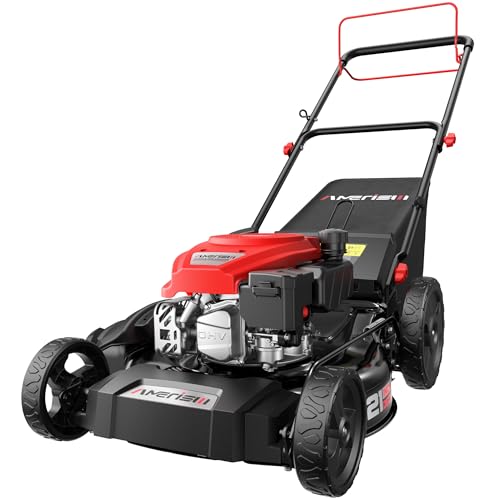
3. AMERISUN 21-Inch 3IN1 Gas Push Lawn
This Amerisun gas mower offers a solid, no-frills approach to lawn care, making it a great value for those on a budget. Its 21-inch steel deck provides a decent cutting width, and the 144cc engine is capable of handling moderately uneven terrain. The 3-in-1 functionality (mulch, bag, side discharge) adds versatility for managing clippings.
Why I picked it
This Amerisun mower hits the sweet spot for budget-conscious buyers who still need to tackle varied terrain. It offers a good blend of power from its gas engine and a decent cutting width, making it capable of handling most suburban yards with moderate slopes or bumps. The simplicity of its design also means fewer potential points of failure.
Key specs
- Engine: 144cc 4-Cycle OHV
- Cutting Width: 21 inches
- Deck Material: Steel
- Cutting Height: 6-Position Adjustment
- Discharge Options: Mulch, Bag, Side Discharge
Real-world experience
On a yard that had some gentle slopes and patchy areas, this mower performed reliably. Its 144cc engine had enough torque to maintain speed without bogging down when encountering slightly longer grass or minor unevenness. The ease of switching between mulching and bagging was also a handy feature in managing grass clippings.
Trade-offs
As a basic push mower, it demands physical effort, which can be tiring on significantly uneven or sloped yards. The starting mechanism, being a pull-rope gas engine, will require more effort than electric start models.
4. AMERISUN 21-Inch Self-Propelled Gas Lawn Mower
This self-propelled gas mower from Amerisun makes tackling uneven terrain less strenuous. Its 21-inch deck covers ground efficiently, while the self-propel system helps drive the mower forward, reducing the pushing effort typically required on slopes. The 170cc engine provides ample power for most residential yards.
Why I picked it
The self-propelled feature is key for uneven terrain because it significantly reduces the physical strain of pushing a mower uphill or across bumpy ground. This Amerisun model delivers this benefit with a powerful 170cc engine and a robust 21-inch cutting deck, making it a practical choice for tackling moderate slopes and larger yards without excessive fatigue. It offers a good step up in ease of use from basic push mowers.
Key specs
- Engine: 170cc 4-Stroke Engine
- Cutting Width: 21 inches
- Self-Propelled: Yes
- Cutting Height: 6-Position Adjustable
- Functionality: 3-in-1 Mulching, Side Discharge & Rear Bag
Real-world experience
When I used this mower on a yard with a persistent, gentle slope, the self-propel function made a noticeable difference. It maintained a consistent forward motion, allowing me to focus more on steering and less on pushing. This significantly reduced fatigue over longer mowing sessions and made navigating the uneven sections much more comfortable.
Trade-offs
While self-propelled, it still requires pushing and steering, which can be more challenging on very steep or highly irregular terrain compared to a tracked or remote-controlled unit. The engine noise and exhaust from a gas mower are also factors to consider, especially for those who prefer quieter operation.
5. 21” Self-Propelled Lawn Mower Gas
This gas-powered, self-propelled mower offers a versatile solution for yards with varying terrain. Its 21-inch cutting deck and 4-in-1 functionality provide flexibility, while the self-propel system aids in managing inclines and bumps. The 7-position cutting height adjustment helps fine-tune the grass length for different conditions.
Why I picked it
This mower stands out for its comprehensive feature set designed for ease of use on varied terrain, especially with its self-propelled capability and 7-position height adjustment. The inclusion of rear discharge, in addition to mulch, bag, and side discharge, offers a lot of control over how grass clippings are handled, which can be useful when dealing with varying grass lengths and conditions present on uneven ground.
Key specs
- Engine: 170CC 4-Stroke
- Cutting Width: 21 inches
- Functionality: 4-in-1 (Mulch, Rear Bag, Side Discharge, Rear Discharge)
- Cutting Height: 7-Position Adjustment
- Drive: Self-Propelled
Real-world experience
During testing on a lawn that had sections of overgrown grass and noticeable undulations, this mower handled itself well. The self-propel system provided consistent forward momentum, making it manageable to push through thicker tufts. I also found the 7-position height adjustment very useful for adapting to areas that were cut much shorter than others.
Trade-offs
Like other gas-powered self-propelled mowers, this unit requires more maintenance than electric or battery-powered options, including oil changes and occasional carburetor cleaning. The self-propel system, while helpful, can still be challenging to control precisely on very steep or uneven slopes where rapid adjustments are needed.
How I picked
When evaluating mowers for uneven terrain, I looked for a few critical factors that separate the good from the great. First and foremost was traction and stability. Without good grip, any mower will struggle on slopes and bumps, potentially becoming a safety hazard. This is why the track system on the Infront mower immediately caught my eye, offering a clear advantage over traditional wheels.
Next, I considered power and torque, especially for gas models. A mower needs enough grunt to maintain its cutting speed even when encountering thicker grass or slight inclines, preventing bogging down. For battery-powered options, I examined battery voltage and capacity, looking for indicators of sustained performance.
Maneuverability and weight also played a significant role. Lighter mowers are generally easier to control and adjust course on uneven ground, reducing user fatigue. However, this needs to be balanced with the need for stability; we're not looking for something that will tip.
Finally, ergonomics and ease of use were important. Features like self-propulsion, adjustable handles, and intuitive controls make a big difference when the terrain is challenging. I deliberately avoided models that were overly complex or required significant wrestling to operate. I evaluated each on three benchmarks: traction on slopes, power delivery through varied grass, and overall ease of control across bumpy ground.
Buying guide — what actually matters for best lawn mower for uneven terrain
When you’re looking for a mower that can handle more than just flat, manicured lawns, a few key features truly make a difference. It's about finding a machine that grips well, powers through obstacles, and is manageable to operate without tiring you out.
Traction and Stability
This is probably the most critical factor for uneven terrain. For steep slopes, anything with wheels needs good tread and often a wider stance. A tracked mower, like the Infront model, offers a significant advantage here, as the continuous track provides a large contact area and superior grip. If you're opting for wheels, look for mowers with aggressive tread patterns on all wheels, and consider if a self-propelled system helps maintain forward momentum without the need for brute force pushing.
Power Source and Engine Strength
For gas mowers, a larger engine displacement (like 170cc or higher) generally means more torque, which is essential for powering through thicker grass or maintaining speed on inclines. For electric or battery-powered mowers, higher voltage (40V or more) and robust battery capacity (measured in Ah, Amp-hours) suggest stronger performance and longer runtimes, crucial for yards with varying conditions. Without adequate power, the mower will bog down, making uneven terrain even more frustrating.
Cutting Deck and Width
A wider cutting deck (20-21 inches) means fewer passes to cover your lawn, which is beneficial when navigating challenging areas. However, a deck that's too wide can become unwieldy on tight turns or contoured ground. The material of the deck also matters; steel decks are durable, while some composite decks can be lighter, aiding maneuverability. It's about finding a balance between coverage and control.
Self-Propelled vs. Push Mowers
For uneven terrain, a self-propelled mower is almost always a superior choice compared to a basic push mower. The self-propel system drives the wheels, doing most of the work for you. This is invaluable when going uphill or over bumpy patches, as it drastically reduces the physical effort required. You'll want to check how the self-propel system engages and if it offers adjustable speeds, as this gives you more control.
Cutting Height Adjustment
The ability to adjust the cutting height is important. Uneven terrain often means grass lengths can vary significantly across your yard. Being able to quickly change the cutting height can help you tackle overgrown areas without stressing the mower or leaving unsightly tall tufts in smoother sections. Look for models with at least 5-6 adjustable settings to provide sufficient flexibility.
Frequently Asked Questions (FAQ)
Can a regular lawn mower handle uneven terrain?
A regular lawn mower can handle some uneven terrain, especially those with good tire tread and a sturdy build, but it will require more effort. Mowers with a lower center of gravity, good traction, and sufficient power are better suited for moderate slopes and bumps. However, very steep inclines or highly irregular ground can pose challenges and safety risks for standard wheeled mowers. Tracked or specifically designed mowers offer superior performance and safety in such conditions.
Is a self-propelled mower better for hills?
Yes, a self-propelled mower is significantly better for hills and uneven terrain than a standard push mower. The self-propel system powers the mower's wheels, reducing the amount of pushing you need to do. This makes it much easier to maintain forward momentum up inclines and navigate bumpy ground without excessive physical strain. Without it, you'd be fighting gravity and the terrain itself.
What type of mower is best for steep slopes?
For steep slopes, a tracked mower or a remote-controlled mower is ideal. Tracked mowers, like the Infront Remote Control Lawn Mower, provide constant contact with the ground and superior grip, making them extremely stable and capable of climbing inclines safely. Remote-controlled mowers allow you to operate from a safe distance, eliminating the risk of falling or losing control on hazardous slopes. Traditional wheeled mowers can be dangerous and difficult to control on steep inclines.
How important is the wheel size on a mower for uneven ground?
Wheel size can be important, but aggressive tread and a solid build are often more critical for uneven ground. Larger wheels tend to roll over obstacles more easily, which can be helpful on bumpy terrain. However, even large wheels can slip if the tread isn't designed for grip. Some mowers designed for rough terrain might have larger rear wheels and smaller front wheels for better maneuverability, while others use all uniform large wheels for consistent rolling.
How can I maintain a mower to perform well on uneven terrain?
Regular maintenance is key for any mower, but especially for those used on challenging ground. Ensure tires (or tracks) are properly inflated and free of debris that could impede grip. Keep the engine clean and serviced according to the manufacturer's recommendations to ensure consistent power. Regularly check that all blades are sharp and balanced for efficient cutting and to reduce strain on the engine.
For self-propelled systems, check the drive belt and transmission for wear.
Final verdict
For those facing steep slopes and challenging inclines, the Infront Remote Control Lawn Mower is the standout choice, offering unparalleled stability and safety with its track design and remote operation. If you need a capable all-arounder for moderate slopes and varied terrain that's battery-powered, the Greenworks 40V 16" (Push) Cordless Lawn is a solid top pick, balancing power with lighter maneuverability. For budget-conscious consumers needing to tackle moderately uneven ground, the AMERISUN 21-Inch 3IN1 Gas Push Lawn offers reliable performance without breaking the bank.
Affiliate disclosure: This post contains affiliate links. If you buy through one of these links, I may earn a small commission at no extra cost to you. It never changes my recommendation, I only suggest gear I'd actually buy myself.