The perfect temperature for Bermuda grass seed germination is between 65°F and 85°F (18°C – 29°C), creating ideal conditions for quick and successful sprouting. Keep in mind that consistent warmth speeds up germination, while cooler temperatures can delay or hinder the process.
In summary, Bermuda grass seeds thrive and germinate best in temperatures ranging from 65°F to 85°F. Maintaining this temperature range ensures healthy seedlings and lush lawns.
Getting Bermuda grass to germinate swiftly requires knowing the right temperature window. When the soil hits the sweet spot of 65°F to 85°F, seeds tend to sprout quickly and grow vigorously. If the soil is too cold, germination slows down significantly, leading to patchy or delayed growth. Conversely, excessively hot conditions can stress the seeds, making watering and care even more critical. Understanding and maintaining the ideal temperature is key to establishing a dense, green Bermuda lawn. This guide will help you identify the perfect conditions for germination, ensuring your grass gets off to a strong start and thrives throughout the season.

Bermuda Grass Seed Germination Temperature: Everything You Need to Know
Understanding the Basics of Bermuda Grass Germination
Bermuda grass is a warm-season turfgrass that thrives in hot climates. It is popular for lawns, sports fields, and golf courses because of its durability and lush appearance. To grow Bermuda grass successfully, knowing the right germination temperature is essential. The seed needs specific temperature conditions to sprout effectively.
Germination is the process where a seed begins to grow into a new plant. For Bermuda grass, this process depends heavily on temperature, moisture, and soil conditions. Without proper germination temperatures, seeds may fail to sprout or take much longer to grow.
Ideal Temperature Range for Bermuda Grass Seed Germination
The optimal soil temperature for Bermuda grass seed germination is between 65°F and 70°F (18°C to 21°C). Within this range, seeds tend to sprout most quickly and uniformly.
If temperatures dip below 60°F (15.5°C), germination slows down significantly, and some seeds may not sprout at all. On the other hand, soils consistently above 85°F (29°C) can hinder germination and even damage young seedlings.
Why Temperature Matters in Bermuda Grass Seed Germination
Temperature influences seed metabolism and enzyme activity, which are vital for sprouting. When soil temperatures are within the right range, seeds absorb water more efficiently, leading to faster germination.
At unsuitable temperatures, seeds may remain dormant longer or rot. Too high temperatures can cause stress, preventing seeds from developing healthy roots. Maintaining the correct temperature range ensures a higher success rate for germination.
Monitoring Soil Temperature for Successful Germination
Using a soil thermometer aids in tracking temperature levels. Measure soil temperature at a depth of about 1 to 2 inches where the seeds are planted.
Check soil temperature daily during planting, especially during early spring and late summer when conditions fluctuate. Proper monitoring helps you time your planting for the best possible germination.
Timing Your Bermuda Grass Seeding Based on Temperature
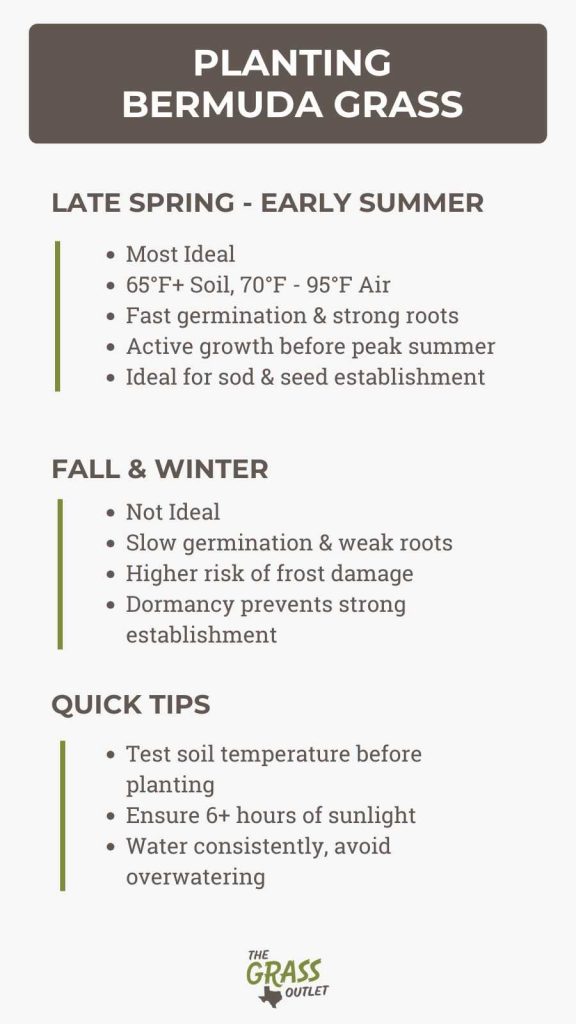
Plant Bermuda grass seeds when soil temperatures are consistently between 65°F and 70°F. This usually occurs in late spring or early summer in most regions.
Avoid planting when soil temperatures are too cold, as germination will be slow or unsuccessful. Similarly, planting during hot summer days when soil temperatures are above 85°F may lead to poor sprouting.
Using Climate Data to Predict Ideal Planting Times
Consult local climate data to determine when soil temperatures reach the optimal range. Many gardening websites or weather services provide soil temperature forecasts.
Keeping track of weather patterns helps plan seeding activities. This approach ensures seeds are planted during the right temperature window for best results.
Effects of Soil Moisture and Temperature on Germination
Moisture is just as important as temperature for Bermuda grass seed germination. Seeds need consistent moisture for water uptake, which is critical for activation of enzymes.
However, overly wet soil combined with poor temperature can cause seeds to rot. Ensure proper drainage and avoid overwatering. Maintaining a balance of moisture and temperature encourages healthy germination.
Temperature-Related Challenges and Solutions
Unpredictable weather can cause temperature fluctuations that complicate germination. Sudden cold snaps or heatwaves may delay or stop seed sprouting.
To mitigate these issues, consider using soil covers or mulches to regulate soil temperature. Covering the soil can keep it warm during chilly nights or shade it during hot days.
Related Topics in Bermuda Grass Cultivation
- Seed Selection: Choose high-quality Bermuda grass seeds for better germination rates and disease resistance.
- Soil Preparation: Properly prepare the soil by tilling and adding nutrients to create optimal conditions for seed growth.
- Watering Techniques: Use consistent watering schedules to keep the soil moist but not waterlogged during germination.
- Fertilization: Apply starter fertilizer to support early root development after germination.
Practical Tips for Successful Bermuda Grass Seed Germination
- Plant seeds when soil temperatures are in the ideal range of 65°F to 70°F.
- Use a soil thermometer to monitor temperature regularly.
- Ensure consistent moisture in the soil to promote germination.
- Use soil covers or mulches to regulate temperature fluctuations.
- Avoid planting during extreme weather conditions that prevent optimal germination.
Successfully growing Bermuda grass starts with understanding the importance of proper germination temperatures. By planting within the ideal soil temperature range of 65°F to 70°F, you set the foundation for healthy, lush turf. Monitoring soil temperature and moisture levels closely, and timing your planting accordingly, will lead to better germination rates. Focusing on these key factors helps ensure your Bermuda grass lawn develops strong and vibrant from the very beginning.
Why Bermuda Grass doesn't like to Grow from Seeds
Frequently Asked Questions
What is the ideal soil temperature for Bermuda grass seed to germinate effectively?
The best soil temperature for Bermuda grass seed to sprout is between 65°F and 70°F (18°C to 21°C). Maintaining these temperatures helps ensure rapid germination and healthy growth. Temperatures below this range can slow down the process, while higher temperatures might cause uneven germination or stress the young seedlings.
How does temperature fluctuation impact Bermuda grass seed germination?
Fluctuations in temperature can negatively affect Bermuda grass seed germination. Consistent soil temperatures within the optimal range promote even emergence. Sudden drops or rises can delay germination, lead to uneven sproutings, or inhibit seedling development. It’s essential to monitor soil conditions and, if necessary, use soil covers or heating methods to maintain steady temperatures.
Can I plant Bermuda grass seed outside the recommended temperature range?
Planting Bermuda grass seed outside the ideal temperature window is possible but may result in poor germination rates. Cooler temperatures slow down germination, while excessively hot soil can cause stress or damage to the seeds. To improve success, consider starting seeds indoors or delaying planting until soil conditions are more favorable for healthy sprouting.
Final Thoughts
Bermuda grass seed germination temperature is crucial for successful growth. Maintaining soil temperatures between 65°F and 70°F encourages quick and even germination. Too cold or too hot conditions can delay or inhibit sprouting.
Understanding the right temperature range helps gardeners plan planting times effectively. Properly managing soil conditions ensures healthy establishment of Bermuda grass.
In conclusion, paying attention to the ‘bermuda grass seed germination temperature’ helps achieve strong lawns efficiently. Keeping soil within the ideal temperature range boosts germination success and overall grass health.